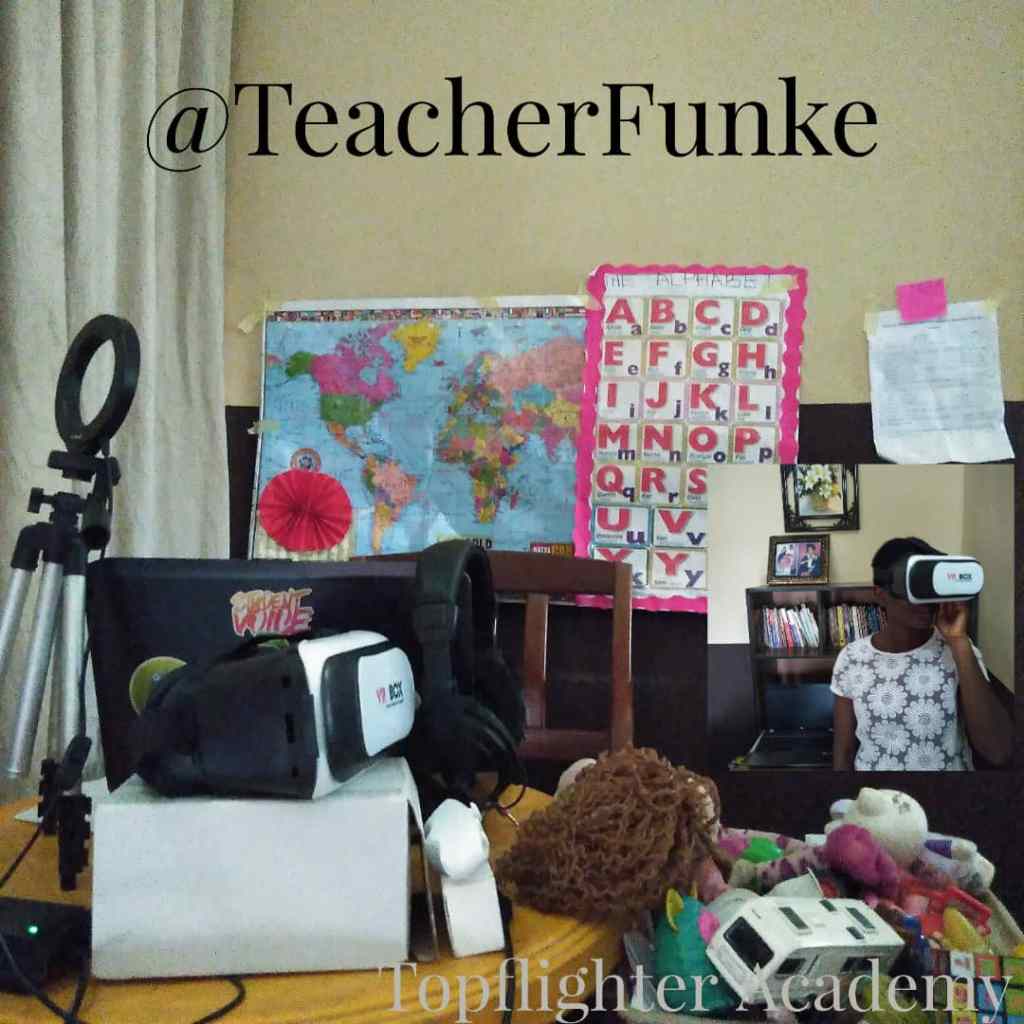
My little cutie homie space!
Video games are fun, school should be fun too. Teacher Funke
Using games outside the game industry is called’ GAMIFICATION’.
What is gamification? Gamification is the use of game design elements in non-game contexts. These game design elements are used to improve engagement, motivation, retention of an activity. Gamification has the potential to motivate us complete tasks like school assignments or workplace projects. It can also help us establish learning progression, match students skill level , make students more curious about the topic or immerse them in a lecture.
Examples of game design elements are feedback, badges, rewards and leaderboards.
Examples of Educational Games
- Duolingo
- Kahoot
- Quizziz
WHY GAMIFY?
People currently spend 3 billion hours a week playing video and computer games from an educational context, incorporating game elements into lesson plans to motivate students and make learning enjoyable is hardly new.
Gamification focuses on extracting the underlying principles of games and asking whether their education experience can be re-configured to build on these principles ( strategy, time-management and role playing).
A successful gamification program will yield four freedoms of play:
- The freedom to fail: This will make children learn at an early stage learn that failures are part of success and we learn to succeed by failing most times. Hence, the reduction of pain and depression that failures bring to individual’s live. In gamification, mistakes should be allowed with little or no consequence.
2. The freedom to assume different identities: It encourages players to see problems from a different perspective.
3.The freedom to experiment: This allows players to explore and discover new strategies and pieces of information.
4.The freedom of effort: When learners know that their efforts are more important their results, they tend to do more which in returns create a good and outstanding result.

 EduPlus