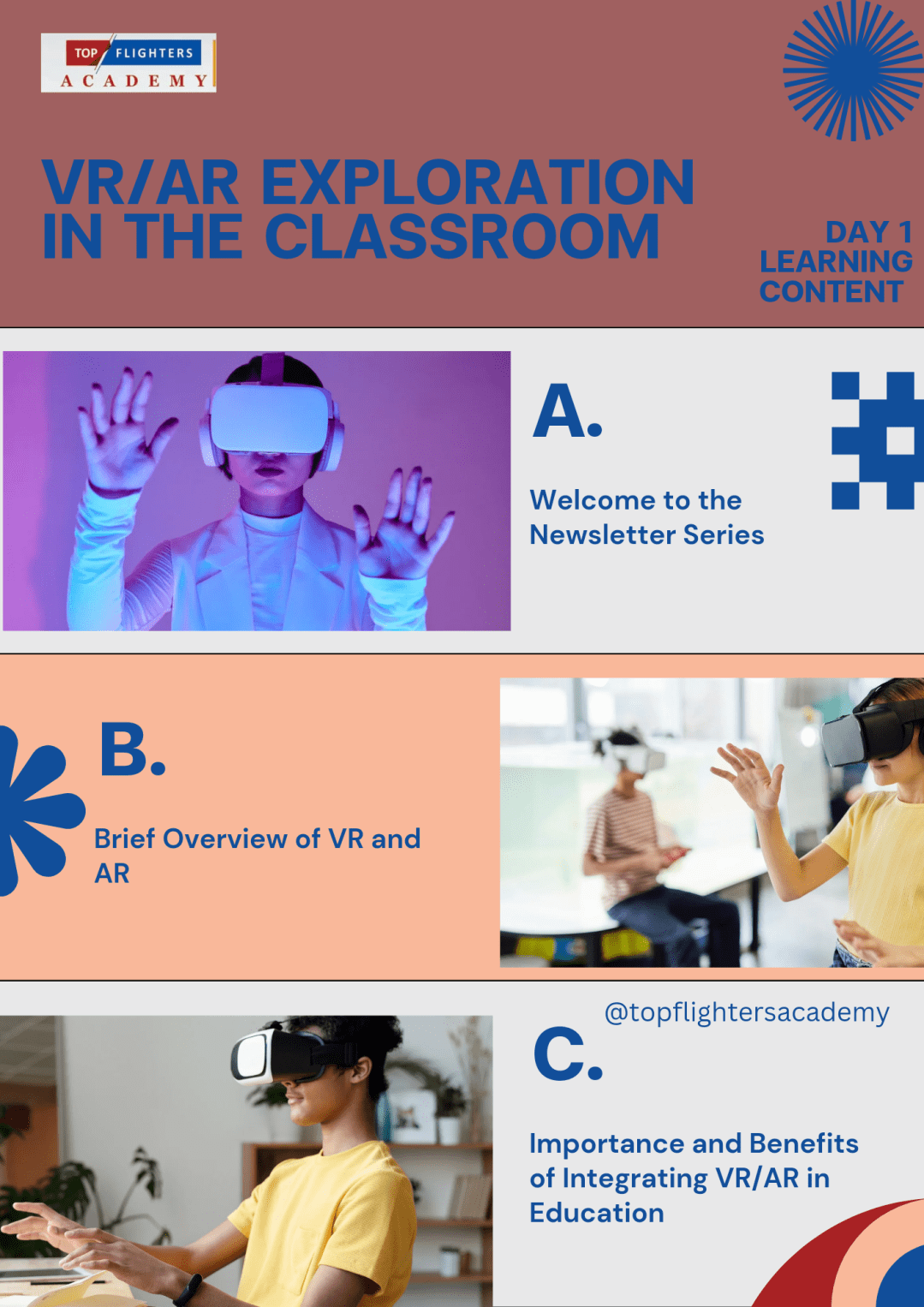
Dear Educators,
Welcome to an exciting journey into the future of education!
My fascination with VR began in 2020 when I first encountered its potential to enhance learning and make lessons more engaging through gamification (I absolutely adore bringing fun into the classroom). I witnessed the thrill of VR games during the Fun Days organized for children at my previous workplace, and it left a lasting impression.
When I introduced VR to my class for the first time, it caused quite a stir. The sight of the VR box turned the classroom upside down, igniting curiosity among the students. They were eager to explore it and understand how it could benefit their academic journey.
Having researched how VR/AR can shape the future of education, I’ve decided to embark on this 14-day exploration with you.
Your curiosity and dedication to evolving educational practices are the guiding lights of this endeavor.
In this exclusive newsletter series, our goal is crystal clear: to uncover the vast potential of VR/AR in reshaping and revolutionizing classroom learning. Together, we’ll dive into these transformative technologies, discovering the many ways they can redefine engagement, interaction, and understanding in educational settings.
Why are we so enthusiastic about this journey? Because we firmly believe that VR/AR aren’t just tools; they’re gateways to new dimensions of learning. Through these technologies, we aim to spark inspiration, nurture creativity, and ignite a passion for learning that goes beyond the usual boundaries.
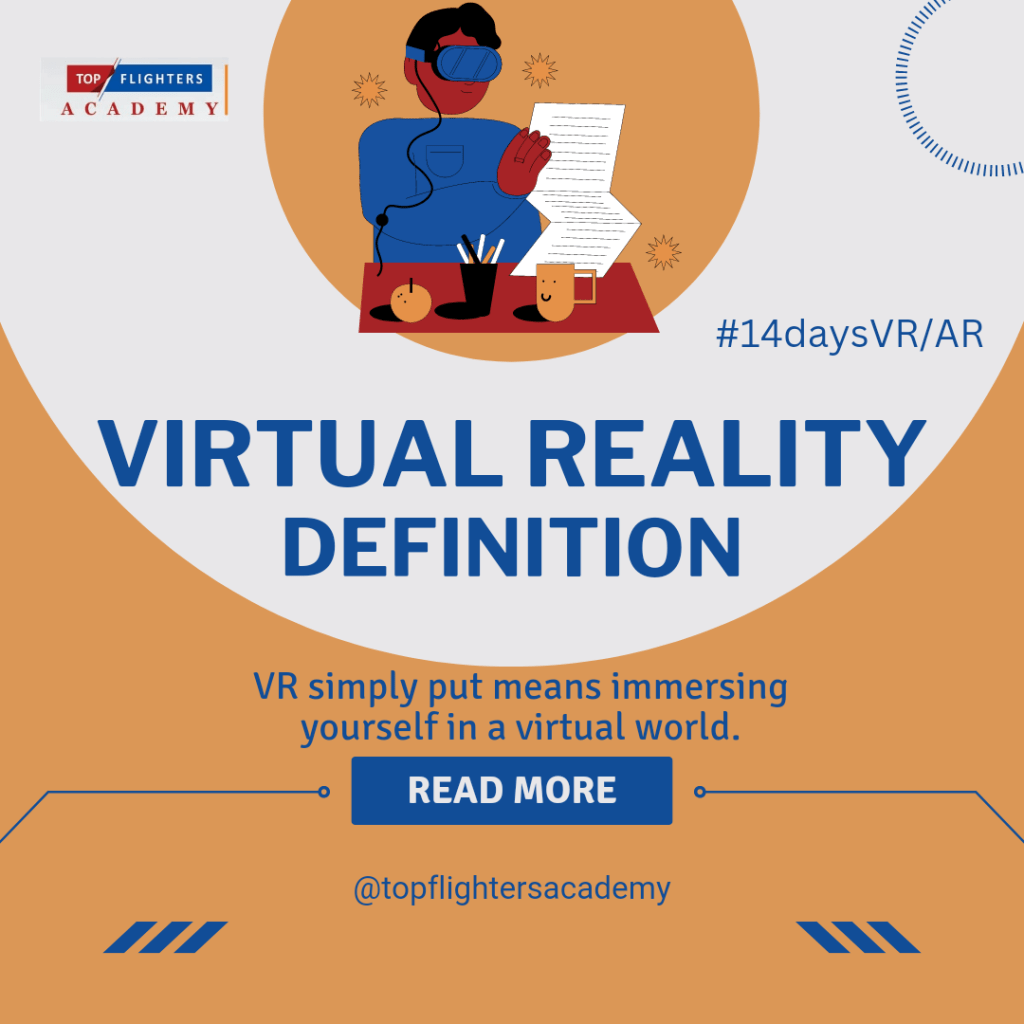
According to PCMag Encyclopedia, Augmented Reality/ Virtual Reality refers to computer-generated simulations that integrate the real world (AR) or are entirely self-contained (VR). AR applications let you move around in the real world. With VR, you have to remain in the same location because you cannot see your surroundings.
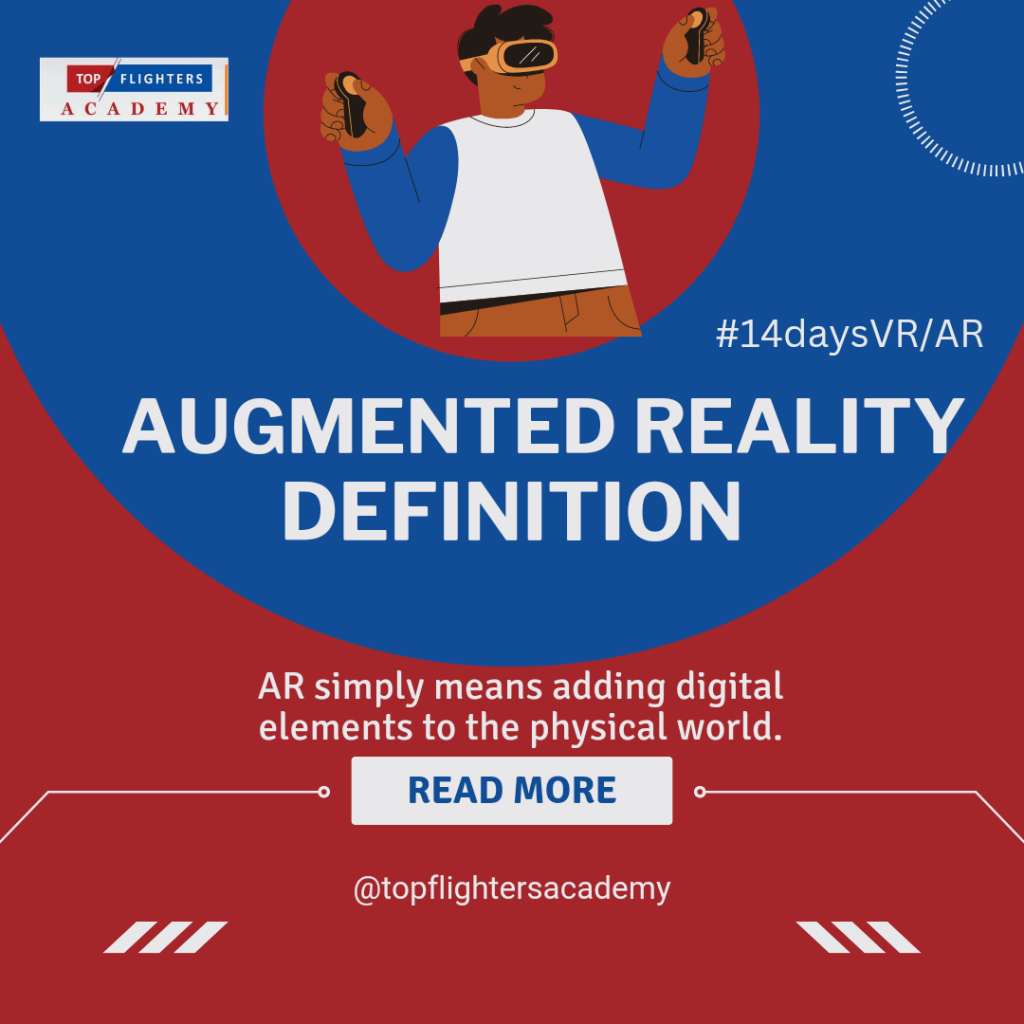
VR replaces your existing world with digital content e.g, being inside of a thing to study it rather than reading a book or watching a video on the internet. it involves enhancing the real world with digital elements.
AR uses our environment as a window to our digital world e.g Microsoft Hololens, with Hololens, you can pre-visualize anything before you buy it.
Do you know that VR/AR has its origin dated to centuries ago? Watch this video on the Evolution of Extended Reality (XR)
Importance and Benefits of Integrating VR/AR in Education
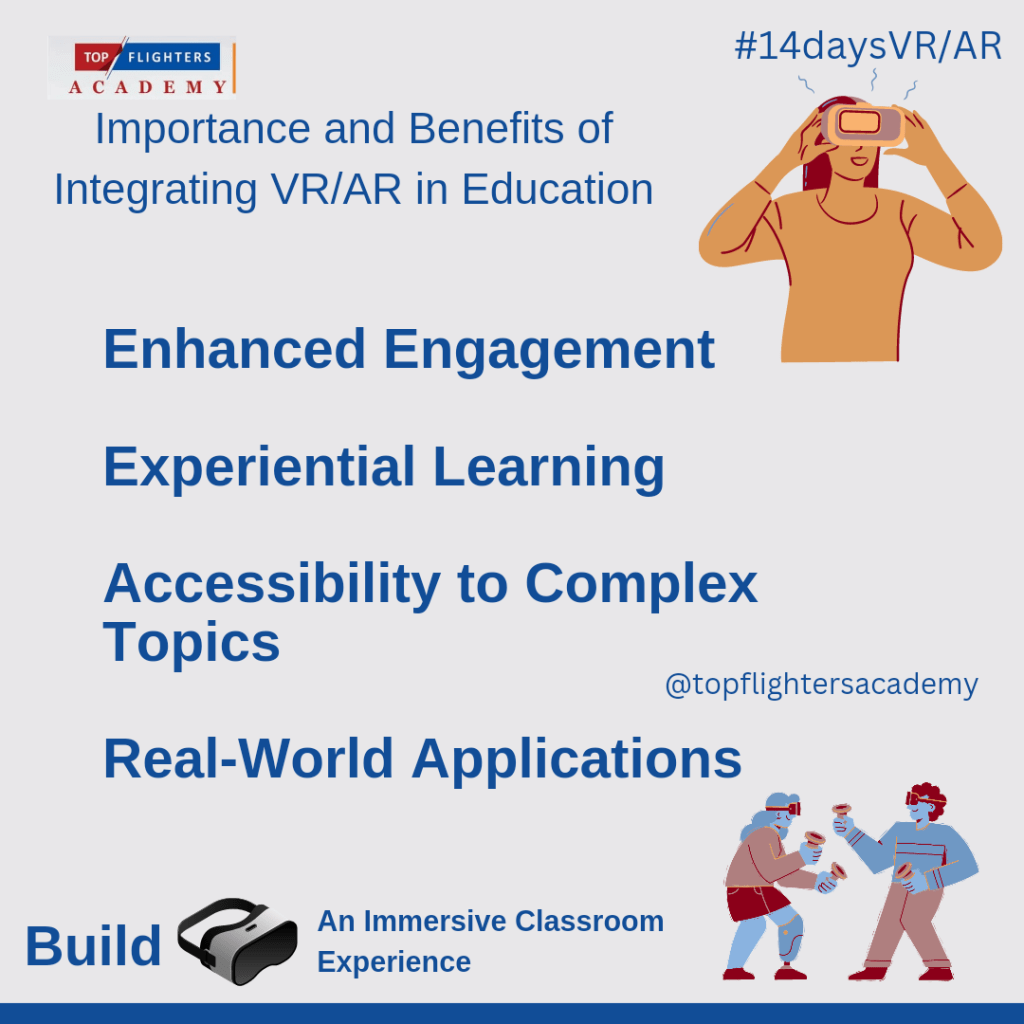
Enhanced Engagement:
VR/AR technologies have a remarkable ability to capture students’ attention in ways traditional methods might struggle to achieve. By immersing learners in interactive experiences, these technologies create a captivating learning environment. Students actively participate and engage with educational content, making lessons more stimulating and enjoyable.
Experiential Learning:
One of the most significant advantages of VR/AR in education is its capacity to facilitate experiential learning. Students can delve into immersive environments that simulate real-life scenarios, enabling hands-on exploration of complex concepts. This hands-on approach enhances comprehension and retention, making learning more tangible and memorable.
Accessibility to Complex Topics:
VR/AR serves as a powerful tool to simplify abstract or intricate subjects. By visualizing complex concepts in an easily understandable format, students can grasp challenging topics more effectively. For instance, abstract scientific theories or historical events can be brought to life, allowing students to visualize and interact with the content, fostering a deeper understanding.
Real-World Applications:
Beyond the classroom, VR/AR technologies mirror real-world applications across various industries. Integrating these technologies in education equips students with skills applicable to technology-driven careers. Whether it’s experiencing architectural designs in VR or practicing medical procedures through simulations, students gain practical insights and prepare for future job opportunities in fields that increasingly rely on technological advancements.
By incorporating VR/AR in education, educators pave the way for students to not only learn but to experience, engage, and prepare for a future where immersive technologies play a pivotal role in various aspects of life and work.
As we wrap up our introduction to the captivating world of VR/AR in education, let’s carry this excitement forward into our journey ahead. Tomorrow, we delve deeper into the technology that underpins these transformative experiences. Get ready to uncover more insights into the immersive realms of Virtual Reality and Augmented Reality. Until then, keep the curiosity alive and let’s continue to envision the classroom of tomorrow together!
Topflighters Academy
Technology Integration Company
Lagos, Nigeria

 EduPlus