Day #4 VR/AR CLASSROOM EXPERIENCE

VR in Different Subjects – Unveiling the Educational Tapestry

Hello, esteemed educators! Today, let’s embark on an even more profound exploration of how Virtual Reality (VR) weaves an intricate tapestry across various subjects, enriching the educational landscape with immersive and transformative experiences.
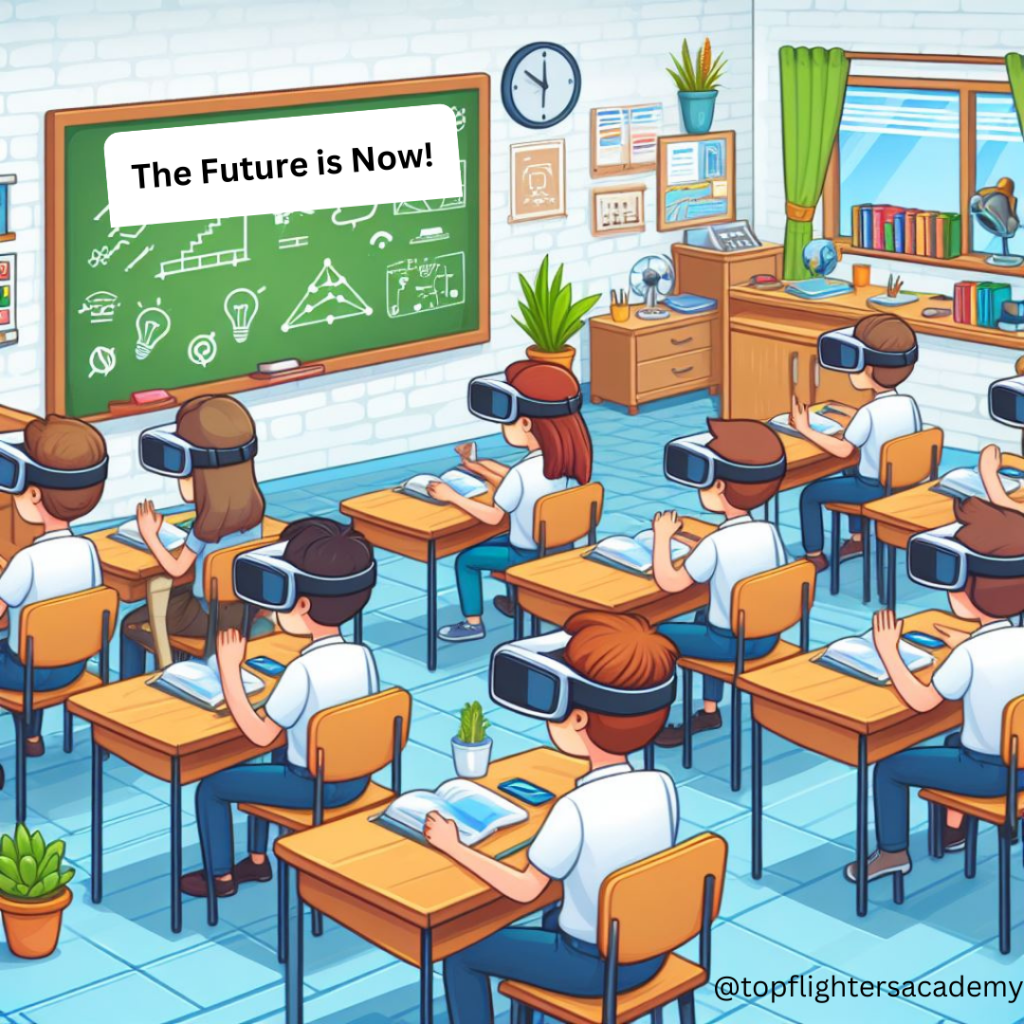
Science: A Virtual Laboratory Beyond Conventions

In the scientific realm, VR goes beyond supplementing traditional labs; it redefines them. Imagine conducting experiments without worrying about material constraints. VR enables students to delve into molecular structures, witness chemical reactions from different perspectives, and even simulate biological processes. This not only sparks curiosity but also instills a deeper appreciation for the scientific method and experimentation.

The future of work is drastically changing due to technology advancements like VR. So, educators, school owners and administrators need to step up their game to prepare today’s learners for the future.

History: Time-Traveling Through Dynamic Narratives

The history classroom becomes a time-traveling vessel with VR. Instead of static textbook images, students can virtually visit historical landmarks, witness pivotal moments, and navigate through historically accurate recreations of ancient cities. By immersing themselves in historical narratives, students develop a nuanced understanding of the interconnectedness of events and the impact of historical decisions.

Literature: Stepping Into the Pages of Stories

Literature comes alive in VR, offering students the opportunity to step directly into the worlds crafted by authors. Imagine exploring the cobbled streets of Dickensian London or traversing the mythical landscapes of classic literature. This immersive approach not only enhances comprehension but also fosters empathy as students emotionally connect with characters and settings. Literature is no longer a passive experience; it becomes a journey of discovery.

Mathematics: Navigating the Dimension of Understanding

In the realm of mathematics, VR serves as a bridge between abstract concepts and tangible understanding. Students can manipulate geometric shapes in a three-dimensional space, observing how mathematical principles manifest in a visually interactive environment. By engaging with mathematical ideas through VR, students develop an intuitive grasp of complex concepts, transforming math from a challenge into an exploration.

Languages: Cultural Immersion in a Virtual Landscape

VR language learning extends beyond vocabulary and grammar drills. Students can immerse themselves in virtual environments where the target language is spoken authentically. From exploring culturally rich scenarios to participating in simulated conversations, VR provides an unparalleled linguistic journey. It’s not just about learning words; it’s about understanding cultural nuances and gaining practical language skills.

Physical Education: Virtual Wellness and Dynamic Activities

In the realm of physical education, VR introduces a new dimension to wellness. Virtual fitness programs engage students in dynamic activities, from practicing yoga in serene virtual landscapes to participating in virtual sports events. This not only introduces variety to physical education classes but also encourages a holistic approach to health and well-being.

By embracing VR across diverse subjects, educators not only capture the attention of the digital generation but also nurture a generation of critical thinkers, empathetic learners, and creative problem solvers. As we continue our journey into the realm of VR/AR in education, stay tuned for more insights and practical applications!

To your progress,

Teacher Funke Akpan

Technology Integration Officer

Founder, Topflighters Academy
Extended Reality – The New Normal in Education

In recent years, the landscape of education has been profoundly transformed by technological innovations. Among these advancements, extended reality, often referred to as XR, has emerged as a powerful tool to revolutionize the way we learn and interact with educational content. Within XR, three distinct categories stand out: Virtual Reality (VR), Augmented Reality (AR), and Mixed Reality (MR). In this blog post, we will delve into the history and evolution of extended reality, explore the meanings and differences between VR, AR, and MR, and weigh the pros and cons of these technologies in education. Additionally, we will discuss the compelling reasons to embrace VR and AR as invaluable assets in modern educational settings.

History and Evolution of Extended Reality

The concept of extended reality can be traced back to the 18th century, but it has gained significant traction in recent decades. Extended reality refers to a spectrum of technologies that extend, augment, or enhance the way we perceive and interact with the physical and digital worlds. It encompasses three main categories: Virtual Reality (VR), Augmented Reality (AR), and Mixed Reality (MR).

The history and evolution of XR

Understanding Virtual Reality, Augmented Reality, and Mixed Reality

  1. Virtual Reality (VR): VR immerses users in a fully digital environment, completely detached from the physical world. Users wear headsets that provide a 360-degree view of a computer-generated environment, allowing them to explore and interact within this synthetic space.
  2. Augmented Reality (AR): AR overlays digital elements onto the real world. This can be achieved through smartphone screens, glasses, or headsets. Users can see both physical and digital objects simultaneously, enhancing their real-world experiences with additional information or virtual objects.
  3. Mixed Reality (MR): MR combines elements of both VR and AR. In MR, digital objects interact with the physical environment in real-time. Users can interact with and manipulate virtual objects in their real-world context.
Microsoft Mesh is an example of Mixed Reality using the Hololens.

Differences Between VR and AR

The primary distinction between VR and AR lies in their level of immersion. VR provides a fully immersive digital experience, whereas AR overlays digital content onto the real world while maintaining a connection to the physical environment. Both technologies have unique use cases and benefits.

Pros and Cons of VR and AR in Education

Pros:

  1. Immersive Learning: VR allows students to immerse themselves in virtual environments, making abstract concepts tangible and increasing engagement and retention.
  2. Real-World Applications: AR can be used to enhance practical learning, such as medical training, by overlaying instructions and data onto real-life scenarios.
  3. Customized Learning: Both VR and AR can adapt content to individual learning styles and paces, catering to diverse educational needs.
  4. Accessibility: Students can access immersive educational content from anywhere, reducing geographical barriers and enhancing inclusivity.
  5. Interactive Collaboration: MR enables collaborative learning experiences, where students interact with both digital and physical components, promoting teamwork and problem-solving skills.

Cons:

  1. Cost: High-quality VR and AR hardware can be expensive, which may limit access for some educational institutions.
  2. Learning Curve: Teachers and students may require training to effectively use VR and AR tools.
  3. Distraction: Overuse or misuse of immersive technologies can lead to distractions and reduce the focus on educational goals.

Reasons to Embrace VR and AR in Education

  1. Enhanced Engagement: VR and AR make learning more engaging, stimulating, and memorable. Complex or abstract topics become easier to grasp when presented in a visually interactive manner.
  2. Hands-On Learning: These technologies provide hands-on experiences that are otherwise difficult or expensive to replicate in the real world, allowing students to experiment and learn in a safe environment.
  3. Global Learning: VR and AR enable students to connect with peers and experts worldwide, facilitating global collaboration and cultural exchange.
  4. Innovative Teaching Methods: Educators can use VR and AR to adopt innovative teaching methods, such as virtual field trips, 3D models, and simulations.
  5. Future-Ready Skills: Preparing students for the digital age, where VR and AR are increasingly relevant, ensures they acquire skills that are valuable in many industries.

In conclusion, Extended Reality, including VR and AR, has the potential to redefine education. It offers an immersive and interactive approach to learning, making education more engaging, accessible, and relevant to the evolving needs of students in the 21st century. As these technologies continue to advance and become more accessible, their role in education is poised to become the new normal, transforming the way we teach and learn. Embracing VR and AR in education is not just about adopting a trend; it’s about preparing students for the future and empowering them with the skills and knowledge they need to succeed in an increasingly digital world.

Do you wish to infuse VR/AR in your classroom or school, you can reach out to me here: funkeakpan79@gmail.com or send a WhatsApp message to +2348186504445

Thank you for reading! Kindly leave a comment if you find this fascinating!

Transforming Teachers’ Mindset

Teachers play a crucial role in shaping the future of our society by imparting knowledge and skills to our next generation. However, the quality of education and the effectiveness of teaching methods largely depend on the mindset and attitude of the teachers. To create a positive and effective learning environment, teachers need to renew their minds constantly. In this blog post, we will explore how teachers can be transformed by renewing their minds.

What is a Renewed Mindset?

A renewed mindset is a way of thinking that allows teachers to approach their work with a positive attitude and an open mind. It is a process of letting go of negative thoughts, beliefs, and attitudes that limit a teacher’s ability to perform to their fullest potential. When teachers renew their minds, they can develop a growth mindset and embrace challenges as opportunities for learning and growth. A renewed mindset can help teachers to be more creative, innovative, and effective in their teaching methods.

Ways to Renew a Teacher’s Mindset

  1. Read Widely: Reading widely can expose teachers to new ideas, concepts, and perspectives. It can help them to stay up to date with the latest trends and research in their field of expertise. Reading can also improve a teacher’s communication skills and help them to better articulate their thoughts and ideas.
  2. Attend Professional Development Workshops: Attending professional development workshops can help teachers to stay current with the latest teaching methods, technologies, and trends in education. It can also provide opportunities for teachers to network and collaborate with other professionals in their field.
  3. Reflect on Teaching Practices: Teachers can renew their minds by reflecting on their teaching practices. They can analyze their teaching methods, strategies, and techniques to identify areas for improvement. Self-reflection can help teachers to become more self-aware and develop a growth mindset.
  4. Embrace Change: Embracing change can be challenging, but it is essential for personal and professional growth. Teachers need to be open to new ideas, methods, and technologies that can improve their teaching practices. Embracing change can help teachers to stay relevant and adapt to the evolving needs of their students.
  5. Foster Positive Relationships: Teachers can renew their minds by fostering positive relationships with their colleagues, students, and parents. Positive relationships can create a supportive and collaborative learning environment that can enhance the teaching and learning experience.

The Benefits of Renewing a Teacher’s Mindset

Renewing a teacher’s mindset can have numerous benefits for both the teacher and the students. A renewed mindset can help teachers to be more creative, innovative, and effective in their teaching practices. It can also improve their communication skills, boost their confidence, and enhance their overall job satisfaction. Students can benefit from a renewed teacher mindset by experiencing a positive and engaging learning environment that promotes growth and development.

In conclusion, teachers play a critical role in shaping the future of our society, and renewing their mindset is essential for their personal and professional growth. By reading widely, attending professional development workshops, reflecting on their teaching practices, embracing change, and fostering positive relationships, teachers can transform their teaching practices and create a positive and effective learning environment for their students.

SEE WHAT HAPPENED TO A TEACHER AND HOW TO AVOID SUCH FROM OCCURRING IN YOUR CLASSROOM!

HAVE YOU WATCHED THIS VIDEO ON HOW A STUDENT EMBARRASSED HIS TEACHER?

Children learn best when teachers teach from the heart. 

Teaching is a work of art from the heart to the heart 🤍🤍🤍😁( This is already sounding like a rhyme 🤣🤣) 

The young man in this video has poured his heart even though it’s not in the most advisable manner but truth be told, we need to stop teaching in ways that are boring to our learners. 

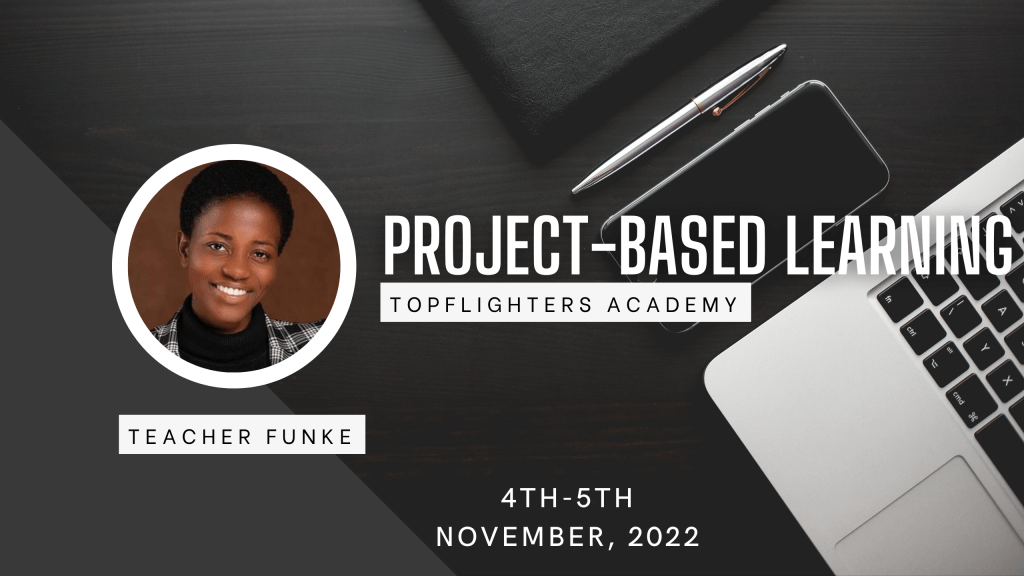
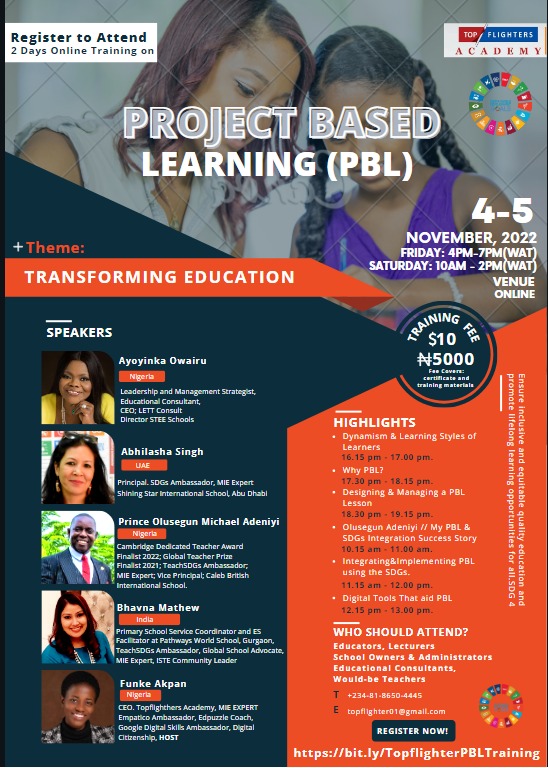
This is one of the reasons why PBL training is a must for everyone in the educational system.  if you are a teacher and don’t have the Project-Based Learning skill- set, you are likely to have this kind of situation in your class (although your learners might not speak up).

PBL  will help you teach content and also success skills (life skills).

PBL is an instructional approach that combines all other teaching methods, and can also be used to address all learning styles and impact them interestingly and engagingly. 

LISTEN TO THE SNEAK PEEK FROM SOME OF OUR GUEST SPEAKERS ABOUT THE TRAINING AND HOW ATTENDING THE SESSIONS CAN HELP YOU TO HAVE AN ENGAGING AND EXCITING LESSON

WHAT ARE YOU STILL WAITING FOR? REGISTER NOW TO EQUIP YOURSELF WITH 21ST-CENTURY TEACHING AND LEARNING SKILLS! https://bit.ly/TopflighterPBLTraining

For more enquiries, you can contact us via e-mail topflightersacademy@gmail.com , WHATSAPP: +2348186504445

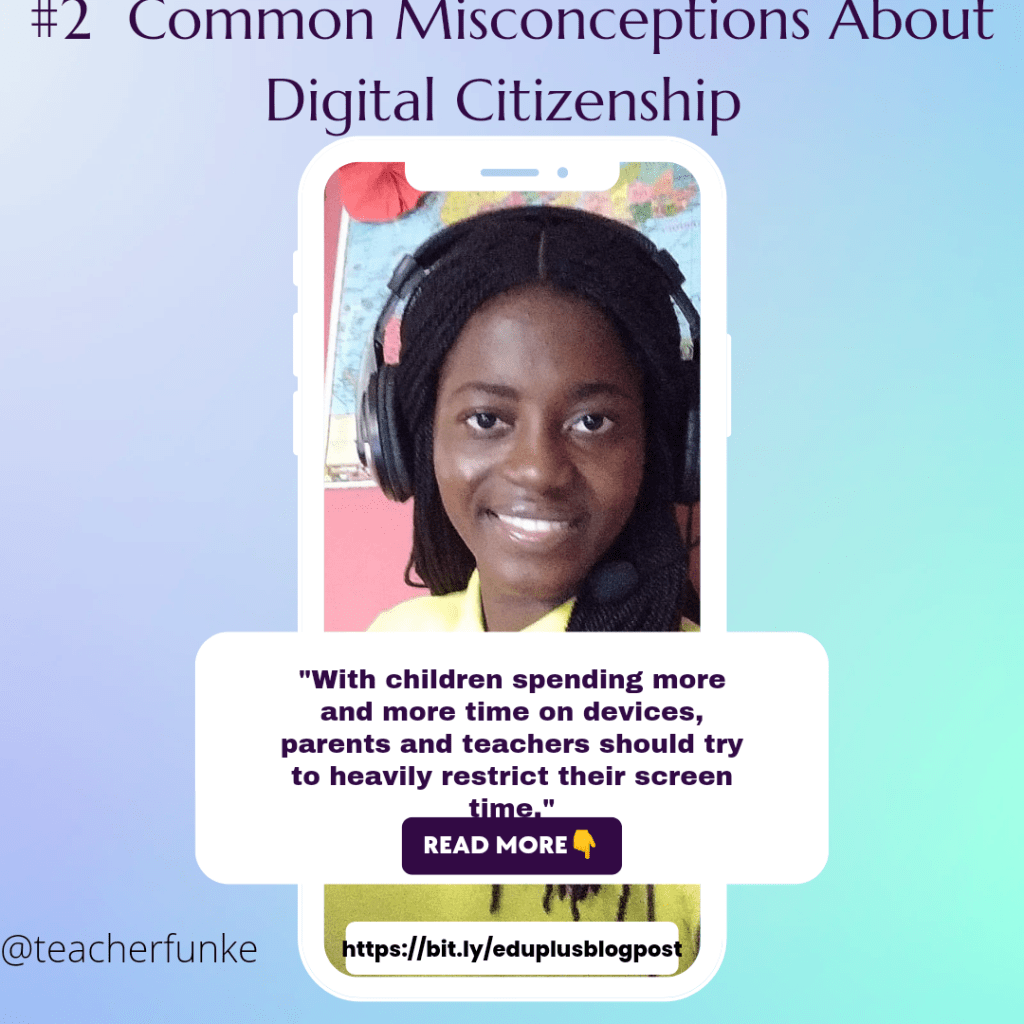
#2 Common Misconceptions About Digital Citizenship

With children spending more and more time on devices, parents and teachers should try to heavily restrict their screen time.”

Parents who heavily restrict their children’s access to the internet tend to have children who experience reduced exposure to risk, but also get fewer opportunities for learning and engagement. 
Outright ban of activities, such as using social media or playing video games, can have consequences for young people, who may feel cut off from their peers or unable to access information and support.

Recognise that media use is no longer an optional extra and that ‘screen time’ is not an inevitably problematic activity. 

Parents and teachers can achieve a balance with their children or students by educating them and making them involved in the process of media use. Adults need to model digital well-being so that young people have something to fall back on.

Research says:
What you can do?
Move beyond ‘screen-time’ as a basis for guidance and help parents and children recognise the difference between problematic, normal and beneficial use.

Culled from the article: 5 Common Misconceptions About Digital Citizenship

This is the end of this series!

Thanks greatly for your time.

Teacher Funke Akpan

#1 Common Misconceptions About Digital Citizenship

If it’s on the web, then it must be true!

One of the elements of digital citizenship is “Digital Literacy”.

Digital Literacy is the knowledge and skills required to differentiate between real and fake contents and how to manage the information on the web.

Not every information on the internet is real and fake on the same time.

More so, not all websites or URL is worth visiting.

Teachers and students need to learn how to use their time on the web judiciously on the web and also how to get the right content.

Digital literacy helps to know what content to avoid in order to live a balanced life void of inappropriate behaviours and actions.

#3 Misconceptions About Digital Citizenship

3 Misconceptions About Digital Citizenship

Parents and teachers need to decide what content and websites have to be restricted for their children.

“Not involving children in making decisions can be a missed opportunity to build a sense of trust and ownership over media use within the family.”

Go beyond giving the message to parents that their main responsibility is to limit and control.

Encourage them to use their digital expertise to engage with their children, and not to police them.

Teachers can also engage students in discussions about media use, help them understand the issues and take part in making these choices.

Context-specific rules (e.g no phones at the table) are harder to enforce than activity constraints(e.g no Snapchat).
Activity constraints are restrictive. Although they reduce a child’s access to certain sites, they do not educate them on how to engage with technology.

Use a balanced approach. Combine activity constraints. For example, employ technical restrictions to ban some websites on school WiFi with active and enabling approaches like engaging students in a discussion about their digital behaviour.

#culled from #5 Common Misconceptions About Digital Citizenship

#4 Common Misconceptions About Digital Citizenship

4 Misconceptions About Digital Citizenship

“Research prescribes a specific number of screen hours for different age groups.”

There is no one-size-fits-all approach. Lack of evidence had meant that experts have found it hard to recommend a cut-off for children’s screen time.

Parents and teachers should adjust their strategies with the age, interests and needs of their children, remembering that they need support and encouragement across the full age range, from infants to older teenagers.

What you can do?

Move beyond ‘screen-time’ as a basis for guidance and help parents and children recognise the difference between problematic, normal and beneficial use.

copied

digitalcitizenship #sdg4 #digitalcitizens #21stcenturyteacher # teacherfunke

#5 Misconceptions about Digital Citizenship

One of the common misconceptions about digital citizenship or the right use of technology in this age is that, parents’ and teachers’ digital skills are inconsequential when it comes to managing their children’s media balance.

This statement is not true in the sense that a parent who is digitally- skilled will be confident to be a guide to children on the correct usage of technology, hence, helping them to model the right use. On the flip side, a parent who isn’t skilled will hinder or stop children from being engaged digitally and also learning the right behaviour online.

As educators, we should not be intimidated by technology but embrace it.
When we embrace this new normal, it will make our work easier and easy to connect with the learners in our class.

Some of the students in our classrooms have the technical know how of some digital tools which can promote and enhance learning. A teacher who is flexible, teachable and a lifelong learner should be ready to learn from anyone including his or her learners.

Parents’ and teachers’ digital skills are inconsequential when it comes to managing their children’s media balance.

*Digitally -skilled parents are more likely to be confident mediating their children’s internet use, no matter what tactic they adopt.

As teachers, the same rule applies to you too. Do not be intimidated by technology. Build your own digital skills and gain confidence in facilitating your students to become responsible digital citizens. Encourage parents to do the same!
*

Note: Quote gotten from the Web.

Teacher Funke Akpan
©2022

internetsafetymonth #teacherofgenz #genz #genalpha #teacherfunke #viral #education #nigeriateacher #miee

Social and Emotional Learning in the Classroom

A must read!

Teacher Funke Akpan's avatarEduPlus

The month of May is #MentalAawrenessDay.

Enjoy this Article on the Benefits of SEL in the Classroom.

What is Social and Emotional Learning?

We live in a time where the increase in crime rate, depression, suicide and suicidal thoughts, bullying, and theft are common among young people. The advent of technology especially after the new normal (COVID-19) brought an increase in crime rates among young ones based on the fact there is economic change; some of their parents lost their jobs which reduce their standard of living, and the introduction of mobile phones without adequate parental control and the less presence/ supervision of an adult in the community.

Social and Emotional Learning is the process through which young people learn and acquire the skills need to succeed academically and in life. SEL helps young people to recognize their emotions, thoughts and feelings and how it relates to other people and…

View original post 1,049 more words