3 Misconceptions About Digital Citizenship
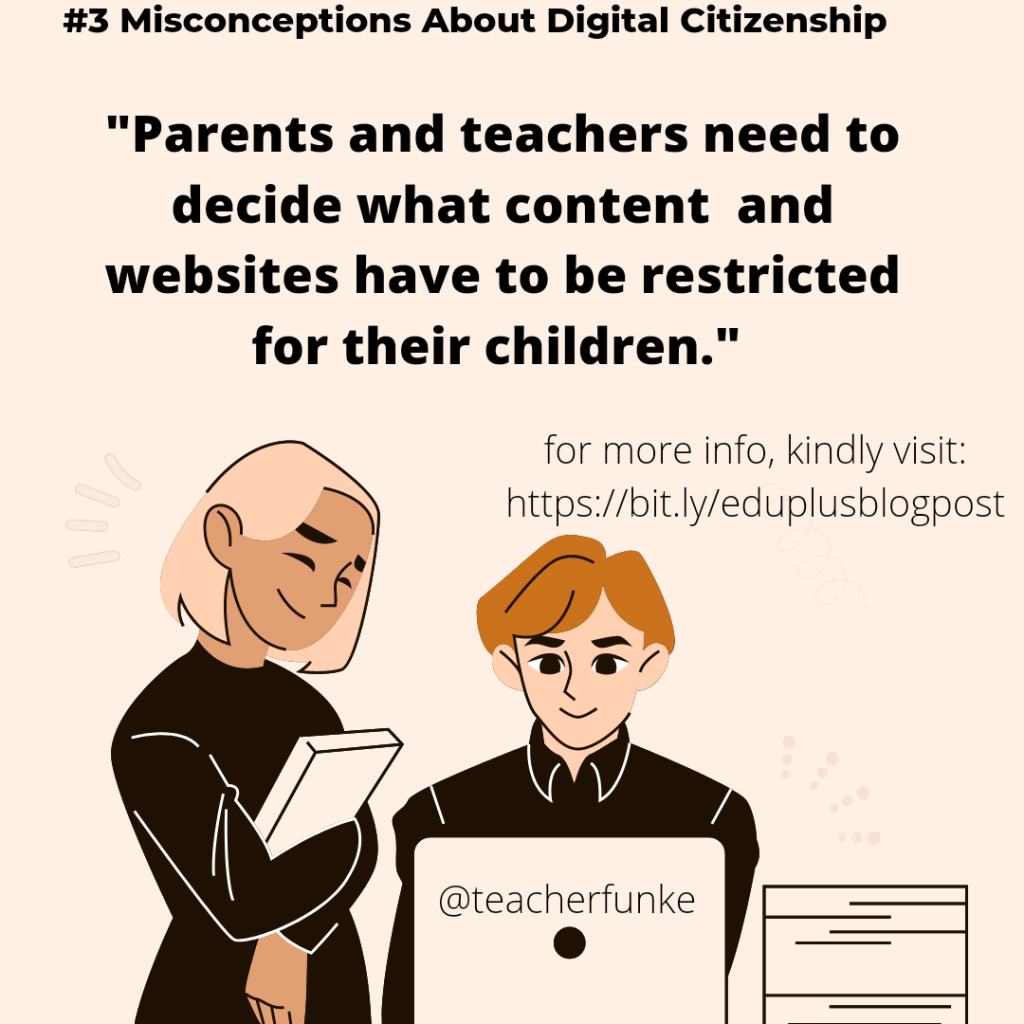
“Parents and teachers need to decide what content and websites have to be restricted for their children.“
“Not involving children in making decisions can be a missed opportunity to build a sense of trust and ownership over media use within the family.”
Go beyond giving the message to parents that their main responsibility is to limit and control.
Encourage them to use their digital expertise to engage with their children, and not to police them.
Teachers can also engage students in discussions about media use, help them understand the issues and take part in making these choices.
Context-specific rules (e.g no phones at the table) are harder to enforce than activity constraints(e.g no Snapchat).
Activity constraints are restrictive. Although they reduce a child’s access to certain sites, they do not educate them on how to engage with technology.
Use a balanced approach. Combine activity constraints. For example, employ technical restrictions to ban some websites on school WiFi with active and enabling approaches like engaging students in a discussion about their digital behaviour.
#culled from #5 Common Misconceptions About Digital Citizenship
 EduPlus