Get ready to unlock the future of education! We’re thrilled to offer you an exclusive opportunity to participate in our 14-day Virtual Reality (VR) and Augmented Reality (AR) Classroom Experience.
🔐 Subscriber Access: Secure your spot now by subscribing to our newsletter! Exclusive access to this transformative learning experience awaits. Click https://forms.gle/181hHWG84KD29dKAA to subscribe and join us on this immersive educational journey.
FAQs:
Q: Who can participate in this program? A: This program is open to educators, school administrators, and anyone passionate about leveraging technology in education.
Q: What equipment is required? A: A compatible device and internet access are recommended for optimal participation.
Q: Will there be ongoing support during the program? A: Absolutely! Our dedicated support team will be available to assist with any queries or technical assistance throughout the 14-day program.
Got questions? We’re here to help! Reach out to our dedicated support team for any queries or assistance.
Don’t miss out on this opportunity to revolutionize your teaching or learning methods. Subscribe today and be at the forefront of educational innovation!
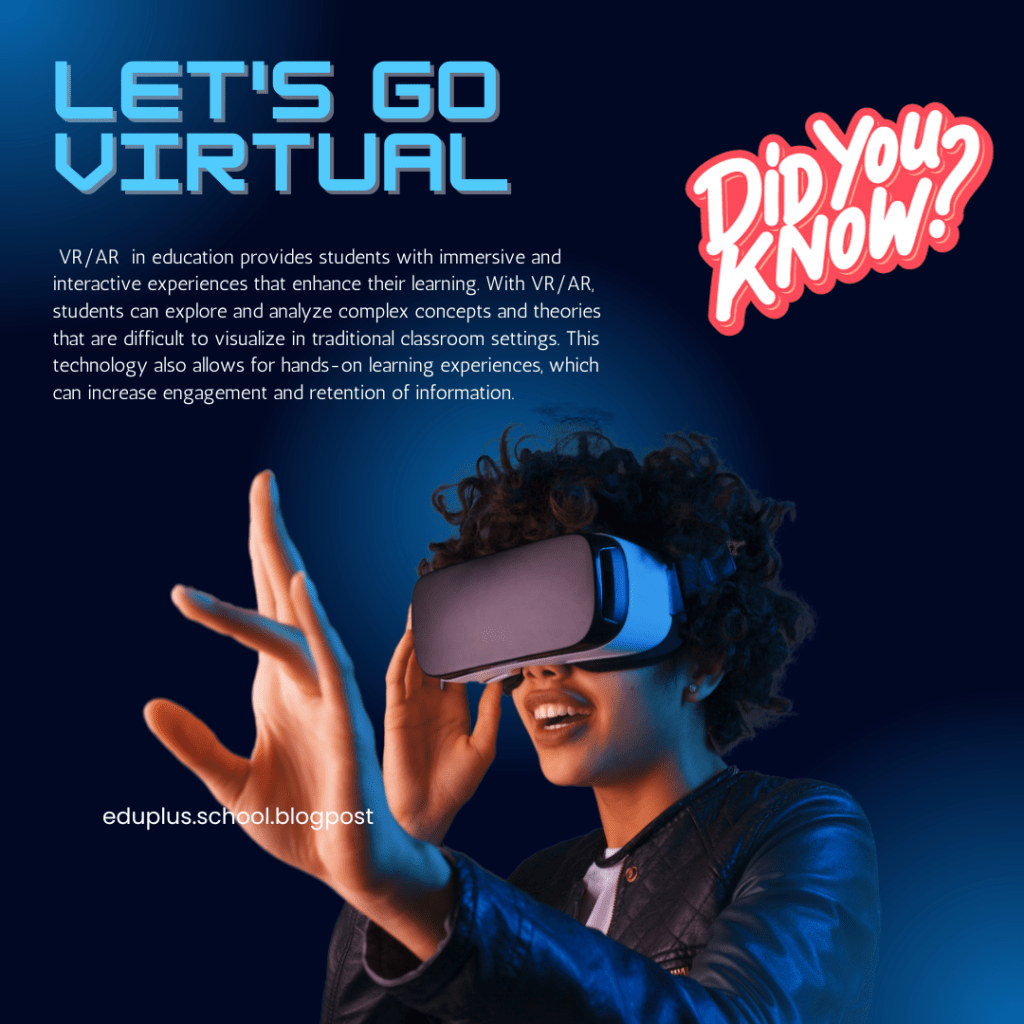
In recent years, the landscape of education has been profoundly transformed by technological innovations. Among these advancements, extended reality, often referred to as XR, has emerged as a powerful tool to revolutionize the way we learn and interact with educational content. Within XR, three distinct categories stand out: Virtual Reality (VR), Augmented Reality (AR), and Mixed Reality (MR). In this blog post, we will delve into the history and evolution of extended reality, explore the meanings and differences between VR, AR, and MR, and weigh the pros and cons of these technologies in education. Additionally, we will discuss the compelling reasons to embrace VR and AR as invaluable assets in modern educational settings.
History and Evolution of Extended Reality
The concept of extended reality can be traced back to the 18th century, but it has gained significant traction in recent decades. Extended reality refers to a spectrum of technologies that extend, augment, or enhance the way we perceive and interact with the physical and digital worlds. It encompasses three main categories: Virtual Reality (VR), Augmented Reality (AR), and Mixed Reality (MR).
The history and evolution of XR
Understanding Virtual Reality, Augmented Reality, and Mixed Reality
Virtual Reality (VR): VR immerses users in a fully digital environment, completely detached from the physical world. Users wear headsets that provide a 360-degree view of a computer-generated environment, allowing them to explore and interact within this synthetic space.
Augmented Reality (AR): AR overlays digital elements onto the real world. This can be achieved through smartphone screens, glasses, or headsets. Users can see both physical and digital objects simultaneously, enhancing their real-world experiences with additional information or virtual objects.
Mixed Reality (MR): MR combines elements of both VR and AR. In MR, digital objects interact with the physical environment in real-time. Users can interact with and manipulate virtual objects in their real-world context.
Microsoft Mesh is an example of Mixed Reality using the Hololens.
Differences Between VR and AR
The primary distinction between VR and AR lies in their level of immersion. VR provides a fully immersive digital experience, whereas AR overlays digital content onto the real world while maintaining a connection to the physical environment. Both technologies have unique use cases and benefits.
Pros and Cons of VR and AR in Education
Pros:
Immersive Learning: VR allows students to immerse themselves in virtual environments, making abstract concepts tangible and increasing engagement and retention.
Real-World Applications: AR can be used to enhance practical learning, such as medical training, by overlaying instructions and data onto real-life scenarios.
Customized Learning: Both VR and AR can adapt content to individual learning styles and paces, catering to diverse educational needs.
Accessibility: Students can access immersive educational content from anywhere, reducing geographical barriers and enhancing inclusivity.
Interactive Collaboration: MR enables collaborative learning experiences, where students interact with both digital and physical components, promoting teamwork and problem-solving skills.
Cons:
Cost: High-quality VR and AR hardware can be expensive, which may limit access for some educational institutions.
Learning Curve: Teachers and students may require training to effectively use VR and AR tools.
Distraction: Overuse or misuse of immersive technologies can lead to distractions and reduce the focus on educational goals.
Reasons to Embrace VR and AR in Education
Enhanced Engagement: VR and AR make learning more engaging, stimulating, and memorable. Complex or abstract topics become easier to grasp when presented in a visually interactive manner.
Hands-On Learning: These technologies provide hands-on experiences that are otherwise difficult or expensive to replicate in the real world, allowing students to experiment and learn in a safe environment.
Global Learning: VR and AR enable students to connect with peers and experts worldwide, facilitating global collaboration and cultural exchange.
Innovative Teaching Methods: Educators can use VR and AR to adopt innovative teaching methods, such as virtual field trips, 3D models, and simulations.
Future-Ready Skills: Preparing students for the digital age, where VR and AR are increasingly relevant, ensures they acquire skills that are valuable in many industries.
In conclusion, Extended Reality, including VR and AR, has the potential to redefine education. It offers an immersive and interactive approach to learning, making education more engaging, accessible, and relevant to the evolving needs of students in the 21st century. As these technologies continue to advance and become more accessible, their role in education is poised to become the new normal, transforming the way we teach and learn. Embracing VR and AR in education is not just about adopting a trend; it’s about preparing students for the future and empowering them with the skills and knowledge they need to succeed in an increasingly digital world.
Do you wish to infuse VR/AR in your classroom or school, you can reach out to me here: funkeakpan79@gmail.com or send a WhatsApp message to +2348186504445
Thank you for reading! Kindly leave a comment if you find this fascinating!
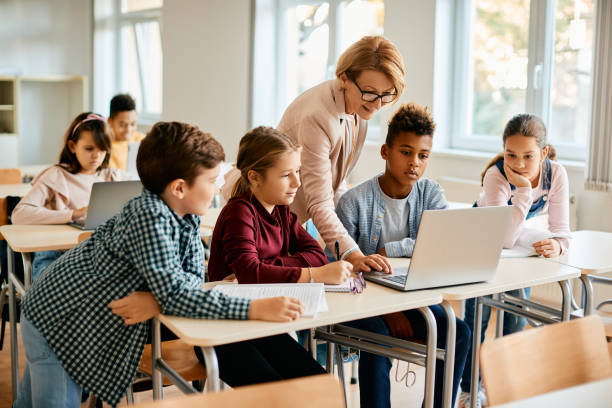
Elementary teacher and her students using laptop during computer class at school.
Empowering Learners for the Future Through Based Learning
As we step into an increasingly interconnected and technology-driven world, it becomes vital for educators to prepare their learners for the challenges and opportunities of the future. One of the most effective ways to achieve this goal is by embracing various forms of based learning in the classroom. Based learning approaches, such as game-based learning, connection-based learning, and flipped learning, have proven to be transformative in education, fostering engagement, critical thinking, and creativity among students.
1. Game-Based Learning: Game-based learning leverages gamification principles to make the learning experience more interactive and enjoyable. By integrating educational content into games, teachers can engage learners in problem-solving, decision-making, and skill development while keeping them motivated and focused. The element of competition, achievement, and rewards in games makes the learning process more appealing, leading to better retention and understanding of the subject matter.
Through game-based learning, students can explore complex concepts, experiment with different strategies, and learn from both successes and failures. This approach enhances their problem-solving abilities and encourages a growth mindset where they embrace challenges as opportunities for growth. Additionally, game-based learning can foster collaboration and teamwork as students often work together to achieve common goals within the games.
2. Connection-Based Learning: Connection-based learning emphasizes building meaningful connections between learners, educators, and the outside world. It recognizes the value of networks and collaborative learning environments in today’s interconnected society. By utilizing technology and social platforms, teachers can create opportunities for students to interact with experts, professionals, and other learners worldwide, exposing them to diverse perspectives and experiences.
Through connection-based learning, learners gain real-world insights, improve their communication skills, and develop a global awareness that is crucial in the modern workforce. The connections made during this learning process can open doors to future opportunities, such as mentorships, internships, and even career prospects. Moreover, learners develop empathy and a sense of belonging as they interact with people from different backgrounds and cultures, fostering a more inclusive and compassionate society.
A Lesson Done With Connection Based Learning
3. Flipped Learning: Flipped learning reverses the traditional classroom model, where students learn new concepts at home through pre-recorded videos or readings and engage in active discussions, problem-solving, and application of knowledge during class time. This approach allows students to learn at their own pace, giving them the flexibility to review and grasp difficult concepts before the in-person sessions.
Flipped learning promotes student autonomy and responsibility for their education, encouraging them to take ownership of their learning journey. It also allows teachers to personalize instruction based on individual needs and interests, leading to more profound learning outcomes. During in-class activities, educators can facilitate collaborative projects, critical thinking exercises, and hands-on experiences, maximizing the benefits of face-to-face interactions.
An example of a flipped lesson!
Video Response From a Pupil
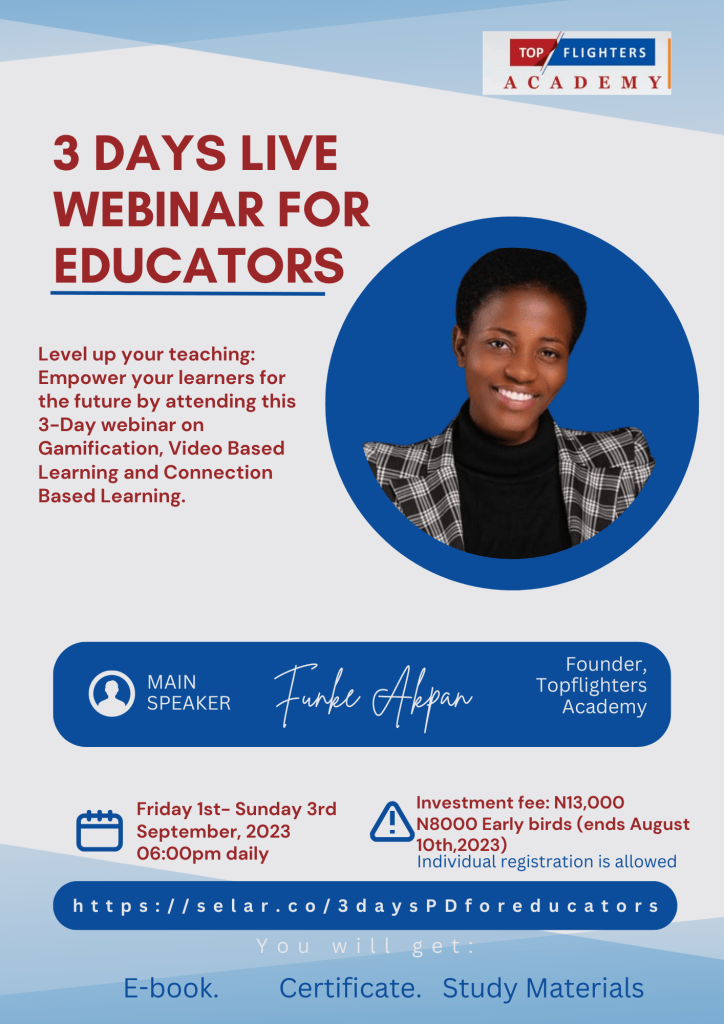
Participate in the Forthcoming Webinar:
To empower educators with knowledge and skills in embracing these based learning approaches, we are excited to announce our upcoming webinar on “Empowering Learners for the Future: Embracing Game-Based Learning, Connection-Based Learning, and Flipped Learning in the Classroom.”
During this webinar, expert speaker will delve into the principles and implementation strategies of each based learning approach. She will share successful case studies, practical tips, and resources to help teachers integrate these methods seamlessly into their classrooms.
Webinar Highlights:
Game-Based Learning: Strategies for incorporating games into the curriculum, selecting appropriate educational games, and assessing learning outcomes.
Connection-Based Learning: Building and nurturing connections within and beyond the classroom, leveraging technology for global collaboration, and facilitating virtual guest speakers.
Flipped Learning: Creating engaging and informative pre-recorded content, designing effective in-class activities, and personalized instruction techniques.
Webinar Benefits: All participants will receive the following as appreciation for their active participation:
An exclusive e-book on Based Learning Strategies for the Future Classroom.
A Professional Development (PD) certificate that can be added to their LinkedIn profile, showcasing their commitment to advancing education.
Access to valuable study materials and resources to aid their continued professional growth.
Don’t miss this fantastic opportunity to upgrade your teaching methodologies and empower your learners for the challenges of tomorrow. Register now for the webinar using the following link:
Teaching is a noble profession that extends far beyond the boundaries of a mere job. It requires a deep passion for learning, a genuine desire to make a positive impact on young minds, and a commitment to shaping the future generation. Being a teacher is a calling, a vocation that goes beyond the classroom walls.
Below are some tips on how you can fully embrace this calling and make a lasting difference in the lives of your students.
A. Cultivate a Growth Mindset: Embracing teaching as a calling begins with a mindset that recognizes the potential for growth in both students and oneself. Believe that every child has unique abilities and gifts waiting to be nurtured. Continuously seek opportunities to learn and grow as an educator, exploring new teaching strategies, attending professional development workshops, and engaging in reflective practices. Remember, the more you learn, the better equipped you’ll be to inspire your students.
B. Build Meaningful Relationships: Education is not just about imparting knowledge; it’s about building meaningful connections with your students. Take the time to understand their interests, strengths, and challenges. Show genuine care and empathy, and be a source of support for their emotional well-being. By creating a safe and inclusive environment, you’ll foster a sense of belonging that allows students to thrive academically and personally.
C. Inspire a Love for Learning: Encourage curiosity and a thirst for knowledge in your students. Spark their imagination by making your lessons engaging, relevant, and interactive. Incorporate real-world examples and encourage critical thinking. Celebrate their achievements and provide constructive feedback to fuel their growth. By instilling a love for learning, you’ll ignite a lifelong passion for education.
D. Adapt to Individual Needs: Recognize that each student is unique, with different learning styles and abilities. Tailor your teaching approach to meet individual needs, differentiating instruction to accommodate diverse learners. Be flexible and open-minded, embracing the opportunity to adapt and modify your teaching strategies. This inclusive mindset ensures that every student receives the support necessary to reach their full potential.
E. Be a Lifelong Learner: Embrace the idea that teaching is a continuous journey of learning. Seek inspiration from other educators, collaborate with colleagues, and participate in professional learning communities. Stay informed about current educational research, trends, and best practices. A commitment to lifelong learning not only enhances your teaching skills but also models the importance of growth and development for your students.
F. Impact Lives Beyond Academics: As a teacher, you have the power to shape not only your students’ academic abilities but also their character and values. Instill in them a sense of empathy, respect, and responsibility. Teach them the importance of teamwork, perseverance, and resilience. Encourage them to become active members of their communities and advocates for positive change. Teach them to also love God and respect constituted authorities. By nurturing well-rounded individuals, you’re contributing to a better society.
G. Seek Support and Self-Care: Teaching is a demanding profession that requires physical and emotional energy. Remember to take care of yourself to avoid burnout. Seek support from colleagues, administrators, and professional networks. Prioritize self-care practices that rejuvenate your mind and body, such as exercise, hobbies, and spending time with loved ones. By taking care of yourself, you’ll be better equipped to provide the support and guidance your students need.Teaching is indeed a calling that requires dedication, passion, and a genuine love for the learning process. By embracing this calling and following these tips, you can create an educational experience that extends far beyond textbooks and exams. You have the power to inspire, empower, and shape the lives of your students, and
in
doing so, you contribute to the betterment of society as a whole. Remember, the impact of a teacher extends far beyond the confines of the classroom.
:H. Embrace Diversity and Inclusion: Create an inclusive classroom environment that celebrates diversity and promotes understanding among students. Respect and value cultural, racial, and socio-economic differences. Foster an environment where every student feels seen, heard, and appreciated. By embracing diversity, you’ll create a space where students learn to appreciate and respect one another, fostering a sense of unity and global citizenship.
I. Encourage Critical Thinking and Problem-Solving: Equip your students with the skills they need to navigate an ever-changing world. Encourage critical thinking, problem-solving, and creativity. Teach them to analyze information, question assumptions, and develop well-reasoned arguments. By fostering these skills, you empower your students to become active participants in society, capable of tackling complex challenges and making informed decisions.
J. Stay Engaged with Parents and Guardians: Recognize that education is a partnership between teachers, students, and parents or guardians. Actively engage parents in their child’s education by maintaining open lines of communication. Share regular updates on their child’s progress and involve them in decision-making processes. Collaborate on strategies that support their child’s learning and development. By working together, you create a strong support system that maximizes student success.
K. Promote a Love for Reading: Instill a love for reading by exposing your students to a wide range of literature and genres. Set aside dedicated time for independent reading and create a classroom library that reflects the diverse interests and backgrounds of your students. Encourage discussions and book clubs to foster a deeper understanding and appreciation of literature. By nurturing a love for reading, you open doors to endless possibilities and lifelong learning.
L. Lead by Example: As a teacher, you are not only an educator but also a role model. Demonstrate the qualities and values you hope to instill in your students. Model kindness, integrity, and perseverance. Show a passion for learning and a commitment to personal growth. By leading by example, you inspire your students to become their best selves and embrace their own calling to make a positive impact on the world.
In conclusion, teaching is more than just a job; it is a calling that requires dedication, passion, and continuous learning. By cultivating a growth mindset, building meaningful relationships, inspiring a love for learning, adapting to individual needs, impacting lives beyond academics, seeking support and self-care, embracing diversity and inclusion, encouraging critical thinking and problem-solving, staying engaged with parents or guardians, promoting a love for reading, and leading by example, teachers can fully embrace their calling and create a lasting impact on the lives of their students. Remember, you have the power to shape the future, one student at a time.
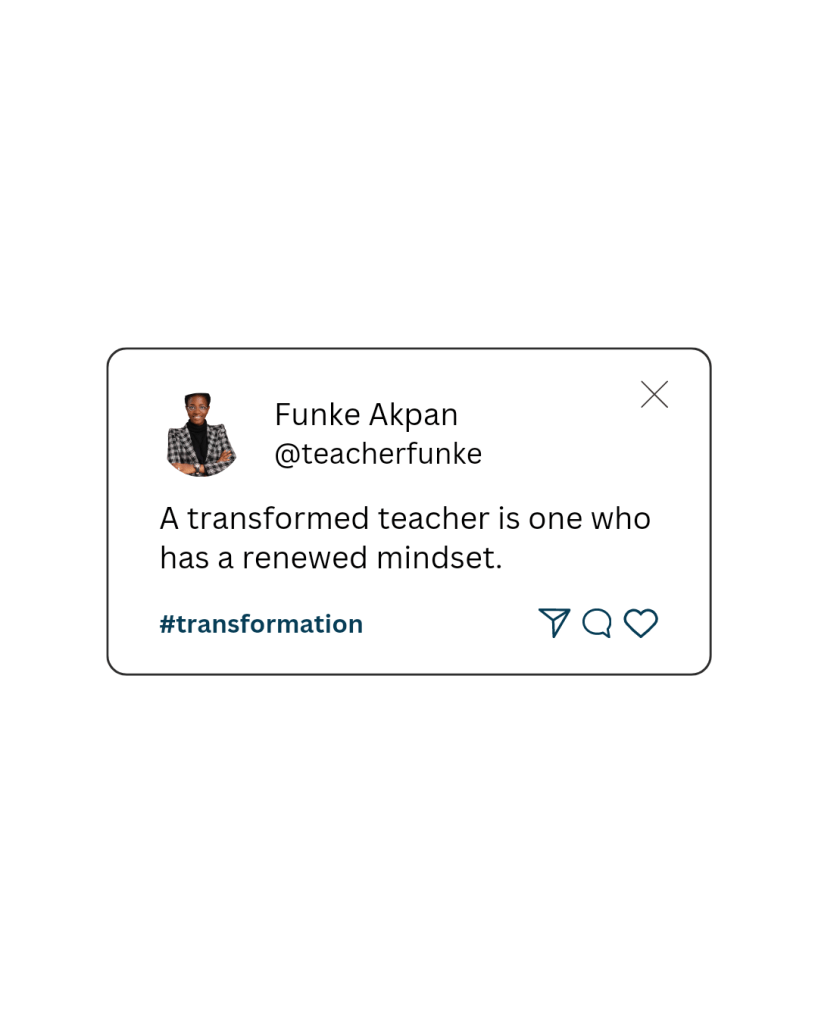
Teachers play a crucial role in shaping the future of our society by imparting knowledge and skills to our next generation. However, the quality of education and the effectiveness of teaching methods largely depend on the mindset and attitude of the teachers. To create a positive and effective learning environment, teachers need to renew their minds constantly. In this blog post, we will explore how teachers can be transformed by renewing their minds.
What is a Renewed Mindset?
A renewed mindset is a way of thinking that allows teachers to approach their work with a positive attitude and an open mind. It is a process of letting go of negative thoughts, beliefs, and attitudes that limit a teacher’s ability to perform to their fullest potential. When teachers renew their minds, they can develop a growth mindset and embrace challenges as opportunities for learning and growth. A renewed mindset can help teachers to be more creative, innovative, and effective in their teaching methods.
Ways to Renew a Teacher’s Mindset
Read Widely: Reading widely can expose teachers to new ideas, concepts, and perspectives. It can help them to stay up to date with the latest trends and research in their field of expertise. Reading can also improve a teacher’s communication skills and help them to better articulate their thoughts and ideas.
Attend Professional Development Workshops: Attending professional development workshops can help teachers to stay current with the latest teaching methods, technologies, and trends in education. It can also provide opportunities for teachers to network and collaborate with other professionals in their field.
Reflect on Teaching Practices: Teachers can renew their minds by reflecting on their teaching practices. They can analyze their teaching methods, strategies, and techniques to identify areas for improvement. Self-reflection can help teachers to become more self-aware and develop a growth mindset.
Embrace Change: Embracing change can be challenging, but it is essential for personal and professional growth. Teachers need to be open to new ideas, methods, and technologies that can improve their teaching practices. Embracing change can help teachers to stay relevant and adapt to the evolving needs of their students.
Foster Positive Relationships: Teachers can renew their minds by fostering positive relationships with their colleagues, students, and parents. Positive relationships can create a supportive and collaborative learning environment that can enhance the teaching and learning experience.
The Benefits of Renewing a Teacher’s Mindset
Renewing a teacher’s mindset can have numerous benefits for both the teacher and the students. A renewed mindset can help teachers to be more creative, innovative, and effective in their teaching practices. It can also improve their communication skills, boost their confidence, and enhance their overall job satisfaction. Students can benefit from a renewed teacher mindset by experiencing a positive and engaging learning environment that promotes growth and development.
In conclusion, teachers play a critical role in shaping the future of our society, and renewing their mindset is essential for their personal and professional growth. By reading widely, attending professional development workshops, reflecting on their teaching practices, embracing change, and fostering positive relationships, teachers can transform their teaching practices and create a positive and effective learning environment for their students.
HAVE YOU WATCHED THIS VIDEO ON HOW A STUDENT EMBARRASSED HIS TEACHER?
Children learn best when teachers teach from the heart.
Teaching is a work of art from the heart to the heart 🤍🤍🤍😁( This is already sounding like a rhyme 🤣🤣)
The young man in this video has poured his heart even though it’s not in the most advisable manner but truth be told, we need to stop teaching in ways that are boring to our learners.
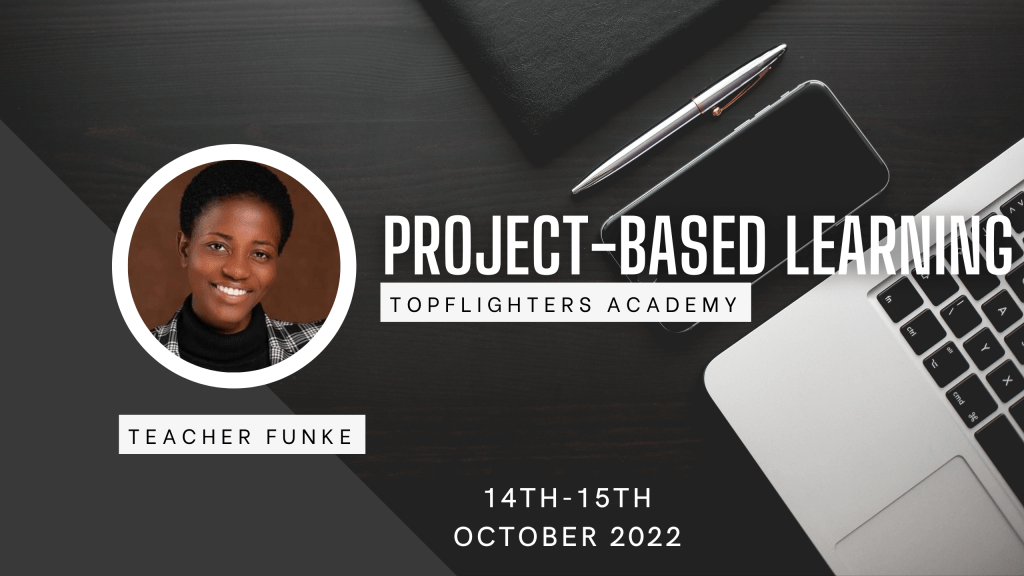
This is one of the reasons why PBL training is a must for everyone in the educational system. if you are a teacher and don’t have the Project-Based Learning skill- set, you are likely to have this kind of situation in your class (although your learners might not speak up).
PBL will help you teach content and also success skills (life skills).
PBL is an instructional approach that combines all other teaching methods, and can also be used to address all learning styles and impact them interestingly and engagingly.
LISTEN TO THE SNEAK PEEK FROM SOME OF OUR GUEST SPEAKERS ABOUT THE TRAINING AND HOW ATTENDING THE SESSIONS CAN HELP YOU TO HAVE AN ENGAGING AND EXCITING LESSON
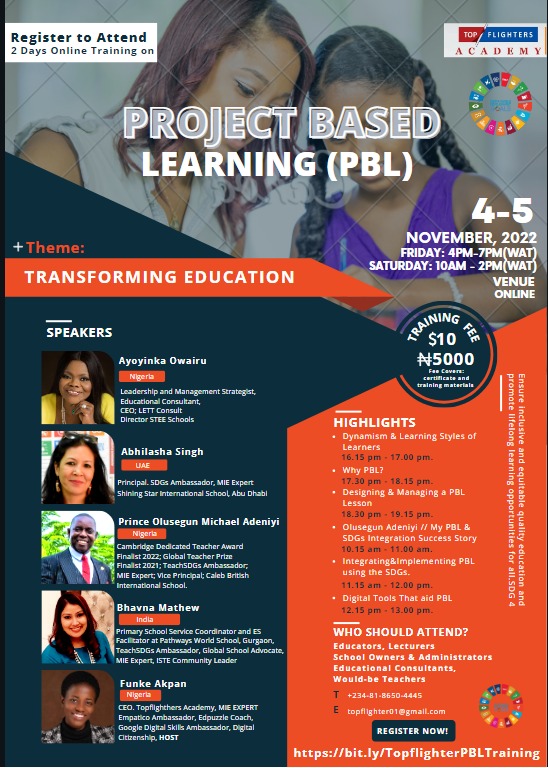
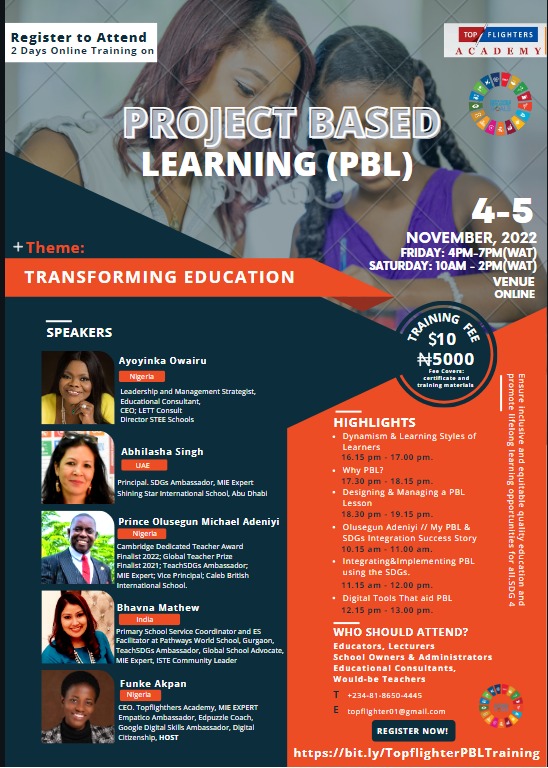
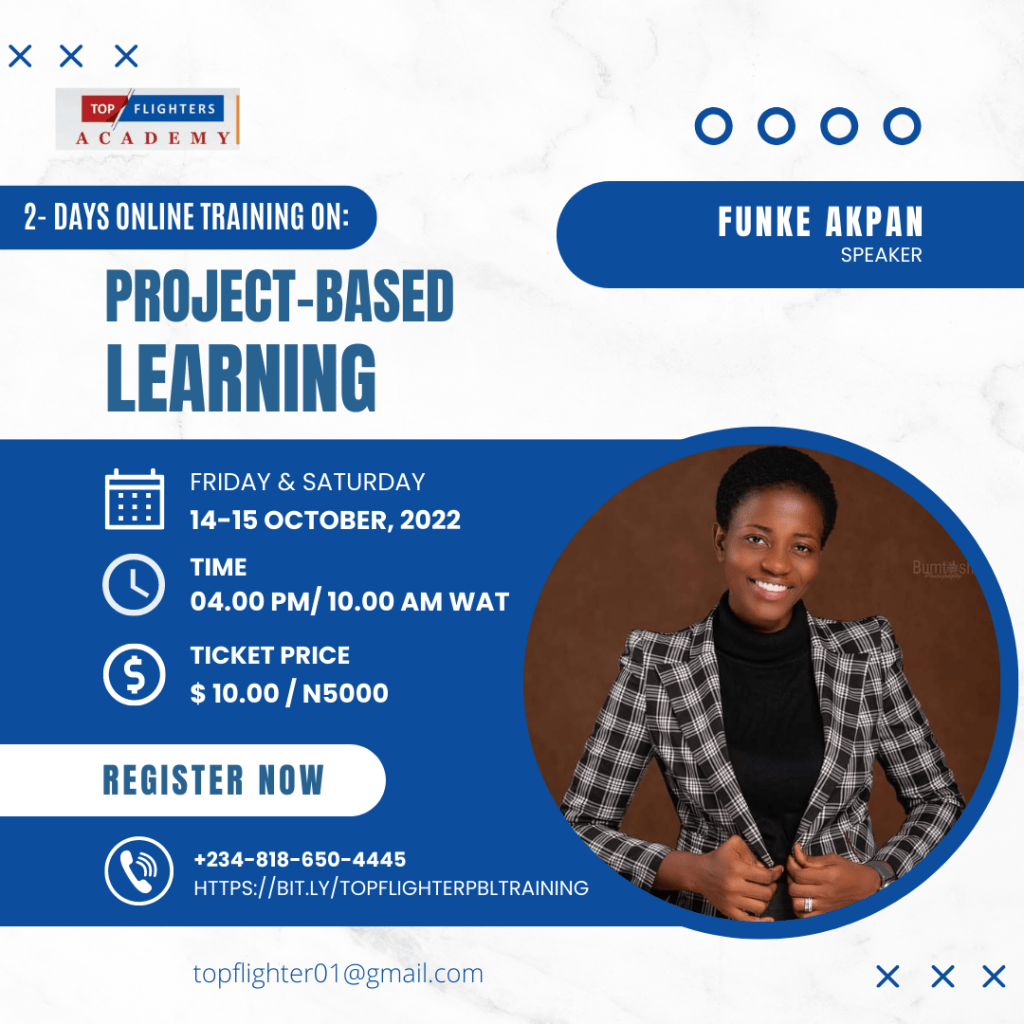
WHAT ARE YOU STILL WAITING FOR? REGISTER NOW TO EQUIP YOURSELF WITH 21ST-CENTURY TEACHING AND LEARNING SKILLS! https://bit.ly/TopflighterPBLTraining
For more enquiries, you can contact us via e-mail topflightersacademy@gmail.com , WHATSAPP: +2348186504445
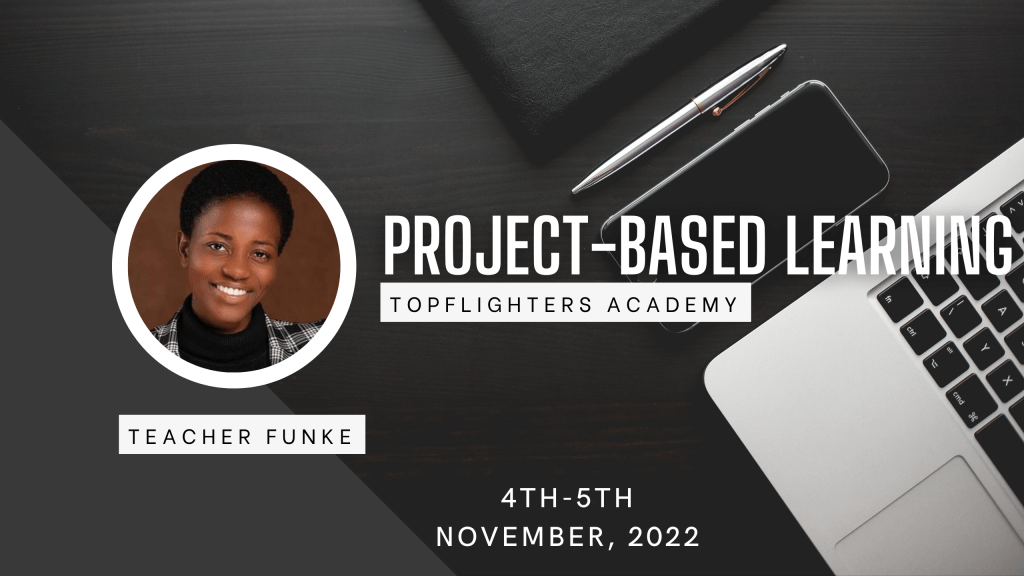
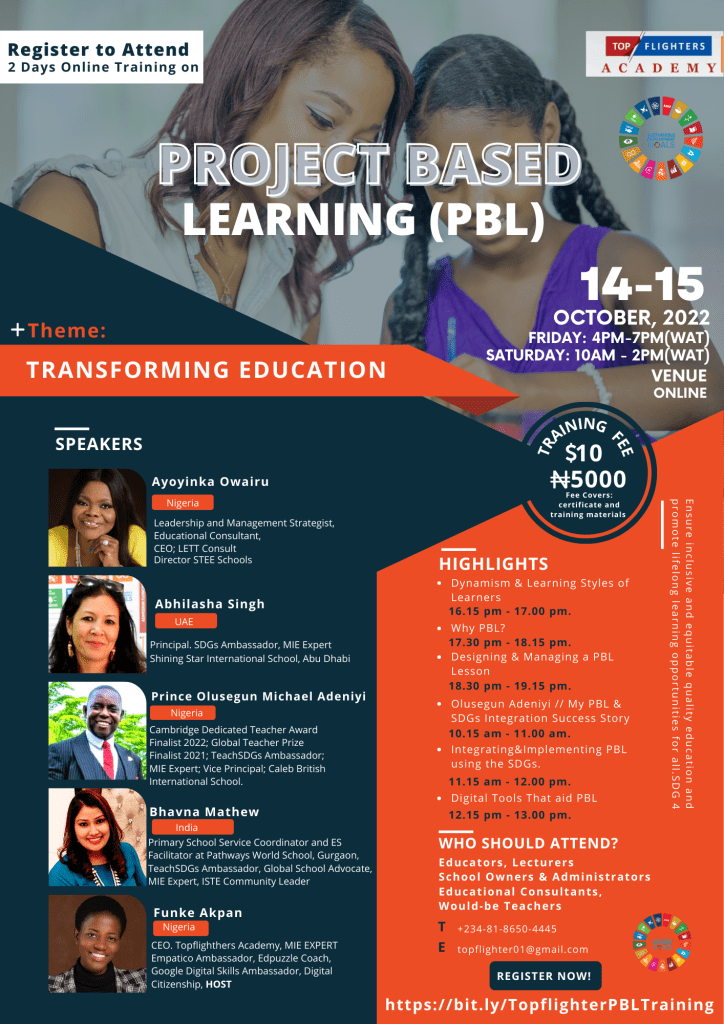
This Online Project-Based Training is organized by Topflighter Academy.
John Dewey once said, ‘If we teach today’s students as we taught yesterday’s, we rob them of tomorrow.’ The children of the 21st Century need not to be taught as children in the previous generations.
This training is aimed at equipping educators with the knowledge needed to make teaching fun, engaging and exciting to the learners. Project-Based Learning can’t be taken out of the classroom if we truly want to have an engaging class, hence the need to attend this online event.
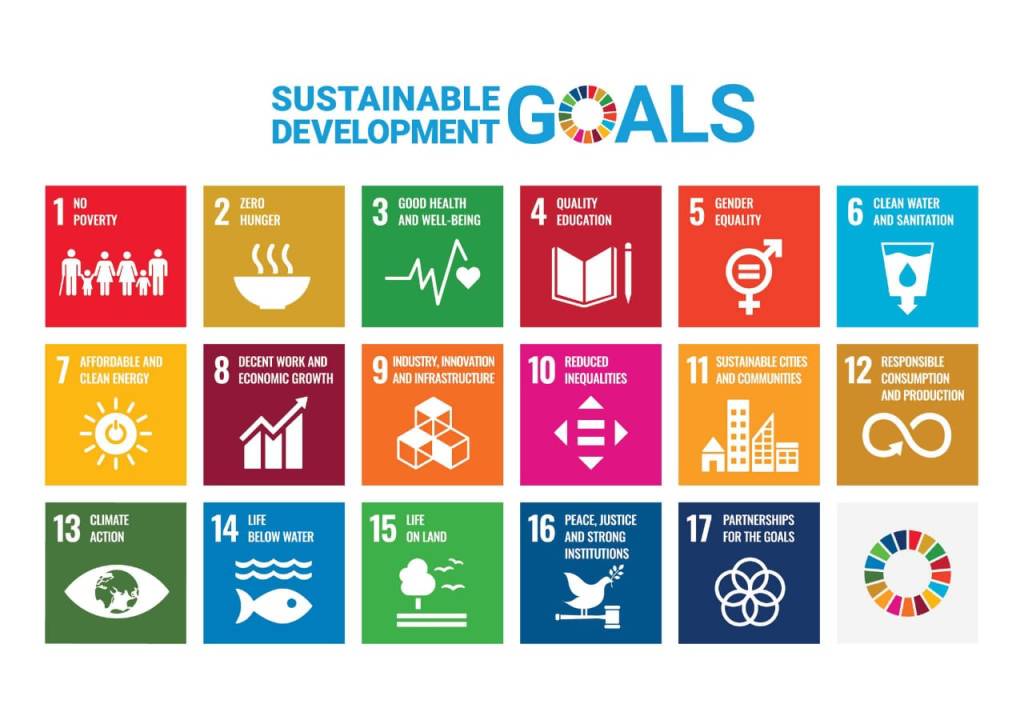
It is also expedient to note that the children of the 21st Century are global citizens and as such, their educators need to be equipped too with the needed knowledge and facilities. During this training, the UN SDGs will be fully discussed and highlighted in order to assist in the necessary knowledge to raise global citizens who will solve problems locally, globally and digitally.
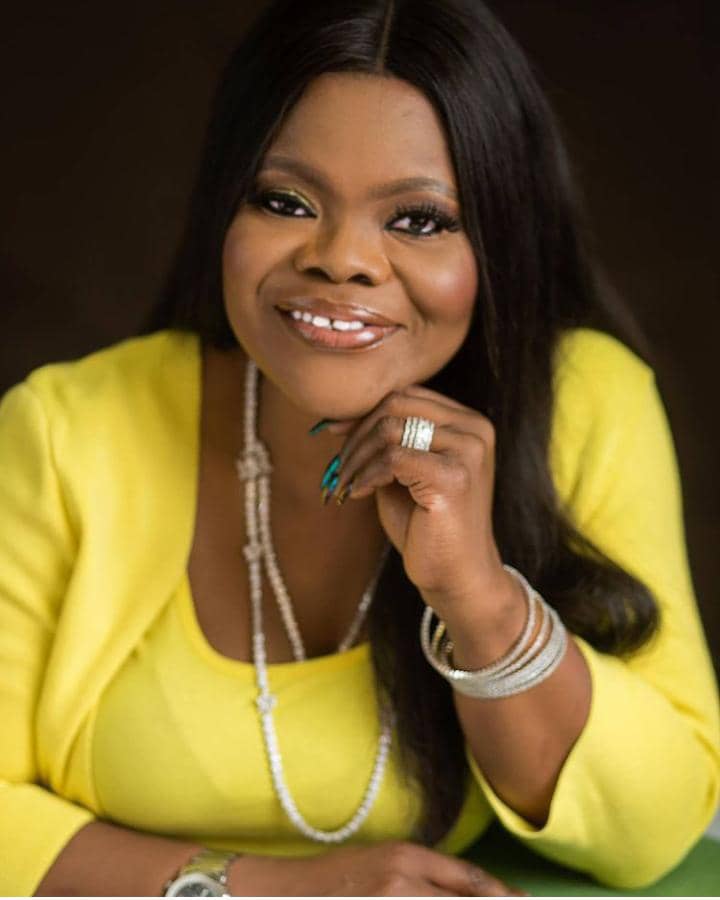
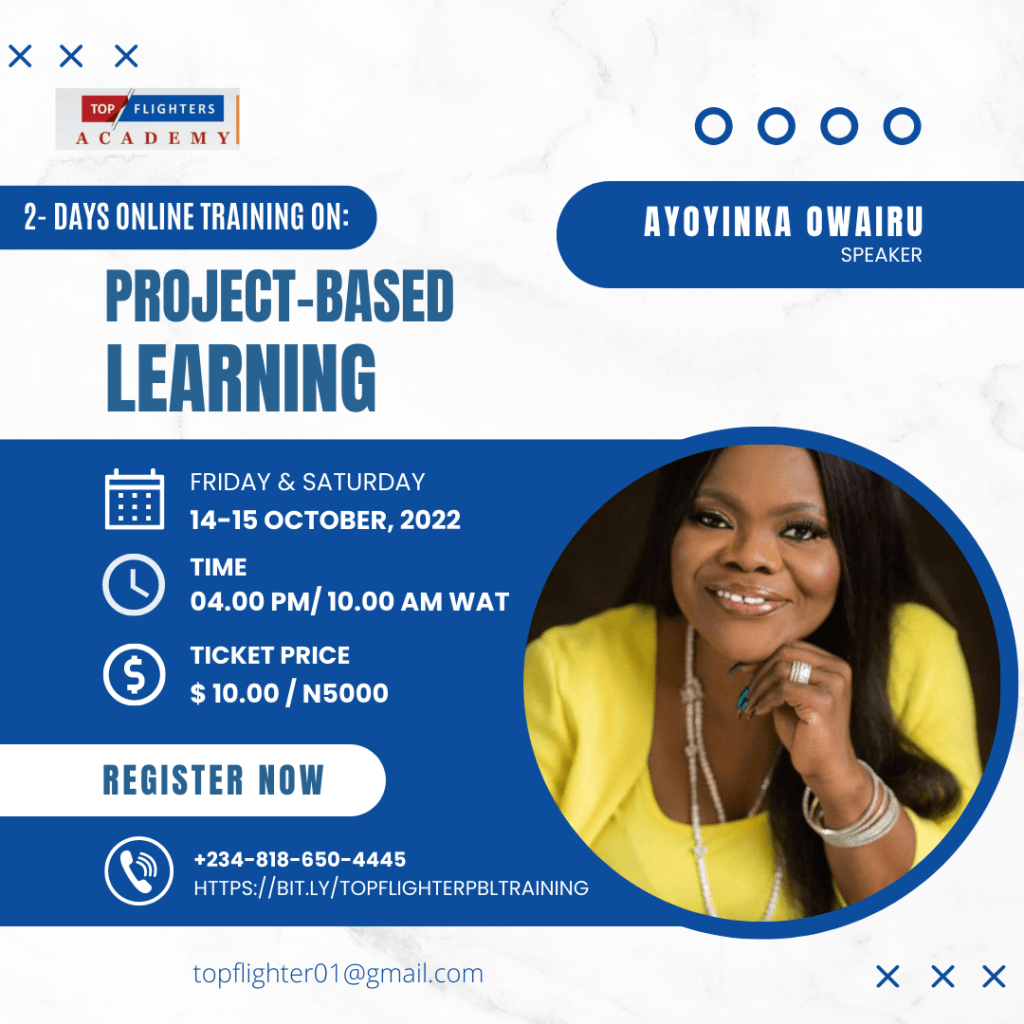
Strategic, with a bias for Administration, Leadership and Management especially in the educational sector.
Business Development, Organisational Structure, Systems, and Processes, are my forte and I have a passion and expertise for building effective high-performing teams and cultures that drive organisational growth.
I have been leading strategic initiatives, developing and promoting improvement strategies leading to raised standards, especially in the management and educational sector, developing business growth strategies and evaluating and reviewing best administrative and managerial practices for over 2 decades.
I have been consulting and training in the management and education sector for 16 years. I have over 20+ years of experience as a key decision-maker, policy maker and stakeholder with board-level credibility.
I am passionate about effectiveness and efficiency in the workplace and goal driven with doggedness for creating excellence in the workplace.
I have taught with top-level responsibilities which include, systems and structural definitions, design and implementation of programs to ensure delivery of organizational goals and targets and equipping and mentoring top-level staff. Creating an organisational structure that reflects corporate values and enables systems, structures and processes to work effectively in line with cultures and visions.
As an educationist, I am deft at the development and implementation of the broad and relevant curriculum both local and International which embraces the school specialisms I love developing strategic processes and benchmark systems to monitor progress, raise standards and ensure a continuous and consistent school-wide focus on student achievement and school standards.
As a business person when I am not training or directing operations, I am turning my passion for profiting at INHERBOX OUTLET, accessories and jewellery shop for women and the men that adore them.
With a strong desire and passion to raise champions when I am not working, I empower women and young men to become all they can be through my platforms Master Your Brilliance and KINSMEN.
I coach, train, equip, empower and mentor. Raising Standards and Creating Impact.
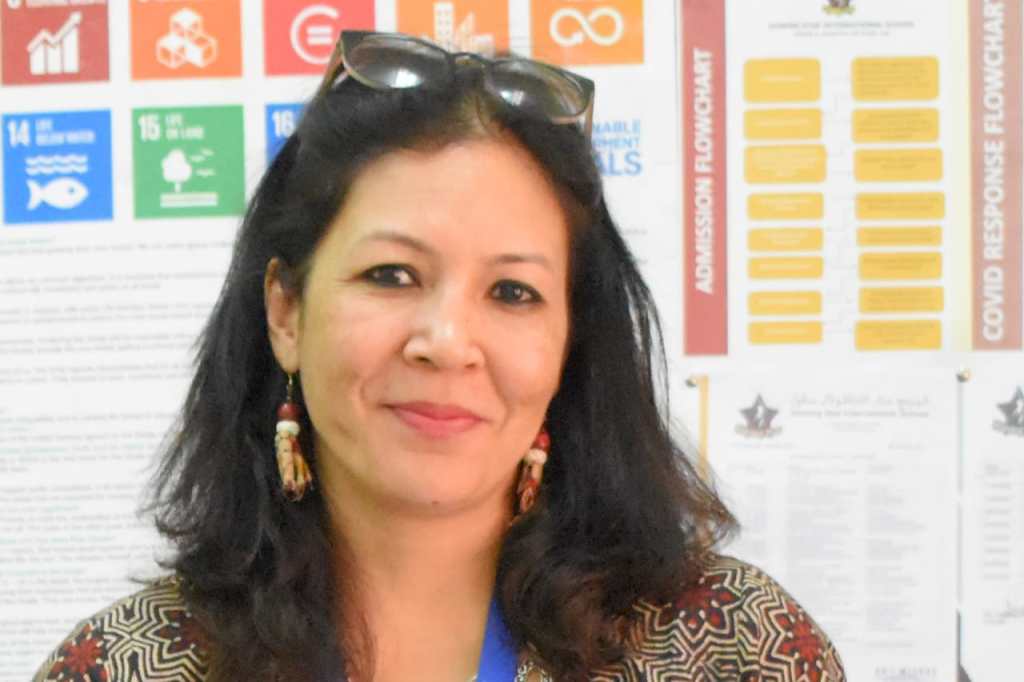
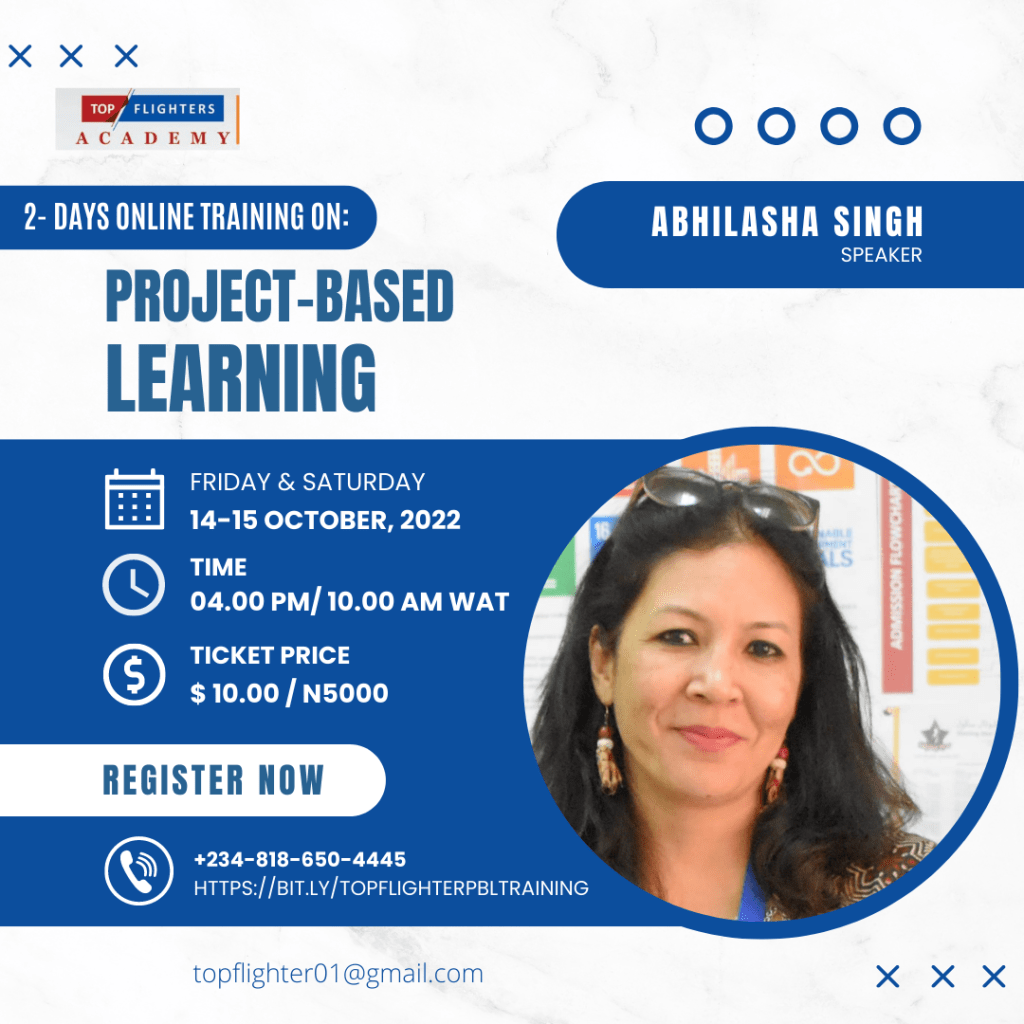
ABHILASHA SINGH
I am working as a Principal in Shining Star International School, Abu Dhabi -an Indian Curriculum school in UAE. I am an MIE Expert -Cohort selected by Microsoft Education. I Am UAE Ambassador and lead facilitator for the Climate Action Project 2020. As a Head of the institution, I drive change and set a growth mindset among staff and students through a visionary plan.
I am trained in International Inspection Skills and have earned the School Inspection Competency Certificate from Tribal Group, UK and an Internal Auditor from the International Center of Assessments Excellence. I am also the country Ambassador for T4 Education.
I also represent Dubai as an Ambassador for SDGs for Children, an international organization working to achieve Global Goals by initiating projects with school students. A TEDx and GESS Speaker, I am a national-level Handball and Basketball player. Now I train to run marathons and am an avid cyclist having participated in many open competitions.
I have had the honour of co-hosting the Microsoft Education Tweet Meet on Twitter in March and April’20. I was Project Amplifier for Take Action Project under Take Action Global, a 6 weeks duration international project connecting more than 1500 classrooms around the world celebrating the 75th year of UN and the collective responsibilities of individuals. This project is an initiative of Innovation Lab Schools- founded by Koen Timmers and Dr. Jennifer Williams. I recently was part of the backend team co-moderating the Facebook Live streaming Channel of the biggest online teachers’ conference called the T4 Education hosted by Mr. Vikas Pota. I am also the country Ambassador for T4 Education 2022-23. I represent UNA-UAE as Ambassador for SDGs.
I am on the Advisory Board of Alpha School of Life Skills, Mumbai. Connect Aid has recognized me as the Top 100 SDG influencers using social media to spread and take action for UN SDGs.
I have completed a Leadership and Management certificate from Harvard School of Education in collaboration with Harvard Business School in Leading Change, Leading Schools and Leading People. Awarded the Most Inspiring Leader 2020 by P Square International. Am pursuing M.Ed in Advanced Teaching from the University of the Peoples, USA and an Innovative Leader Award’21 from Ek Updesh, Delhi supported by Niti Aayog and Ministry of Aayush, FIT India, Ministry of Education UAE, Skill Indi- NSDC.
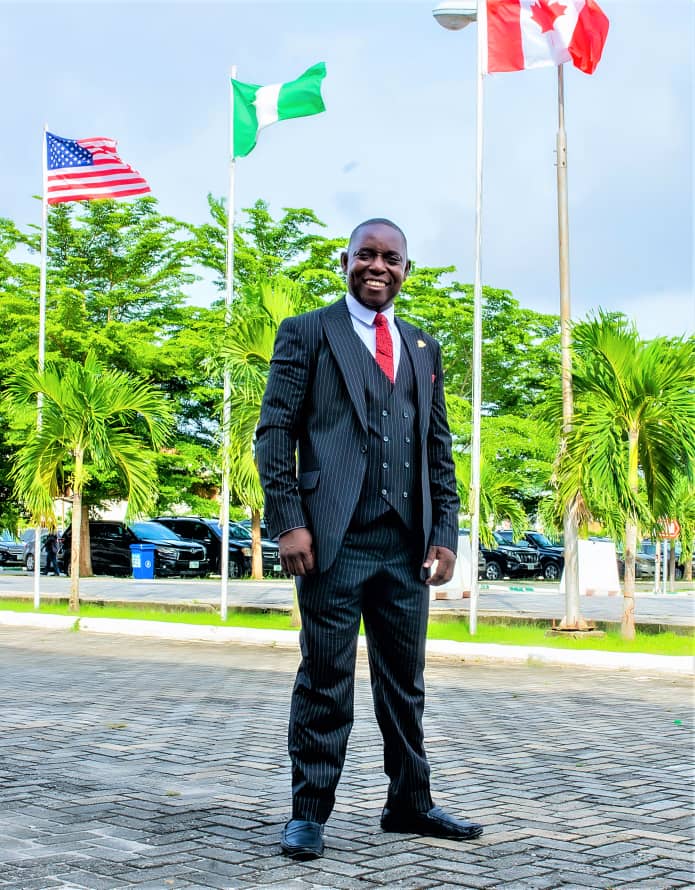
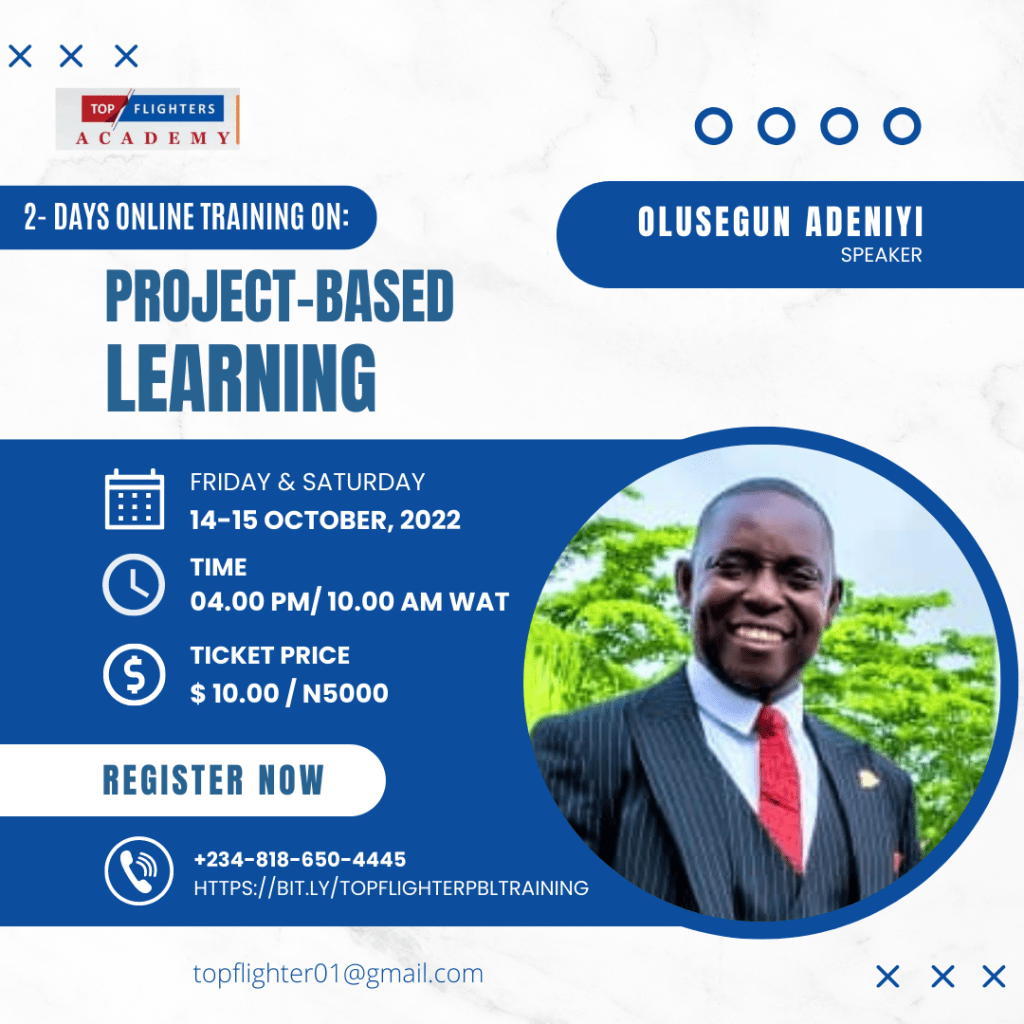
Prince Olusegun Michael Adeniyi
Prince Olusegun Adeniyi is a multi-award-winning Artist-cum-Art Educator. He possesses a genuine spirit of collaboration and has spent over two decades giving children access to the best, most stimulating and most-rewarding artistic engagements. He is passionate about the integration of SDGs in art lessons, most importantly, fostering holistic and inclusive education through STEAM. His projects have been novel and groundbreaking. He has a track record of successful achievements in the field of art education at both national and global levels, which include: Cambridge Dedicated Teacher Award 2022 Finalist; Global Teacher Prize 2021 Finalist; Lifetime Achievement Award (International Category), 2021 Green Difference Awards by Project Green School, USA; David Shepherd Award 2021, Global Canvas Art Competition by David Shepherd Wildlife Foundation (DSWF), London; President’s Teachers and School Excellence Award, 2019; Microsoft Certified Educator; Wakelet Ambassador/Community Leader; TeachSDGs Ambassador; MIE Expert/Trainer 2022/2023, to mention but a few. Prince Olusegun is committed to raising the standard of art education, advancing the learning field of Art and inspiring the next generations of artists and art lovers who will be innovative thinkers and global citizens. He was selected $1 Million Global Teacher Prize 2021 Finalist for “placing his school on the map for artistic excellence”. He was recently awarded the 1st Runner up- Best Teacher (Private) in Nigeria. Read his Global Teacher Prize inspirational story at: https://www.globalteacherprize.org/person?id=15048. Check out his students’ sustainability projects at: https://linktr.ee/calebsteamhub View the artistic engagements and success stories in 2021 at: https://youtu.be/bskgxYtsr1I Learn more about Adeniyi at: https://linktr.ee/olusegunadeniyi
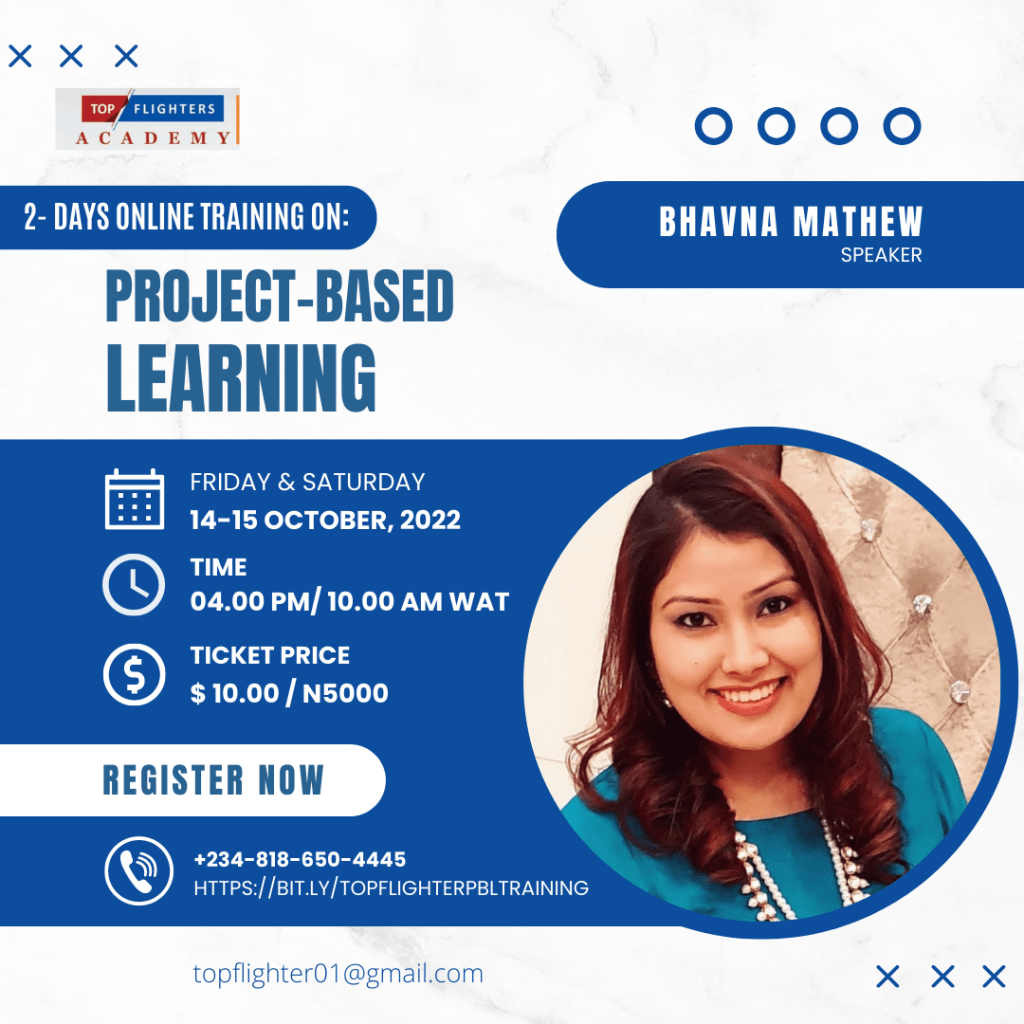
Bhavna Mathew
I have been teaching and mentoring Primary years learners in several IB schools of Gurgaon for 18 years. I have worked in manifold capacities and roles as an IBPYP Practitioner. Currently, I am a Primary School Service Coordinator and English Support Facilitator at Pathways World School. I hold a Masters in English literature and a Bachelors in Education. I’m a certified Montessori Early Childhood Educator. Furthermore, in pursuit of my goal as an educationist, I became a Microsoft Innovative Educator Expert, Flipgrid enthusiast, Adobe Creative Educator, Seesaw, Wakelet, and Teach SDG Ambassador, Global School Advocate and ISTE Community Leader. Being passionate about ‘Global Citizenship and International Mindedness’, I have facilitated and participated in numerous Global Goals projects to promote 17 UN Sustainable Development Goals. I have been a presenter at numerous prestigious platforms & have created an Educator Club #DesiretoLearn . I conduct Book ClubPDs, Twitter Chats, and workshops for educators worldwide. I’m a visionary and a lifelong learner who believes in transforming education through Global Collaborations. I have been recognised for my work Internationally and Nationally through the prestigious awards – IPN INSPIRE Awards- Global Collaboration Award 2021, ISTE ‘Global Collaboration Network’ 2021 and ’20 to Watch’ Award 2022.
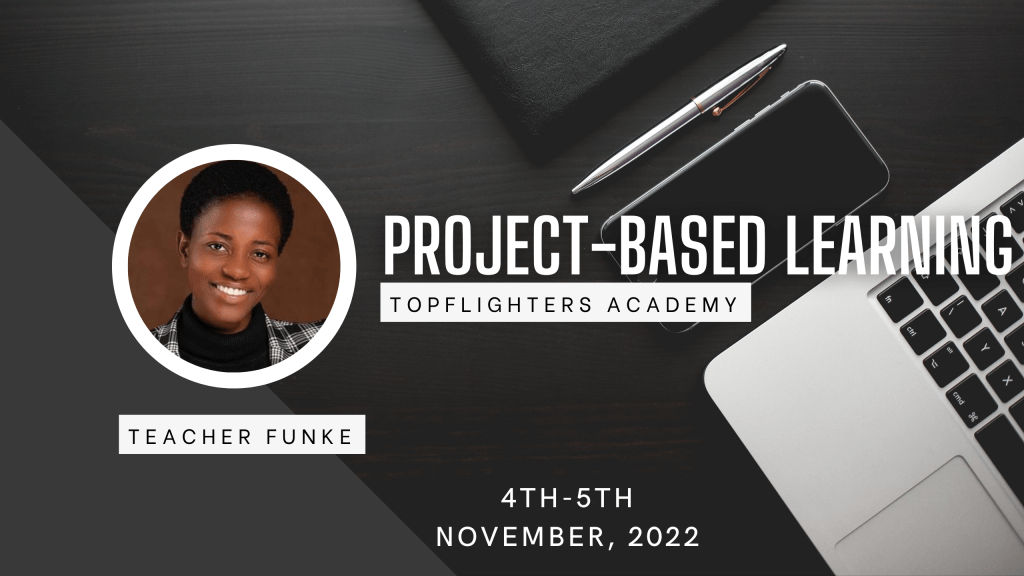
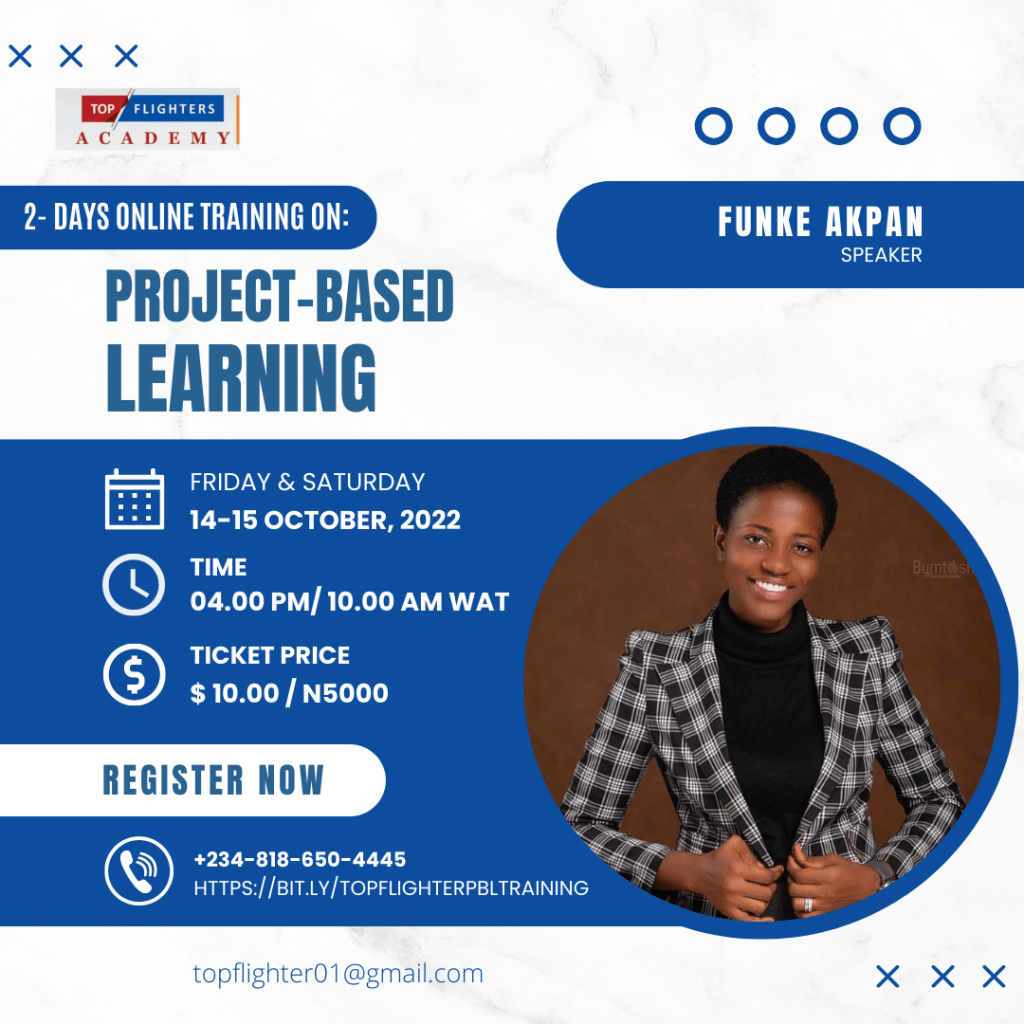
Teacher Funke Akpan
Akpan Funke popularly known as as Teacher Funke. I am an experienced educator with over thirteen (13) years of teaching experience.
I have worked in various capacities as a K-12 teacher, Head of the Nursery Department, Editorial board member etc. I am currently studying the English language at the prestigious University of Lagos (Nigeria). In order to provide quality services in my profession, I became an Edpuzzle Coach and a Microsoft Innovative Educator Expert.
I am of the belief that education should be beyond academics and this made me introduce Connection Based Learning in my classroom where my learners can connect with different classrooms from all over the world. From being an Empatico educator who spreads kindness and empathy to children in the school community, I was awarded an Empatico Ambassador.
I am also a Google Digital Skills, an Adobe Creative Educator, Digital Citizenship Tutor, Social and Emotional Learning Activist, Black Girls Tech Summit Ambassador and currently undergoing a program as an SDGs Advocate for Nigeria.
Over the years, I have facilitated trainings, webinars and workshops on Project-Based Learning, 21st Century Teaching Methodologies, Digital Citizenship Education, Social and Emotional Learning etc
I am the founder of Topflighter Academy. Topflighter Academy is an educational institution that provides educators with training on 21st Century Teaching tools, methodologies and strategies. We also offer services on Digital Citizenship Education and Social and Emotional Learning.
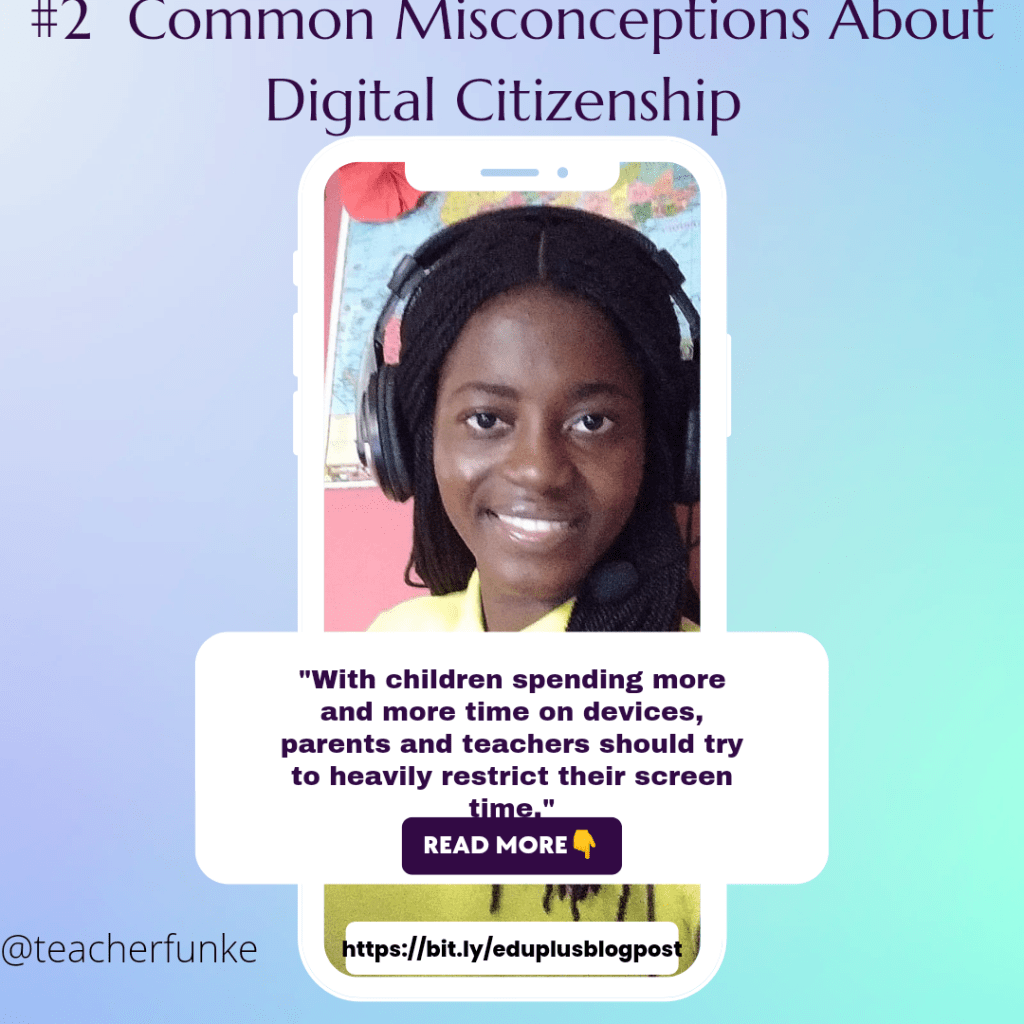
“With children spending more and more time on devices, parents and teachers should try to heavily restrict their screen time.”
Parents who heavily restrict their children’s access to the internet tend to have children who experience reduced exposure to risk, but also get fewer opportunities for learning and engagement. Outright ban of activities, such as using social media or playing video games, can have consequences for young people, who may feel cut off from their peers or unable to access information and support.
Recognise that media use is no longer an optional extra and that ‘screen time’ is not an inevitably problematic activity.
Parents and teachers can achieve a balance with their children or students by educating them and making them involved in the process of media use. Adults need to model digital well-being so that young people have something to fall back on.
Research says: What you can do? Move beyond ‘screen-time’ as a basis for guidance and help parents and children recognise the difference between problematic, normal and beneficial use.
Culled from the article: 5 Common Misconceptions About Digital Citizenship
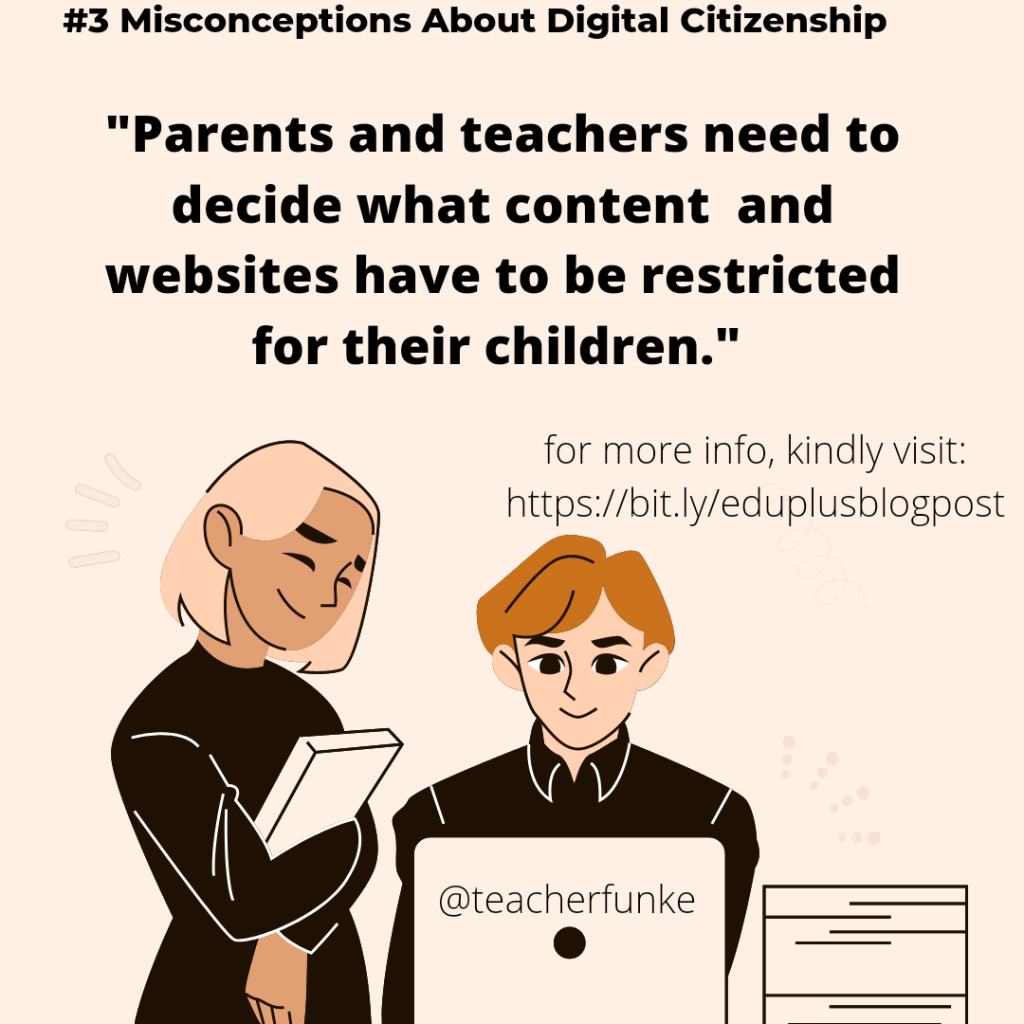
“Parents and teachers need to decide what content and websites have to be restricted for their children.“
“Not involving children in making decisions can be a missed opportunity to build a sense of trust and ownership over media use within the family.”
Go beyond giving the message to parents that their main responsibility is to limit and control.
Encourage them to use their digital expertise to engage with their children, and not to police them.
Teachers can also engage students in discussions about media use, help them understand the issues and take part in making these choices.
Context-specific rules (e.g no phones at the table) are harder to enforce than activity constraints(e.g no Snapchat). Activity constraints are restrictive. Although they reduce a child’s access to certain sites, they do not educate them on how to engage with technology.
Use a balanced approach. Combine activity constraints. For example, employ technical restrictions to ban some websites on school WiFi with active and enabling approaches like engaging students in a discussion about their digital behaviour.
#culled from #5 Common Misconceptions About Digital Citizenship





 EduPlus