#Trend 4: Connection Based Learning
In today’s rapidly evolving educational landscape, where technology and globalization have become the norm, there’s an emerging approach that is reshaping how we think about teaching and learning. This approach is called Connection-Based Learning (CBL). It’s not just another buzzword; it’s a powerful educational philosophy that emphasizes the importance of relationships, collaboration, and real-world connections in the learning process.
In this blog post, we’ll explore what Connection-Based Learning is, why it matters, and how educators can effectively implement it to create meaningful and impactful learning experiences for their students.
What is Connection-Based Learning?
Connection-Based Learning is an educational approach that prioritizes the development of meaningful connections between students, their peers, educators, and the broader community. The goal is to create a learning environment where students are not just passive recipients of information but active participants in a network of relationships that enhances their understanding of the world. At its core, CBL is about creating authentic, real-world connections that enrich the learning experience.
These connections can take many forms, such as:
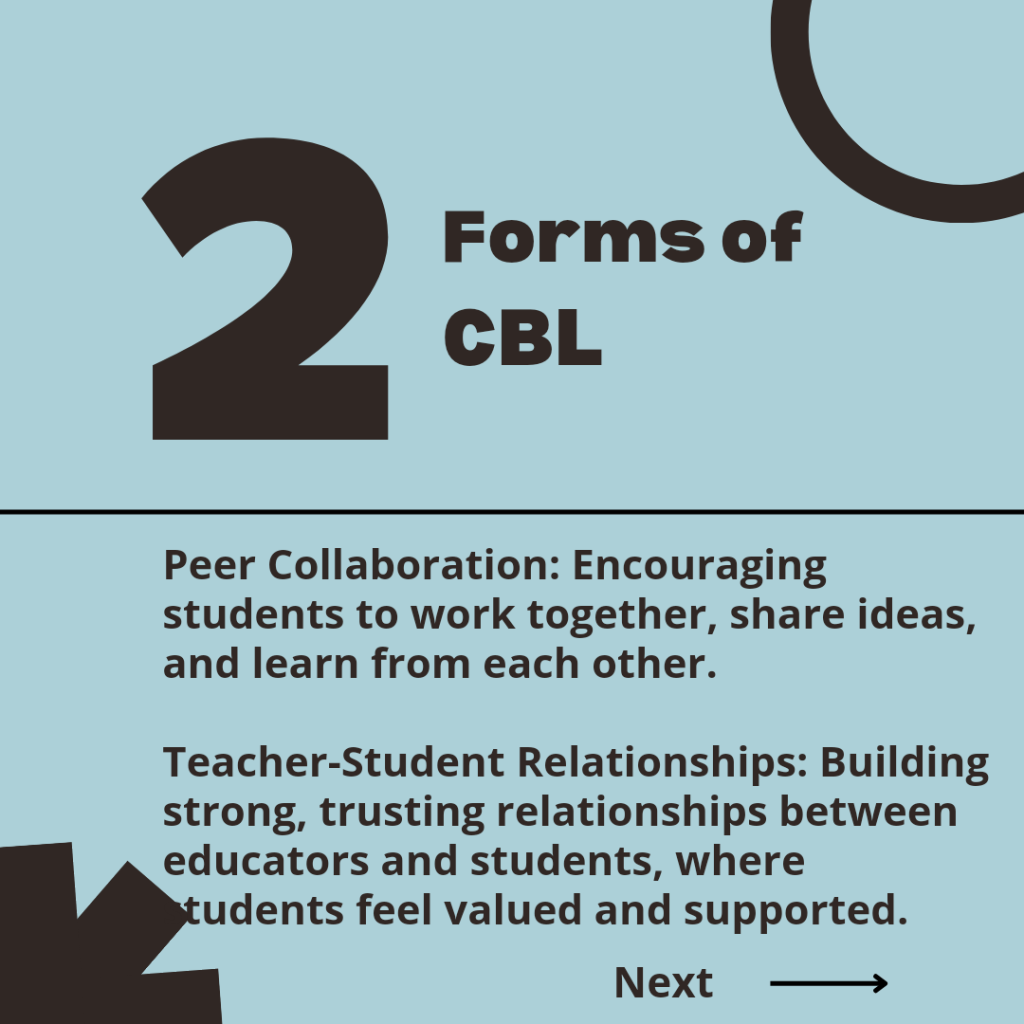
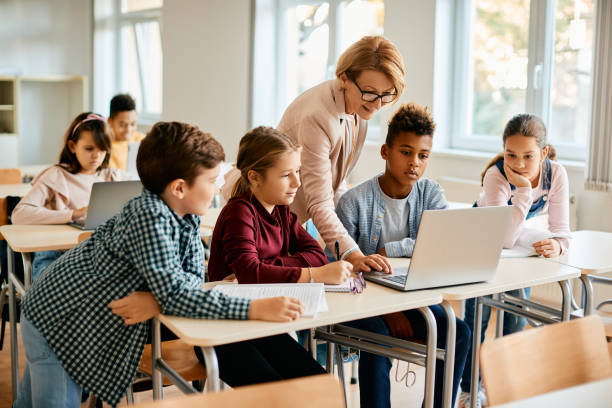
1. Peer Collaboration: Encouraging students to work together, share ideas, and learn from each other.
2. Teacher-Student Relationships: Building strong, trusting relationships between educators and students, where students feel valued and supported.
3. Community Involvement: Connecting learning to the broader community, whether through partnerships with local organizations, service-learning projects, or real-world problem-solving.
4. Global Connections: Leveraging technology to connect students with peers, experts, and communities around the world, fostering a global perspective and cultural understanding.
Why Connection-Based Learning Matters
In an era where information is readily accessible at our fingertips, the role of education is shifting from simply transmitting knowledge to fostering critical thinking, creativity, and collaboration. Connection-Based Learning is a response to this shift, offering several key benefits:
1. Enhanced Engagement: When students feel connected to their peers, teachers, and the broader community, they are more likely to be engaged and motivated in their learning. CBL makes learning relevant by linking it to real-world experiences and relationships.
2. Deeper Understanding: CBL encourages students to explore concepts in depth through collaboration and discussion. By working with others, they can gain new perspectives and insights that deepen their understanding of complex topics.
3. Social-Emotional Learning: Developing strong connections with others helps students build essential social and emotional skills, such as empathy, communication, and conflict resolution. These skills are crucial for success in both school and life.
4. Real-World Applications: CBL prepares students for the challenges of the real world by connecting classroom learning to real-world problems and scenarios. This approach helps students see the relevance of their education and equips them with the skills they need to thrive in a rapidly changing world.
5. Global Citizenship: By connecting students with peers and experts from around the world, CBL fosters a sense of global citizenship. Students learn to appreciate different cultures, perspectives, and ways of thinking, which is essential in our interconnected world.
How to Implement Connection-Based Learning
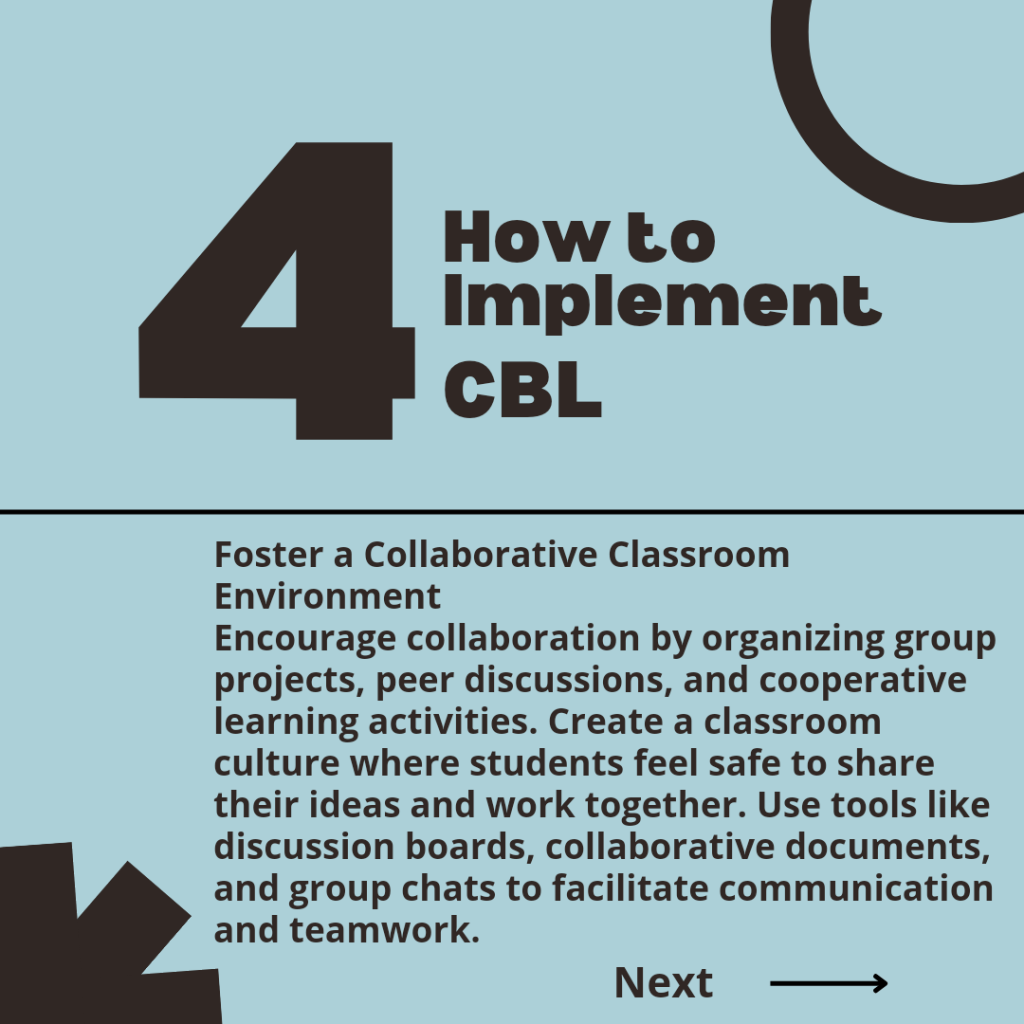
Encourage collaboration by organizing group projects, peer discussions, and cooperative learning activities. Create a classroom culture where students feel safe to share their ideas and work together. Use tools like discussion boards, collaborative documents, and group chats to facilitate communication and teamwork.
2. Build Strong Teacher-Student Relationships
Take time to get to know your students and show genuine interest in their lives. This can be as simple as greeting them at the door, asking about their interests, or offering personalized feedback on their work. When students feel that their teacher cares about them as individuals, they are more likely to be engaged and motivated.
3. Integrate Community-Based Projects
Connect learning to the local community by involving students in service-learning projects, internships, or partnerships with local organizations. These projects can help students see the real-world impact of their education and develop a sense of responsibility and civic engagement.
4. Leverage Technology for Global Connections
Use technology to connect your students with peers, experts, and communities around the world. This could involve virtual exchanges with classrooms in other countries, online collaborations with experts in a particular field, or participation in global challenges and competitions. These experiences can broaden students’ perspectives and help them develop a global mindset.
5. Focus on Real-World Problem Solving
Incorporate project-based learning (PBL) and inquiry-based learning (IBL) into your curriculum, where students work on solving real-world problems or answering complex questions. Encourage them to connect with experts, conduct research, and collaborate with others to find solutions. This approach not only makes learning more relevant but also helps students develop critical thinking and problem-solving skills.
Examples of Connection-Based Learning in Action
To illustrate the power of Connection-Based Learning, here are a few examples of how it can be applied in different educational settings:
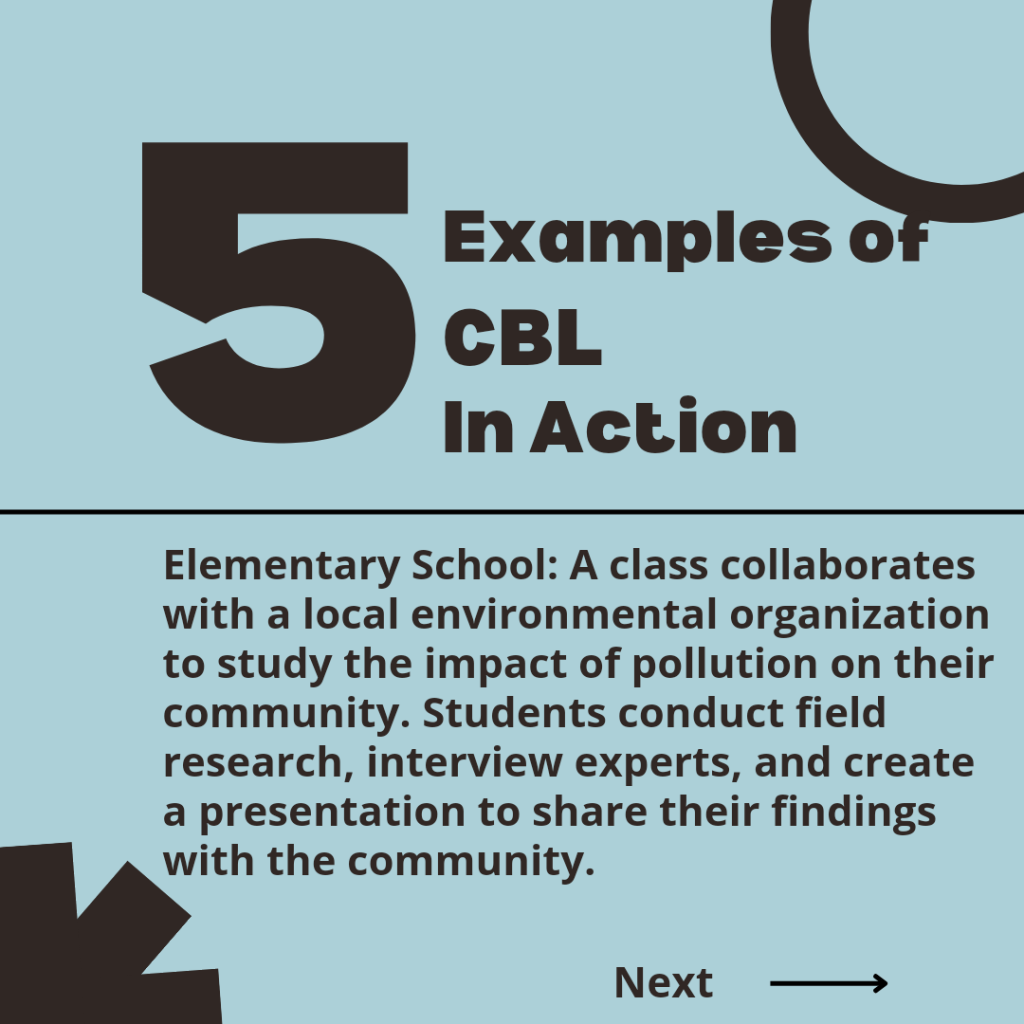
Elementary School: A class collaborates with a local environmental organization to study the impact of pollution on their community. Students conduct field research, interview experts, and create a presentation to share their findings with the community.
Middle School: Students in a history class connect with a classroom in another country to compare how different cultures view historical events. Through virtual exchanges, they share their perspectives and create joint projects that highlight the similarities and differences in their histories.
High School: A science teacher partners with a local hospital to give students the opportunity to work on real-world health challenges. Students conduct research, analyze data, and propose solutions, all while working alongside medical professionals.
University: A professor organizes a service-learning project where students work with a non-profit organization to address a social issue in their community. The students apply what they’ve learned in the classroom to develop and implement a solution, gaining valuable experience and making a positive impact.
Online Platforms for CBL
Skype in the Classroom and Microsoft Flip are powerful tools for Connection-Based Learning, allowing educators to bridge the gap between the classroom and the world beyond.
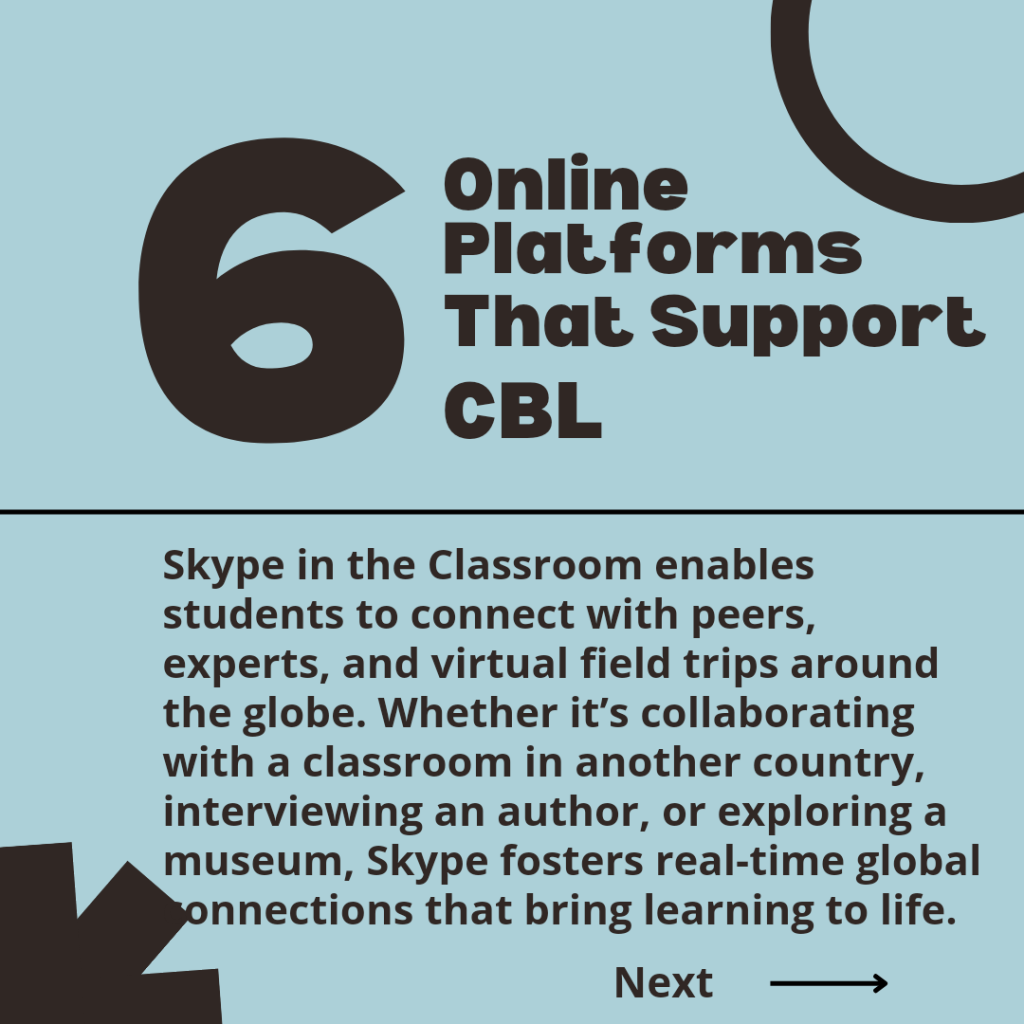
Skype in the Classroom enables students to connect with peers, experts, and virtual field trips around the globe. Whether it’s collaborating with a classroom in another country, interviewing an author, or exploring a museum, Skype fosters real-time global connections that bring learning to life. These interactions help students develop a broader perspective, enhance communication skills, and engage with diverse cultures.
Microsoft Flip (formerly Flipgrid) offers a creative platform for students to share their thoughts, ideas, and projects through video. Teachers can create discussion prompts, and students respond with short videos, encouraging dialogue and reflection. This tool not only supports peer-to-peer learning but also empowers students to express themselves in a way that builds confidence and strengthens their digital communication skills.Together, these tools can transform the learning experience by making it more interactive, collaborative, and connected to the real world, essential aspects of Connection-Based Learning.
Challenges and Considerations
While Connection-Based Learning offers many benefits, it’s important to be aware of the potential challenges. Building meaningful connections takes time and effort, and not all students may be comfortable with collaborative learning. Additionally, technology can be both a facilitator and a barrier, depending on access and familiarity.Educators should be prepared to provide support and guidance to help students navigate these challenges. It’s also important to create a classroom environment where all students feel included and valued, regardless of their background or abilities.
Conclusion
Connection-Based Learning is more than just a teaching strategy—it’s a way of rethinking education for the 21st century. By focusing on relationships, collaboration, and real-world connections, CBL helps students develop the skills and mindsets they need to succeed in an increasingly complex and interconnected world.As educators, our role is to guide and support our students as they navigate these connections, helping them to see the relevance of their education and empowering them to make a positive impact in their communities and beyond. Whether you’re just starting to explore CBL or already incorporating it into your teaching, remember that the key to success is building strong, meaningful connections that inspire and engage your students.
Kindly share, like and comment! Let’s know how you intend to use Connection Based Learning in your classroom.
Have you read the previous posts on Flipped Learning, Game Based Learning and Project Based Learning? Ensure you do that now for an enriched teaching/learning.
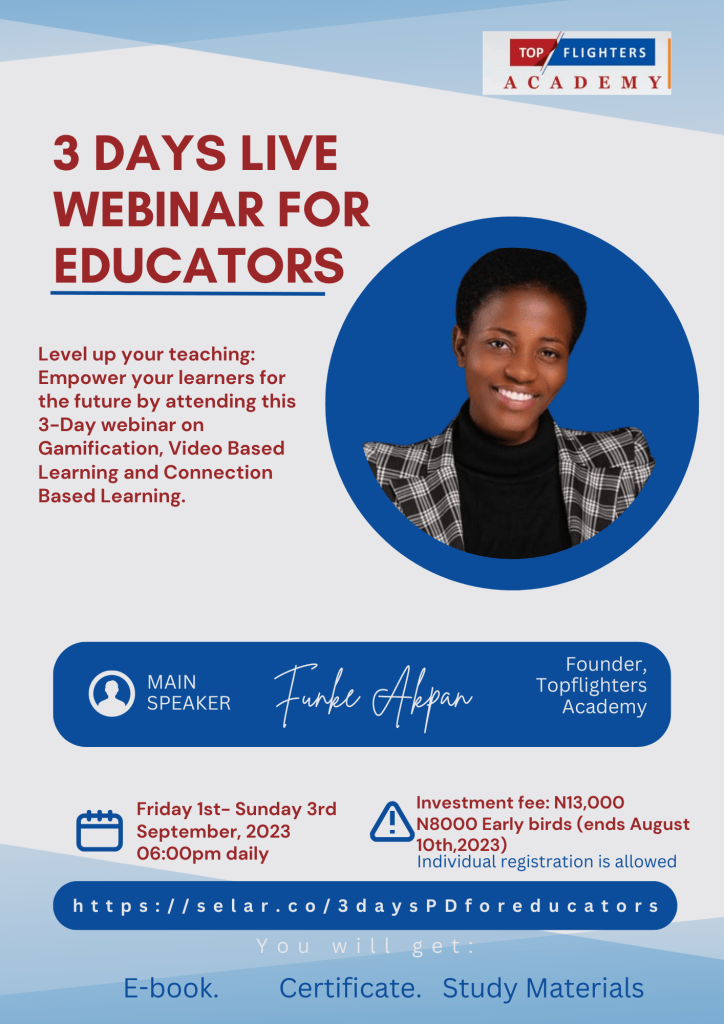
At Topflighters Academy, we offer high quality trainings on 21st Century Methodologies for Schools and Teachers.
Contact us today: topflighters01@gmail.com or call +2348186504445



 EduPlus