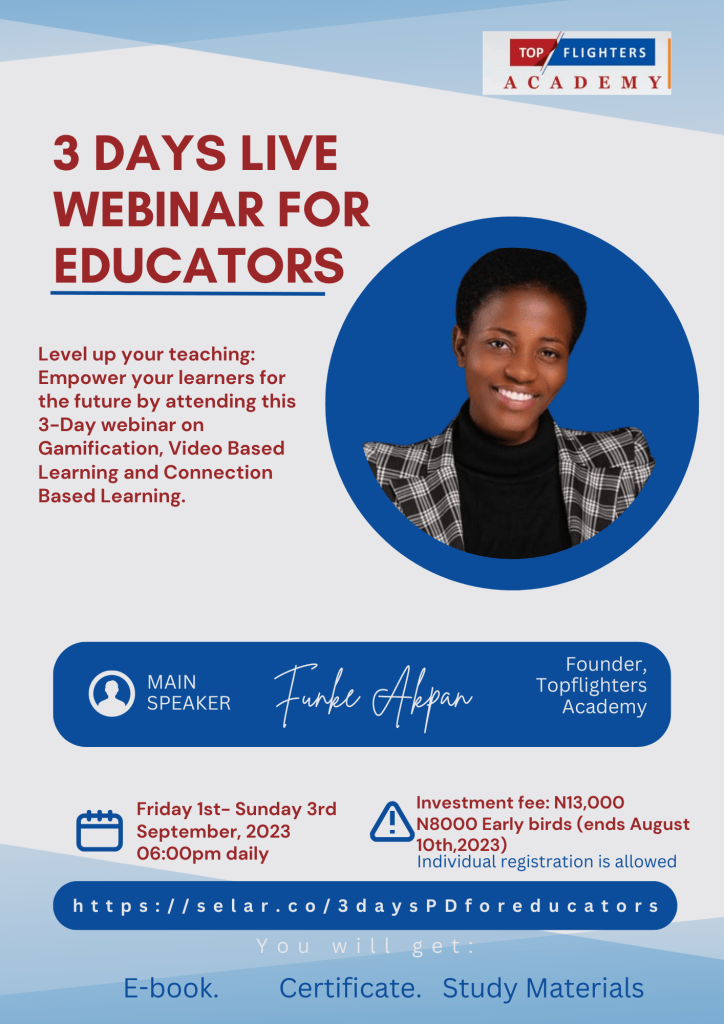
DAY 2 VR/AR CLASSROOM EXPERIENCE

Exploring the Tech Behind VR/AR

Welcome back, educators! Today, let’s dive into the fascinating world of Virtual Reality (VR) and Augmented Reality (AR), the technologies reshaping our classrooms.
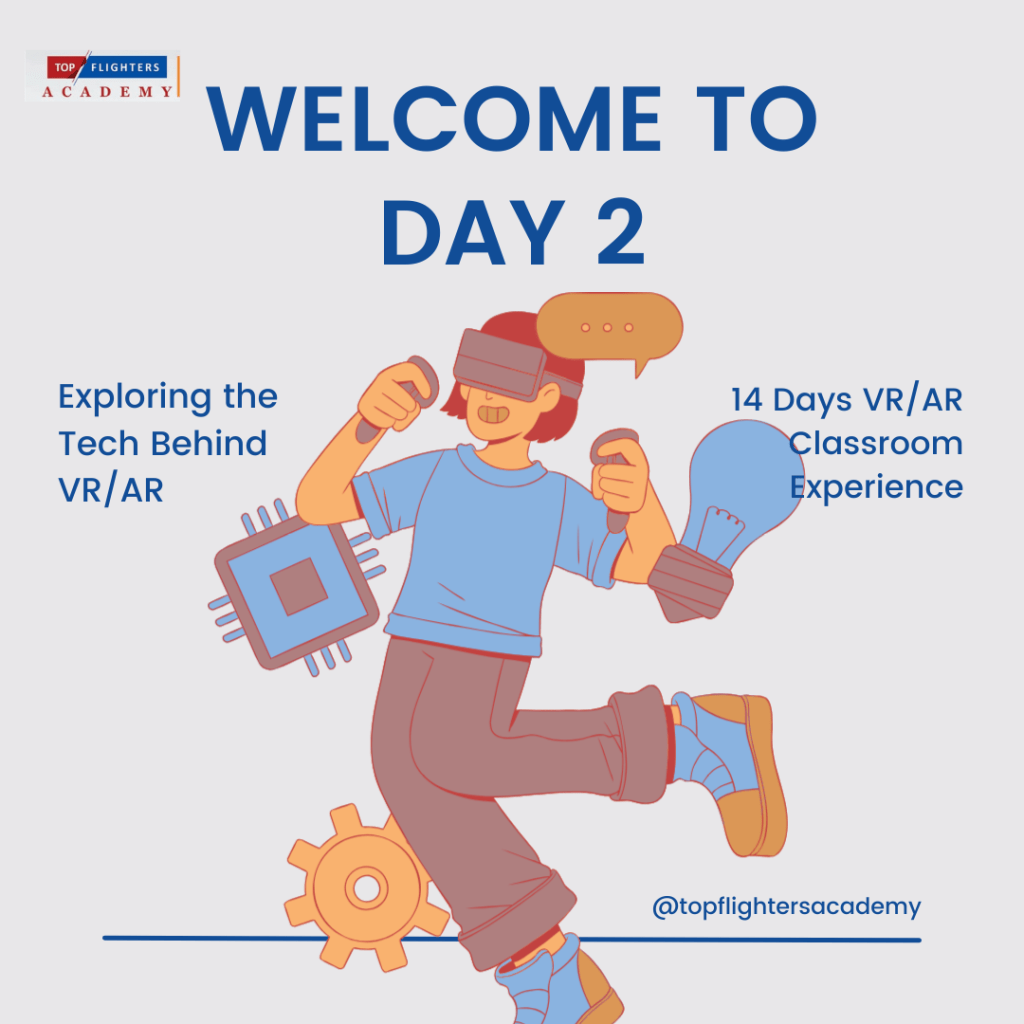
Detailed Explanation of VR Technology

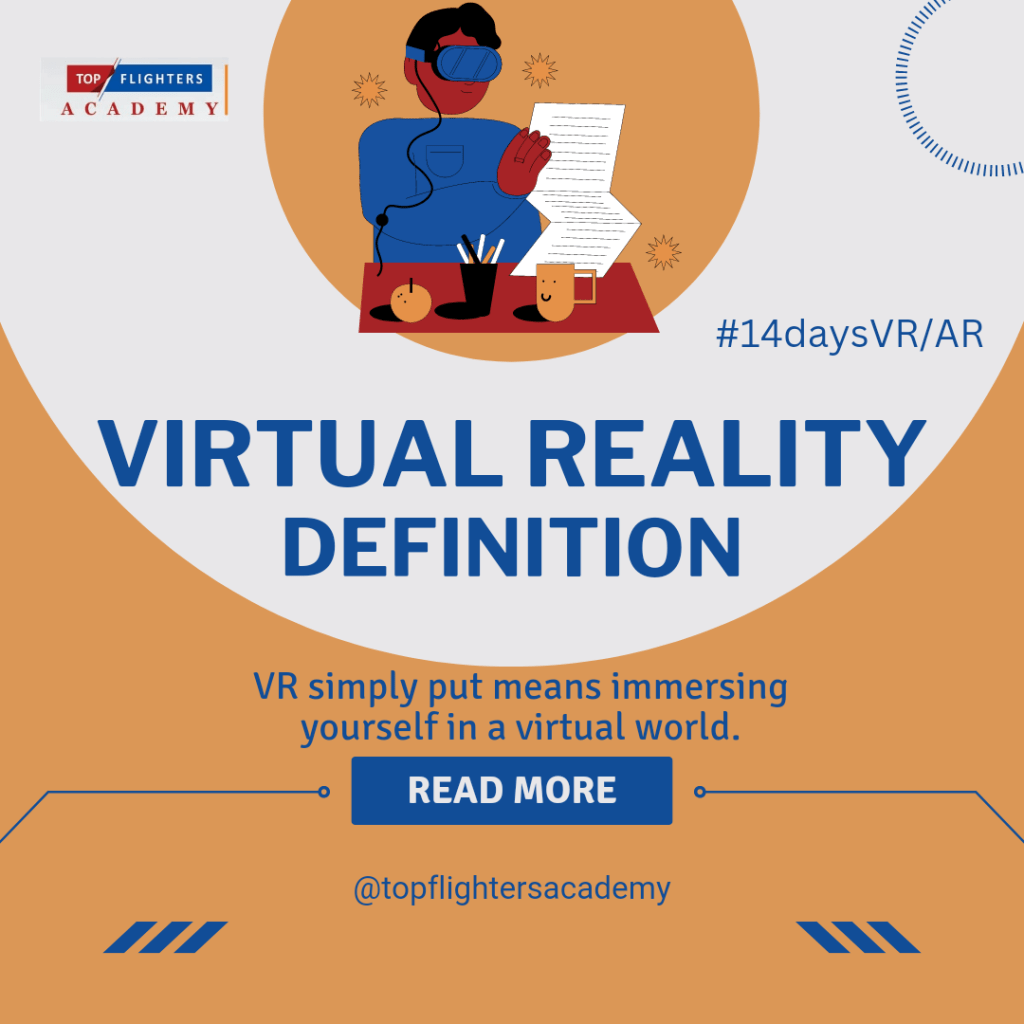
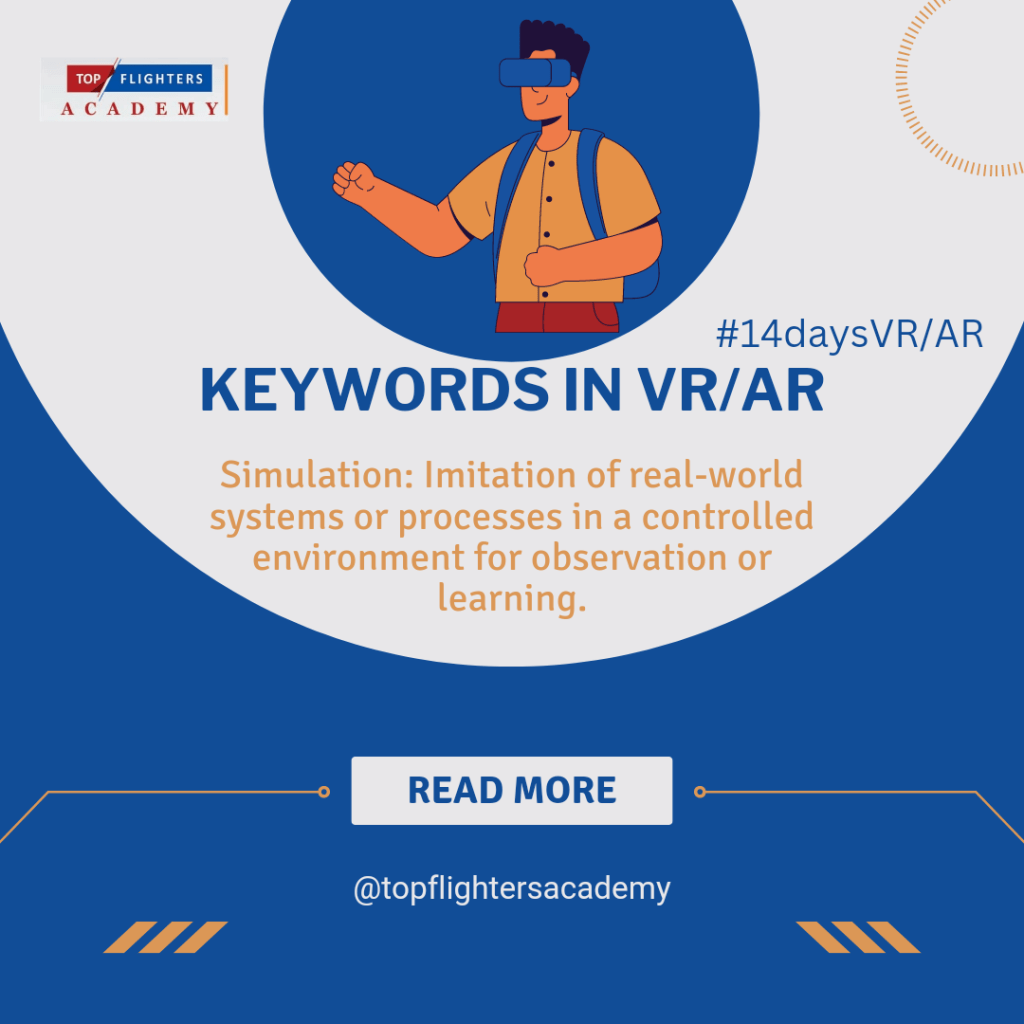
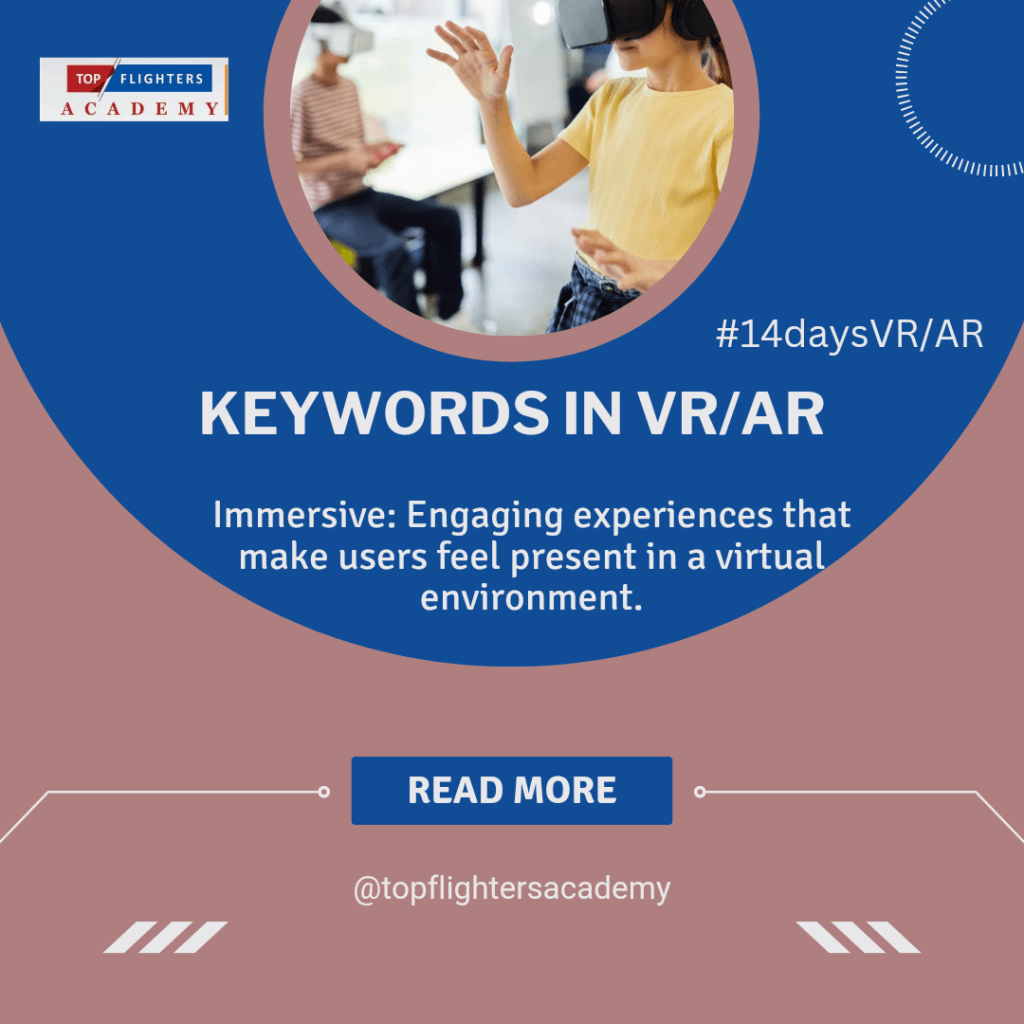
Virtual Reality (VR): VR creates a simulated environment that immerses users in a digital world, completely replacing the real-world environment. In the classroom, VR allows students to explore and interact with 3D computer-generated environments. It offers a fully immersive experience where students can engage with educational content in a way that feels realistic and often allows for interactivity. For example, students can virtually visit historical landmarks, explore scientific concepts in 3D space, or experience simulations like biology dissections, offering an immersive and engaging learning experience.

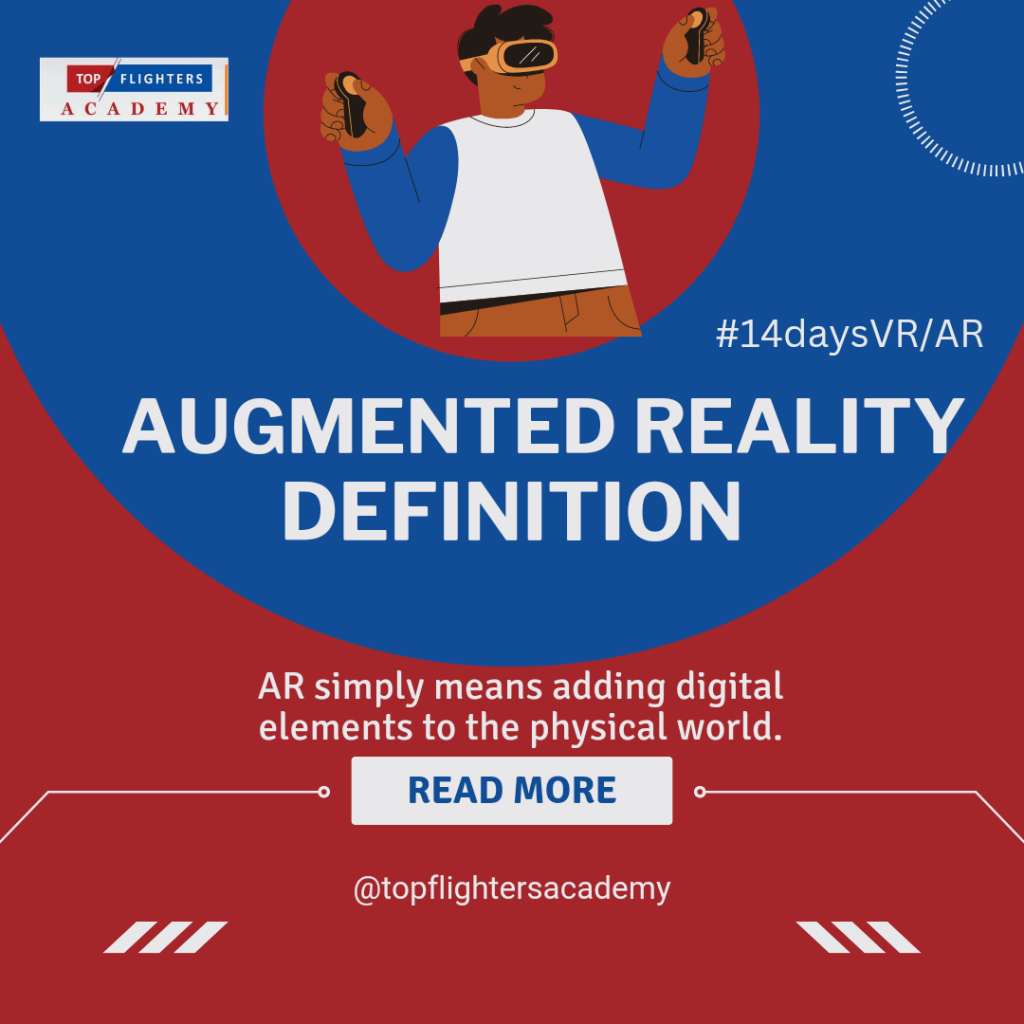
Augmented Reality (AR): AR overlays digital content onto the real-world environment, enhancing what users see by adding virtual elements. In the classroom, AR supplements and enriches the physical surroundings with additional digital information. AR can bring textbooks, posters, or physical objects to life by overlaying relevant information, animations, or interactive elements when viewed through AR-enabled devices like smartphones or AR glasses. For instance, students can see 3D models of planets popping out of their textbooks, enhancing their understanding of astronomy, or witness historical events through AR-enhanced visualizations.

Both VR and AR offer unique ways to transform the classroom experience by providing immersive, interactive, and experiential learning opportunities that engage students in ways traditional methods cannot. They offer a dynamic and personalized learning environment where abstract concepts become tangible and learning becomes more engaging and memorable.

Hardware and Immersion: Think of VR hardware as the tools that transport us to different worlds right from our desks. VR headsets, like Oculus Rift or HTC Vive, serve as the windows into these virtual realms. These headsets come with controllers and sensors that let us navigate and interact with the virtual space, making us feel like we’re truly part of the experience.

Motion Tracking and Interaction: Imagine this: as you move your head or hands, the virtual world responds instantly. That’s the magic of VR’s motion tracking! These systems detect our movements, translating them into actions within the virtual environment. This interaction makes learning incredibly engaging and hands-on, whether exploring the human body or traveling through historical events.
Detailed Explanation of AR Technology

Overlaying Digital Content: Now, think of AR as adding a layer of information to the world around us. Using devices like smartphones or AR glasses, AR technology superimposes digital content onto our physical environment. Remember playing with filters on your phone that placed digital objects in your real-world surroundings? That’s AR in action!

In this short video, I added a digital element to my physical space. That is what AR is all about!

Spatial Mapping and Object Recognition: AR doesn’t just add any content; it’s smart! AR devices map our surroundings and recognize objects in real-time. This means they can enhance what we see by adding information or animations to specific objects or spaces. It’s like having an interactive encyclopedia pop up whenever you look at something!

Examples of Devices Used for VR/AR Experiences

VR Devices: These are like the portals to other dimensions! Devices like Oculus Rift, HTC Vive, or PlayStation VR are some of the leading VR headsets. They offer diverse experiences, from exploring ancient civilizations to diving into the depths of the ocean, making learning an adventure.

AR Devices: AR devices like Microsoft HoloLens, Google Glass, or even AR applications on smartphones, allow us to interact with digital content while still being present in our real surroundings. They’re like having a magic lens that reveals hidden layers of information about the world around us. Another example is SnapAR Google (SnapChat Inc.)

Types of VR

Virtual Reality (VR) technology has evolved to accommodate various applications and experiences. Here are different types of VR:

1. Non-Immersive VR: This type of VR typically involves a less immersive experience, often through desktop or mobile applications. It doesn’t fully engulf the user in a virtual environment but offers some elements of VR, such as 360-degree videos or simple VR applications.

2. Semi-Immersive VR: These setups provide a more immersive experience than non-immersive VR but don’t completely immerse users. They often use projection systems or large screens to create an immersive environment, allowing users to interact with the simulated world to some extent.

3. Fully Immersive VR: This type of VR offers the most immersive experience, transporting users to entirely virtual environments using head-mounted displays (HMDs) like Oculus Rift, HTC Vive, or PlayStation VR. Users can interact with and navigate these environments in a manner that makes them feel fully present within the virtual world.

4. Collaborative VR: Collaborative VR environments allow multiple users to interact and engage within the same virtual space simultaneously. These setups are beneficial for group activities, team projects, or remote collaboration where users can communicate and interact in a shared virtual setting.

5. Web-based VR: This type of VR utilizes web technologies to provide immersive experiences directly through web browsers. It enables users to access VR content without requiring specific applications or installations, making VR more accessible and easy to use.

Each type of VR offers unique experiences and applications, catering to different needs and preferences, whether for entertainment, education, training, or professional purposes.
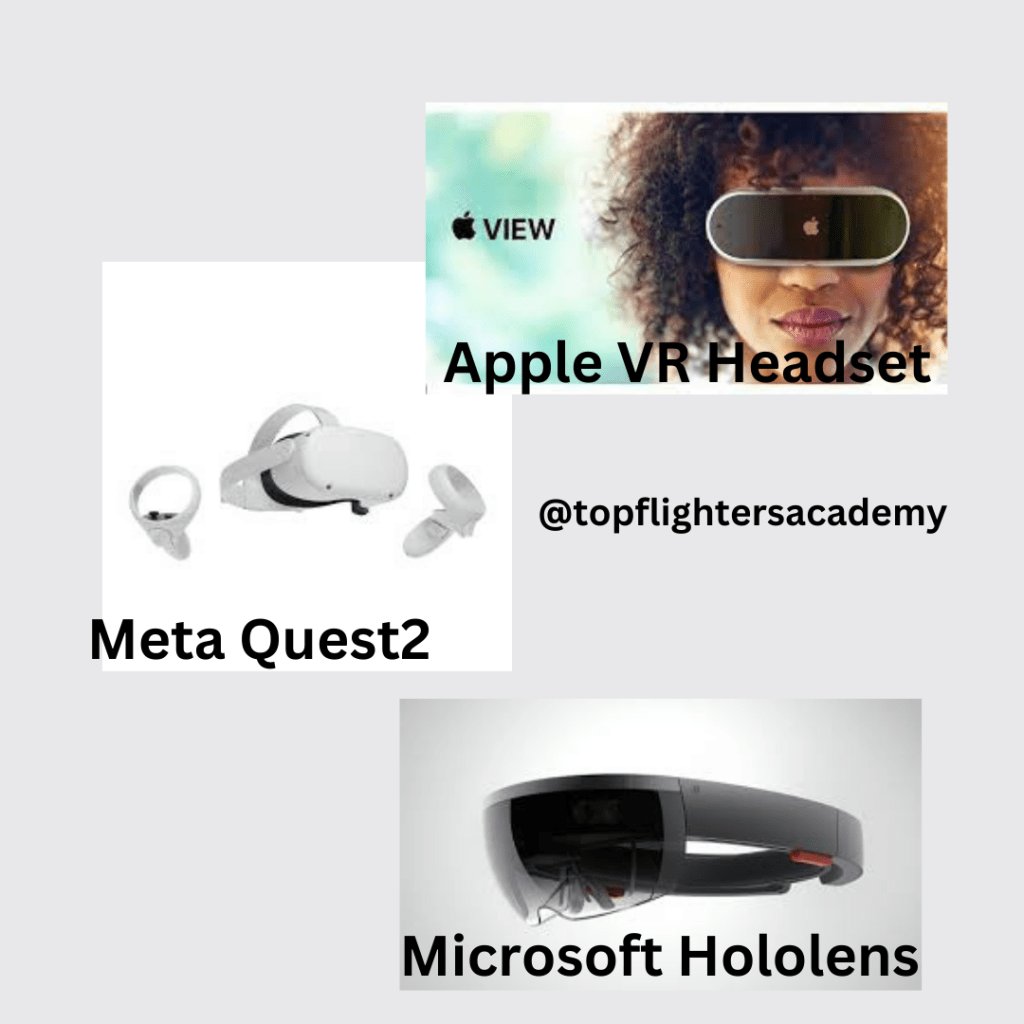
Different Kinds of VR Googles

There are several types of VR goggles available, each offering different features, experiences, and functionalities. Here are some common types:

1. Tethered VR Headsets: These VR goggles are connected to a computer or gaming console, providing high-quality immersive experiences. They often come with external sensors for precise tracking and offer extensive capabilities, making them suitable for gaming, professional applications, and high-fidelity experiences. Examples include Oculus Rift, HTC Vive, and Valve Index.

2. Standalone VR Headsets: These goggles don’t require a separate computer or console for operation. They contain all the necessary hardware and are more portable. They offer a good balance between quality and convenience, making them suitable for a wide range of applications. Oculus Quest series and HTC Vive Focus are examples of standalone VR headsets.

3. Smartphone-based VR Headsets: These goggles rely on smartphones to provide the VR experience. Users place their smartphones into the headset, which uses the phone’s display and processing power to create VR content. They are more affordable and accessible but typically offer less immersive experiences compared to dedicated VR headsets. Examples include Samsung Gear VR and Google Cardboard.

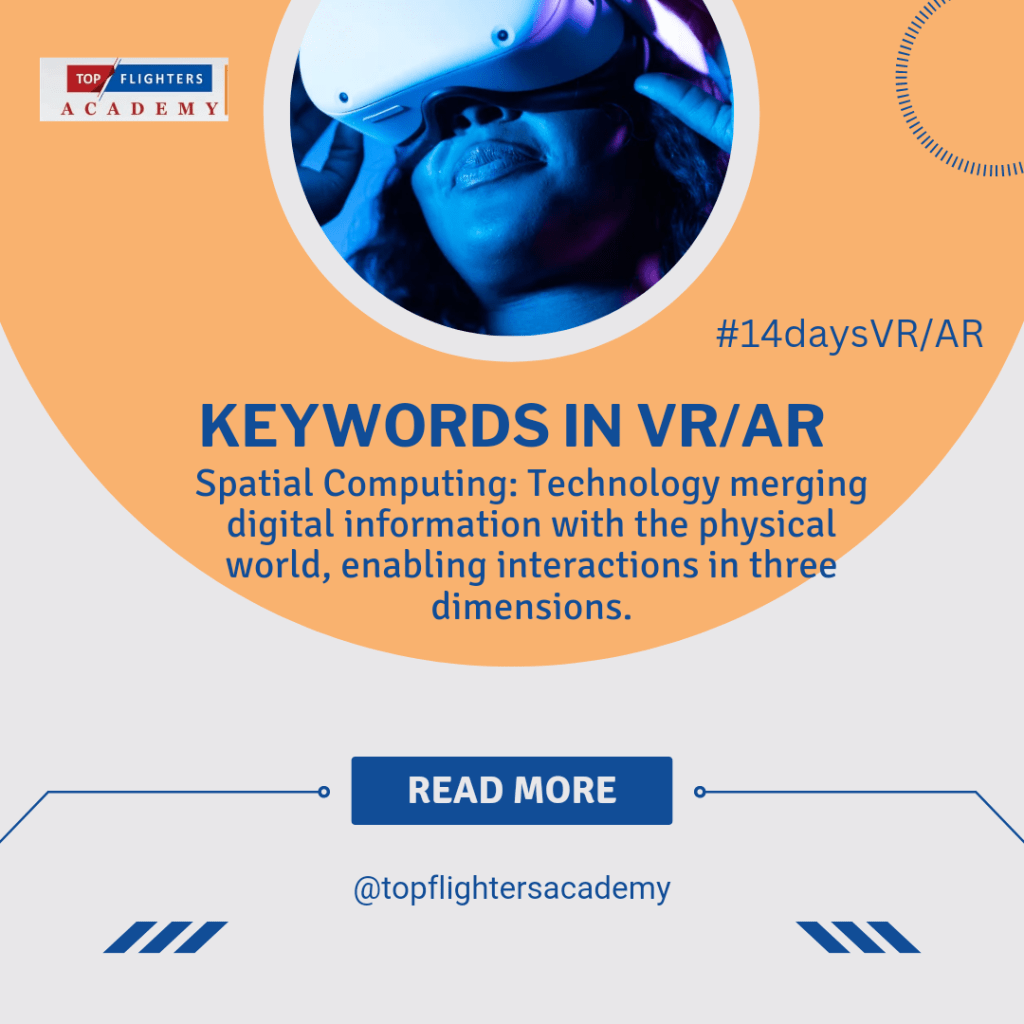
4. Mixed Reality Headsets: These goggles combine elements of both VR and AR, allowing users to interact with both virtual and real-world environments. They offer a blend of digital content and real-world interactions, making them suitable for various applications, including gaming, education, and professional use. Microsoft HoloLens and Magic Leap are examples of mixed reality headsets. Microsoft Hololens is an example of a Mixed Reality Headset.

Each type of VR goggle has its advantages and limitations, catering to different user preferences, usage scenarios, and levels of immersion. The choice often depends on factors like budget, intended use, mobility, and desired level of immersion and interaction.
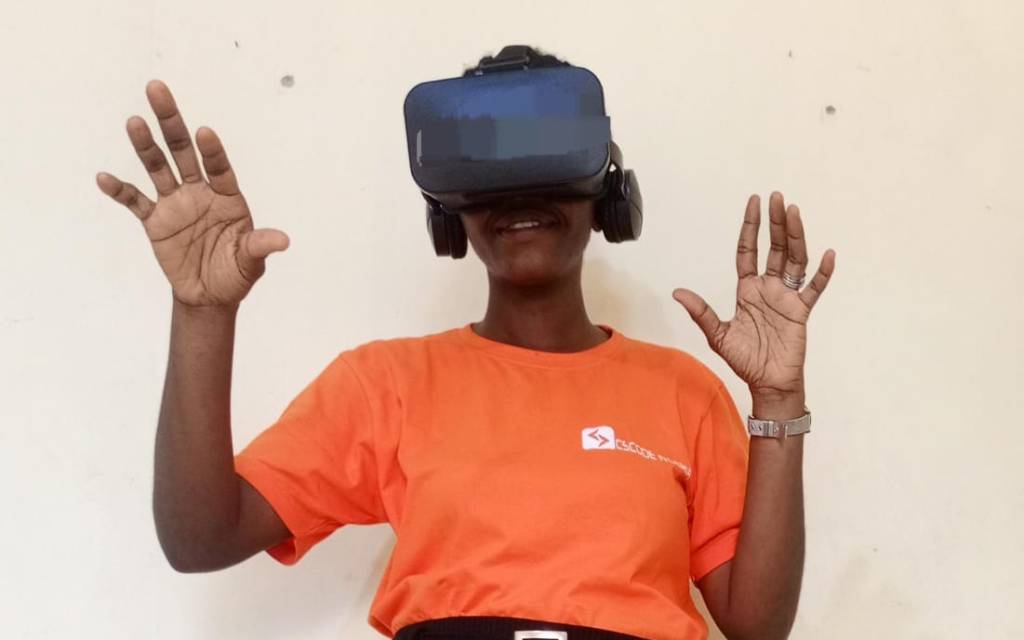
An example of a Smartphone-based VR headset worn by Teacher Funke

Tomorrow, we’ll explore how these technologies seamlessly integrate into educational settings, creating a whole new world of learning opportunities right inside our classrooms!

Keep exploring,

Funke Akpan

Founder, Topfligters Academy

Technology Integration Expert

+2348186504445

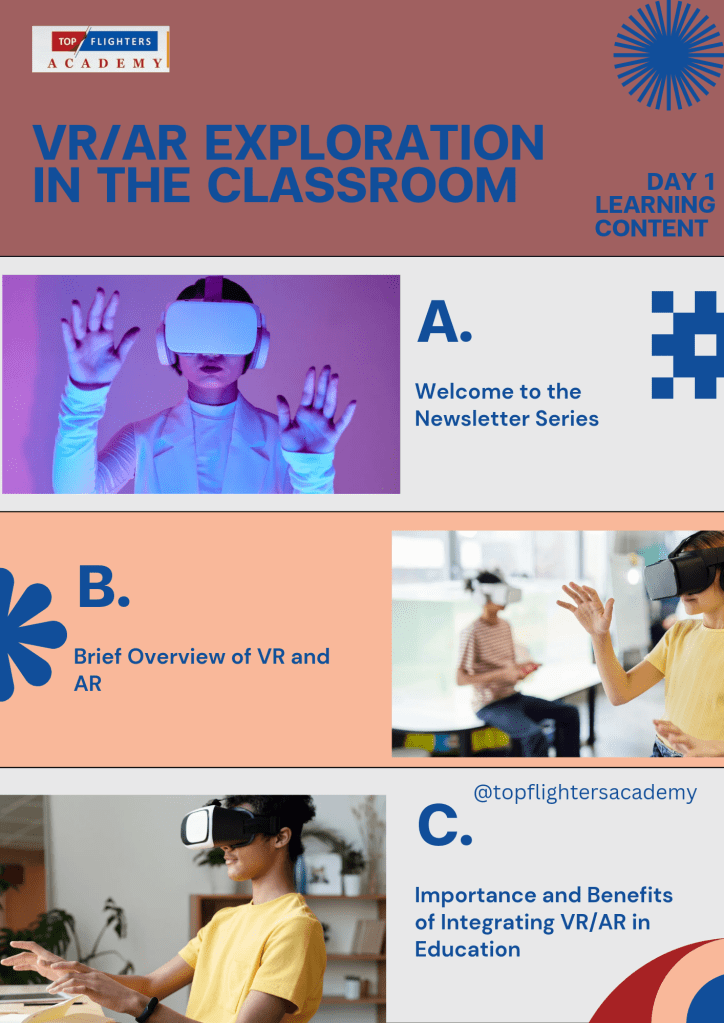
DAY 1 VR/AR CLASSROOM EXPERIENCE

Dear Educators,

Welcome to an exciting journey into the future of education!

My fascination with VR began in 2020 when I first encountered its potential to enhance learning and make lessons more engaging through gamification (I absolutely adore bringing fun into the classroom). I witnessed the thrill of VR games during the Fun Days organized for children at my previous workplace, and it left a lasting impression.

When I introduced VR to my class for the first time, it caused quite a stir. The sight of the VR box turned the classroom upside down, igniting curiosity among the students. They were eager to explore it and understand how it could benefit their academic journey.

Having researched how VR/AR can shape the future of education, I’ve decided to embark on this 14-day exploration with you.

Your curiosity and dedication to evolving educational practices are the guiding lights of this endeavor.

In this exclusive newsletter series, our goal is crystal clear: to uncover the vast potential of VR/AR in reshaping and revolutionizing classroom learning. Together, we’ll dive into these transformative technologies, discovering the many ways they can redefine engagement, interaction, and understanding in educational settings.

Why are we so enthusiastic about this journey? Because we firmly believe that VR/AR aren’t just tools; they’re gateways to new dimensions of learning. Through these technologies, we aim to spark inspiration, nurture creativity, and ignite a passion for learning that goes beyond the usual boundaries.

According to PCMag Encyclopedia, Augmented Reality/ Virtual Reality refers to computer-generated simulations that integrate the real world (AR) or are entirely self-contained (VR). AR applications let you move around in the real world. With VR, you have to remain in the same location because you cannot see your surroundings.

VR replaces your existing world with digital content e.g, being inside of a thing to study it rather than reading a book or watching a video on the internet. it involves enhancing the real world with digital elements.

AR uses our environment as a window to our digital world e.g Microsoft Hololens, with Hololens, you can pre-visualize anything before you buy it.

Do you know that VR/AR has its origin dated to centuries ago? Watch this video on the Evolution of Extended Reality (XR)

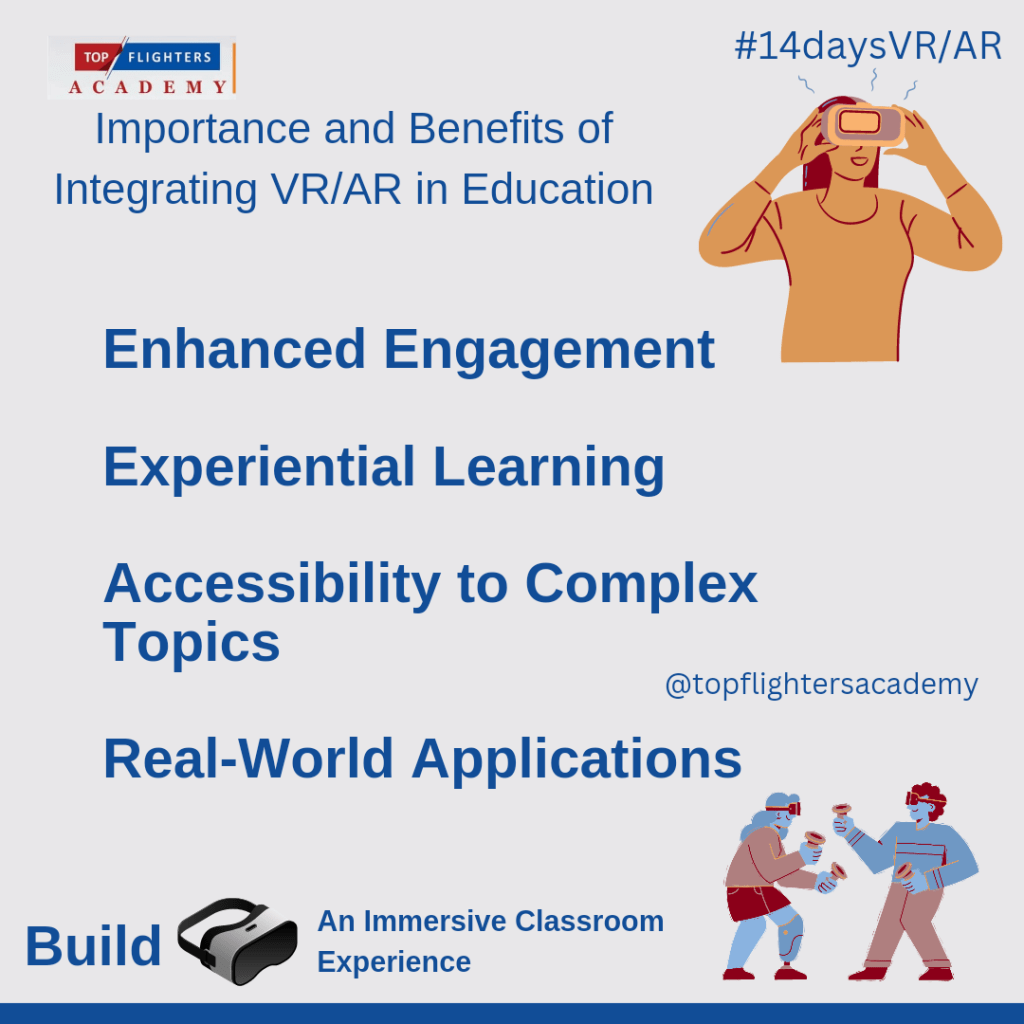
Importance and Benefits of Integrating VR/AR in Education

Enhanced Engagement:

VR/AR technologies have a remarkable ability to capture students’ attention in ways traditional methods might struggle to achieve. By immersing learners in interactive experiences, these technologies create a captivating learning environment. Students actively participate and engage with educational content, making lessons more stimulating and enjoyable.

Experiential Learning:

One of the most significant advantages of VR/AR in education is its capacity to facilitate experiential learning. Students can delve into immersive environments that simulate real-life scenarios, enabling hands-on exploration of complex concepts. This hands-on approach enhances comprehension and retention, making learning more tangible and memorable.

Accessibility to Complex Topics:

VR/AR serves as a powerful tool to simplify abstract or intricate subjects. By visualizing complex concepts in an easily understandable format, students can grasp challenging topics more effectively. For instance, abstract scientific theories or historical events can be brought to life, allowing students to visualize and interact with the content, fostering a deeper understanding.

Real-World Applications:

Beyond the classroom, VR/AR technologies mirror real-world applications across various industries. Integrating these technologies in education equips students with skills applicable to technology-driven careers. Whether it’s experiencing architectural designs in VR or practicing medical procedures through simulations, students gain practical insights and prepare for future job opportunities in fields that increasingly rely on technological advancements.

Have you imagined yourself studying about your body cells while you are in your cells? Sounds good and funny right?

By incorporating VR/AR in education, educators pave the way for students to not only learn but to experience, engage, and prepare for a future where immersive technologies play a pivotal role in various aspects of life and work.

As we wrap up our introduction to the captivating world of VR/AR in education, let’s carry this excitement forward into our journey ahead. Tomorrow, we delve deeper into the technology that underpins these transformative experiences. Get ready to uncover more insights into the immersive realms of Virtual Reality and Augmented Reality. Until then, keep the curiosity alive and let’s continue to envision the classroom of tomorrow together!

Topflighters Academy

Technology Integration Company

🌟 Exclusive Access: Join Our 14-Day VR/AR Classroom Experience! 🚀


Get ready to unlock the future of education! We’re thrilled to offer you an exclusive opportunity to participate in our 14-day Virtual Reality (VR) and Augmented Reality (AR) Classroom Experience.

📆 Dates: Monday 8th – Monday 22nd January, 2023
🎯 Focus: Explore, Engage, Excel in VR/AR Education

🌐 What’s Included:

  • Introduction to VR/AR Technology
  • Strategies for Seamless Integration in Education
  • Interactive Sessions and Practical Demonstrations
  • Hands-on Experience with Cutting-Edge Tools

🔐 Subscriber Access:
Secure your spot now by subscribing to our newsletter! Exclusive access to this transformative learning experience awaits. Click https://forms.gle/181hHWG84KD29dKAA to subscribe and join us on this immersive educational journey.

FAQs:

Q: Who can participate in this program?
A: This program is open to educators, school administrators, and anyone passionate about leveraging technology in education.

Q: What equipment is required?
A: A compatible device and internet access are recommended for optimal participation.

Q: Will there be ongoing support during the program?
A: Absolutely! Our dedicated support team will be available to assist with any queries or technical assistance throughout the 14-day program.

Got questions? We’re here to help! Reach out to our dedicated support team for any queries or assistance.

Don’t miss out on this opportunity to revolutionize your teaching or learning methods. Subscribe today and be at the forefront of educational innovation!

You have a FREE gift, get one of Teacher Funke’s ebook for FREE here: https://selar.co/TheBasedClassroom

Don’t forget to leave a review after reading!

Warm regards,
Funke Akpan

Founder, Topflighters Academy

+2348186504445

Empowering Learners for the Future Through Based Learning

Elementary teacher and her students using laptop during computer class at school.

Empowering Learners for the Future Through Based Learning

As we step into an increasingly interconnected and technology-driven world, it becomes vital for educators to prepare their learners for the challenges and opportunities of the future. One of the most effective ways to achieve this goal is by embracing various forms of based learning in the classroom. Based learning approaches, such as game-based learning, connection-based learning, and flipped learning, have proven to be transformative in education, fostering engagement, critical thinking, and creativity among students.

1. Game-Based Learning:
Game-based learning leverages gamification principles to make the learning experience more interactive and enjoyable. By integrating educational content into games, teachers can engage learners in problem-solving, decision-making, and skill development while keeping them motivated and focused. The element of competition, achievement, and rewards in games makes the learning process more appealing, leading to better retention and understanding of the subject matter.

Through game-based learning, students can explore complex concepts, experiment with different strategies, and learn from both successes and failures. This approach enhances their problem-solving abilities and encourages a growth mindset where they embrace challenges as opportunities for growth. Additionally, game-based learning can foster collaboration and teamwork as students often work together to achieve common goals within the games.

← Back

Thank you for your response. ✨

2. Connection-Based Learning:
Connection-based learning emphasizes building meaningful connections between learners, educators, and the outside world. It recognizes the value of networks and collaborative learning environments in today’s interconnected society. By utilizing technology and social platforms, teachers can create opportunities for students to interact with experts, professionals, and other learners worldwide, exposing them to diverse perspectives and experiences.

Through connection-based learning, learners gain real-world insights, improve their communication skills, and develop a global awareness that is crucial in the modern workforce. The connections made during this learning process can open doors to future opportunities, such as mentorships, internships, and even career prospects. Moreover, learners develop empathy and a sense of belonging as they interact with people from different backgrounds and cultures, fostering a more inclusive and compassionate society.

A Lesson Done With Connection Based Learning

3. Flipped Learning:
Flipped learning reverses the traditional classroom model, where students learn new concepts at home through pre-recorded videos or readings and engage in active discussions, problem-solving, and application of knowledge during class time. This approach allows students to learn at their own pace, giving them the flexibility to review and grasp difficult concepts before the in-person sessions.

Flipped learning promotes student autonomy and responsibility for their education, encouraging them to take ownership of their learning journey. It also allows teachers to personalize instruction based on individual needs and interests, leading to more profound learning outcomes. During in-class activities, educators can facilitate collaborative projects, critical thinking exercises, and hands-on experiences, maximizing the benefits of face-to-face interactions.

An example of a flipped lesson!
Video Response From a Pupil

Participate in the Forthcoming Webinar:

To empower educators with knowledge and skills in embracing these based learning approaches, we are excited to announce our upcoming webinar on “Empowering Learners for the Future: Embracing Game-Based Learning, Connection-Based Learning, and Flipped Learning in the Classroom.”

Date: Friday 1st – Sunday 3rd September, 2023
Time: 6:00 pm daily

During this webinar, expert speaker will delve into the principles and implementation strategies of each based learning approach. She will share successful case studies, practical tips, and resources to help teachers integrate these methods seamlessly into their classrooms.

Webinar Highlights:

  • Game-Based Learning: Strategies for incorporating games into the curriculum, selecting appropriate educational games, and assessing learning outcomes.
  • Connection-Based Learning: Building and nurturing connections within and beyond the classroom, leveraging technology for global collaboration, and facilitating virtual guest speakers.
  • Flipped Learning: Creating engaging and informative pre-recorded content, designing effective in-class activities, and personalized instruction techniques.

Webinar Benefits:
All participants will receive the following as appreciation for their active participation:

  • An exclusive e-book on Based Learning Strategies for the Future Classroom.
  • A Professional Development (PD) certificate that can be added to their LinkedIn profile, showcasing their commitment to advancing education.
  • Access to valuable study materials and resources to aid their continued professional growth.

Don’t miss this fantastic opportunity to upgrade your teaching methodologies and empower your learners for the challenges of tomorrow. Register now for the webinar using the following link:

To participate in the 3-Days Webinar https://selar.co/3daysPDforeducators

Participation in Game-Based Learning ONLY: https://selar.co/gamebasedlearningwebinar Bonus: You will be taught how to monetize your gaming skills.

Connection-Based Learning ONLY: https://selar.co/Connectionbasedlearningwebinar

Flipped Lesson ONLY https://selar.co/flippedlearningwebinar

The early birds offer (40% discount) ends on 10th August 2023

Join us as we embark on this journey to revolutionize education and create a future-ready generation of learners!

For more details, reach out to Teacher Funke here: https://wa.me/message/NTYOCQXCDGQFB1