DAY #8 VR/AR CLASSROOM EXPERIENCE

SUBJECT: EXPLORING VIRTUAL REALITY HARDWARE COMPONENTS (CLASSROOM BASED VR TECHNOLOGY) II
Welcome to day #8 dear educators! Today, we will explore some VR technology that are specifically made for the classroom and how VR/AR can be infused effectively into your lessons.

Happy Reading!

CLASSVR

HOW CLASSVR WORKS:

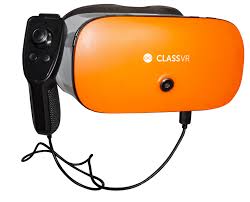
The Hardware: ClassVR Headsets

ClassVR headsets provide a safe and secure way for students to explore VR & AR in the classroom with the teacher keeping full control over each device. From a comfortable VR experience using the adjustable head straps to the intuitive and simple to use interface and controls, ClassVR headsets have been designed specifically for students of all ages.

The Software: ClassVR Teacher Portal

The ClassVR Portal ensures teachers can confidently manage students and add value to lessons when using VR & AR in lessons. Easily search and build VR playlists using the drag and drop functionality, deliver lessons simultaneously and guide students through experiences using set dynamic points of interest. Teachers are always in control and the real-time class view provides full visibility of what and where their students are exploring in the headsets.

The Content: Curriculum-Aligned VR & AR Resources
The ClassVR Portal contains thousands of pedagogically sound, curriculum-aligned VR & AR resources including content, downloadable lessons plans, guides and worksheets to boost student engagement in every lesson. Teachers can also upload their own content, access the community of educational resources shared by existing ClassVR users and other third-party educational VR & AR content providers.

For more info on CLASSVR, kindly visit their website: www.classvr.com

LENOVO ThinkReality

DESCRIPTION AND FEATURES

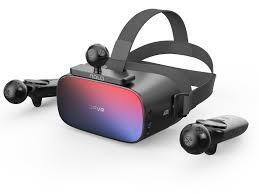
Discover the DPVR P1 Pro EDU headset

These powerful, standalone devices are ready to deliver immersive experiences straight out of the box, with zero-touch device registration and content management.
icon systems management@3x

Integrated audio

icon end point security 0

Immersive visualizations

icon cloud eco systems

Up to 3 hours’ battery life

icon warranty
icon premier support

Headset integrated touchpad and 3DoF wireless controller

Visit https://techtoday.lenovo.com/us/en/solutions/k12-education for more nformation about this hardware.

Google Cardboard
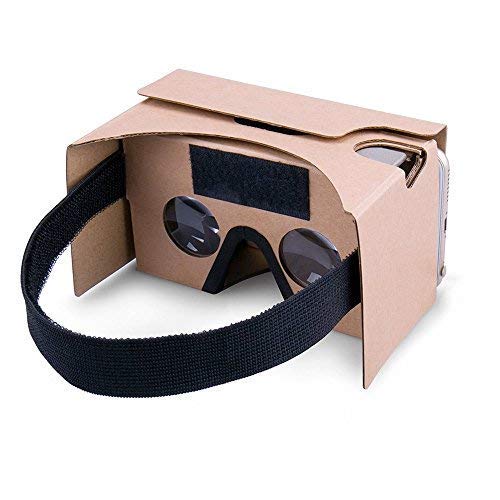
Google Cardboard brings immersive experiences to everyone in a simple and affordable way. Whether you fold your own or buy a certified viewer, you’re just one step away from experiencing virtual reality on your smartphone.

With a wide variety of viewers to choose from, you’re sure to find one that fits you just right.

VREDDO

VReddo is an education and training technology provider based in Brisbane, Australia. We are dedicated to building innovative and practical learning solutions which enable high learning retention and simplify the communication of complex problems through interactive software.

Their mission is to help organisations improve the effectiveness of their learning and development programs through the incorporation of Virtual Reality (VR) via these 4 VReddo solutions:

a. VReddo Classrooms

Interactive Live VR Classroom Training

VReddo Training Labs

Interactive VR Training Experiences

VReddo Skillsets

Immersive, always-on VR Learning Modules

VReddo Showcases

Immersive VR Demonstrations

VReddo is built for the Oculus platform, running on a secure Android operating system. The Oculus platform is designed for isolated application instances to ensure no interference or access from outside applications. VReddo recognises user data and class content security is paramount and has implemented a range of security features to ensure 100% protection.

User data to and from AWS requires authentication.

VReddo’s data input methods use physical systems. All brute force attempts are 100% ineffective.

VReddo’s engine uses Unity and Photon servers supporting Diffie Hellmann Key Exchange using AES encryption.

VReddo infrastructure resides in Amazon Web Service’s South East 2 region, which is based in Sydney.

VReddo infrastructure has been purpose-built in AWS for high availability with both VReddo and the Content Management System utilising the full suite of AWS security features. (As seen on their website: http://www.vreddo.com)

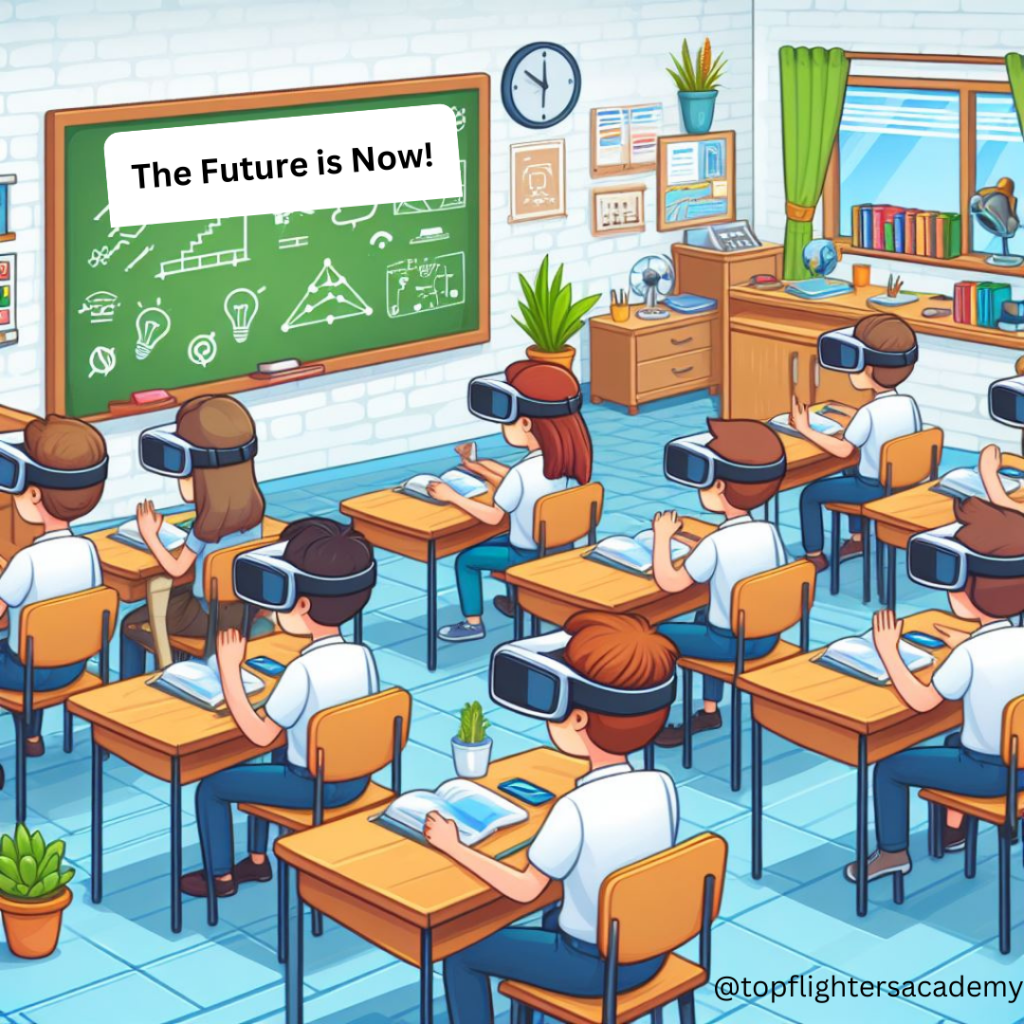
Thank you for stopping by today! Continue to explore VR/AR in your little corner. The future is now! See you tomorrow!

To your best interest,

Funke Akpan

Technology Integration Expert

Founder, Topflighters Academy

DAY #5 VR/AR CLASSROOM EXPERIENCE

SUBJECT: Exploring Virtual Reality Hardware Components


Day 7: Exploring Virtual Reality Hardware Components

Welcome to Day 7 of our journey into the immersive world of Virtual Reality (VR)! Today, we’ll take a closer look at the essential hardware components that make up the backbone of any VR experience. These components work seamlessly together to transport users into captivating virtual environments, creating an unparalleled sense of presence and engagement.

VR Headsets:
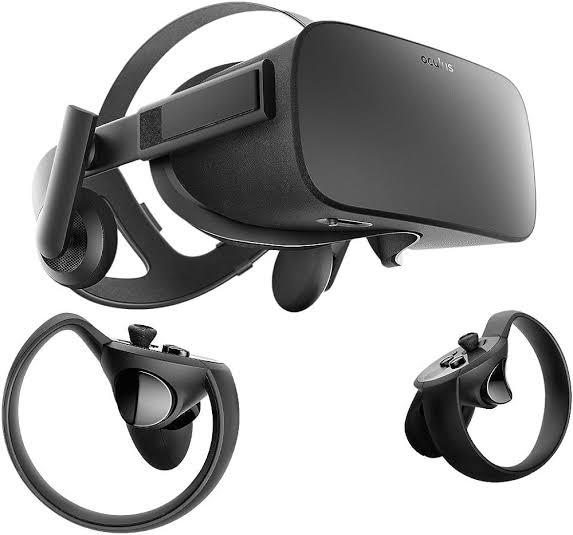
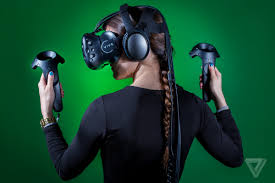
At the heart of the VR experience is the VR headset, a device that users wear over their eyes to immerse themselves in virtual worlds. Examples of popular VR headsets include the Oculus Rift, HTC Vive, and PlayStation VR. These devices employ high-resolution displays, motion sensors, and often integrated headphones to deliver a visually stunning and immersive experience.

Controllers:
Enhancing interaction within virtual environments, controllers are handheld devices that allow users to manipulate and navigate the VR space. Examples include the Oculus Touch controllers and the HTC Vive controllers, which feature motion tracking and haptic feedback to simulate the sense of touch in the virtual realm.

Sensors and Tracking Systems:
To precisely track user movements and gestures, VR systems utilize external sensors or built-in cameras. For instance, the Oculus Rift relies on external sensors that detect the position of the headset and controllers in a defined space, while inside-out tracking systems, like those found in the Oculus Quest, use cameras embedded in the headset to monitor the surroundings.

Computing Devices:
Powering the immersive experiences in VR requires robust computing devices. VR-ready computers or gaming consoles are equipped with high-performance graphics cards and processors. Devices like the Oculus Link allow standalone headsets to connect to a computer, leveraging its processing power for more graphically demanding content.

Accessories:
Various accessories enhance the VR experience. Charging stations keep untethered devices powered up, protective cases safeguard hardware, and additional peripherals, such as VR gloves or haptic vests, can add layers of sensory feedback to create a more immersive encounter.

SPECIFIC EXAMPLES OF VIRTUAL REALITY HARDWARE

A. SMARTPHONE-BASED VR HEADSET

BRAND: UMEEUTOO

(As seen on AMAZON)

PICTORIAL DESCRIPTION

Features & details

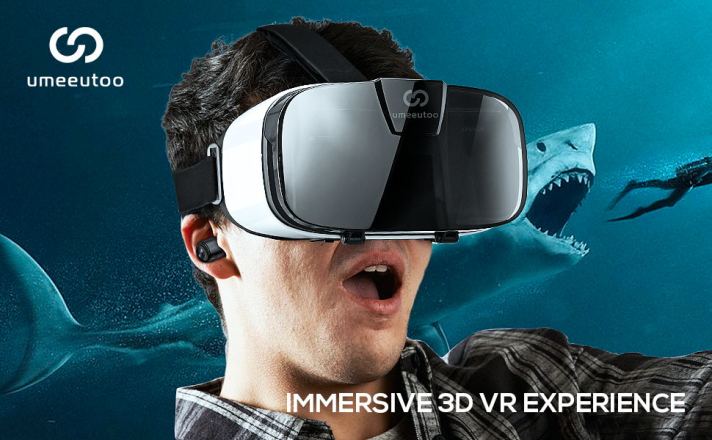
FITS ALMOST EVERY PHONE:3D VR headsets are compatible with smartphones with a 4.5″ x 6.3” screen such as for iPhone models X, XR, XS, 8, 8 plus, 9, 9 plus, 11, 11 pro, 12 mini, 12 pro, SE, etcalso compatible with Samsung Android Galaxy Note 20, S20, OnePlus, Box VR, Google Pixel, etc

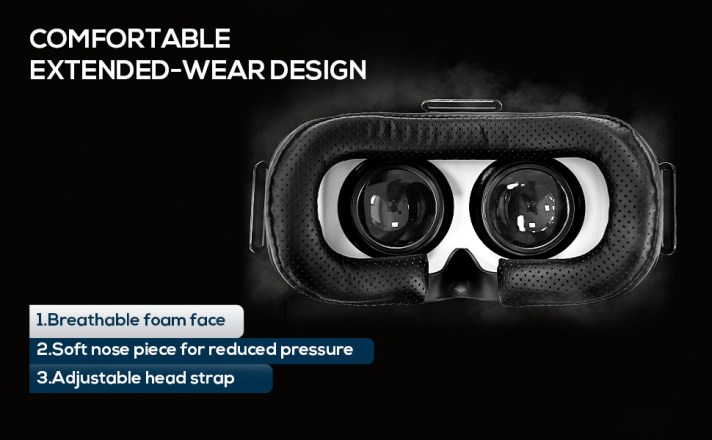
COMFORTABLE, EXTENDED WEAR DESIGN:we offer a comfort-fit experience with a fully adjustable head strap T-shaped headband will fit most head sizes (both adults and children),eyesight protection system,and reduce pressure around the face by adjusting the buckles on both sides.

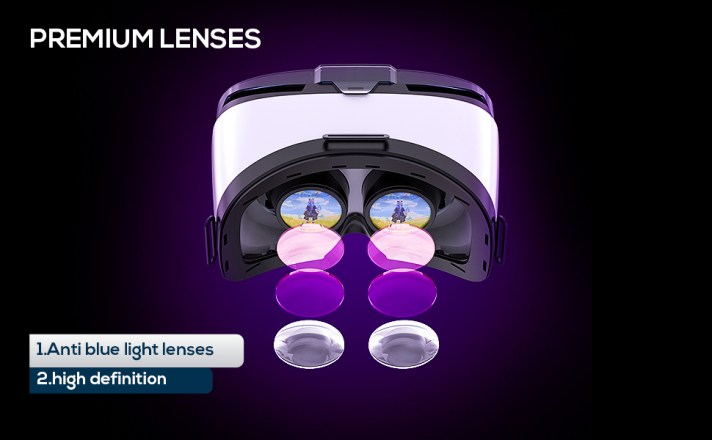
EYE-protected HD lenses:VR glasses headset using anti-reflective and Anti-blue light coating lenses to prevent eyestrain when using the headset. Also, sharp HD images are achieved by the aspheric and anti-distortion lens surface.

IMMERSIVE 3D EXPERIENCE: Taking into VR games/movies/videos.phone VR goggles 360-degree panoramic view bringing more shocking visual experience and immersive visual impa-ct.

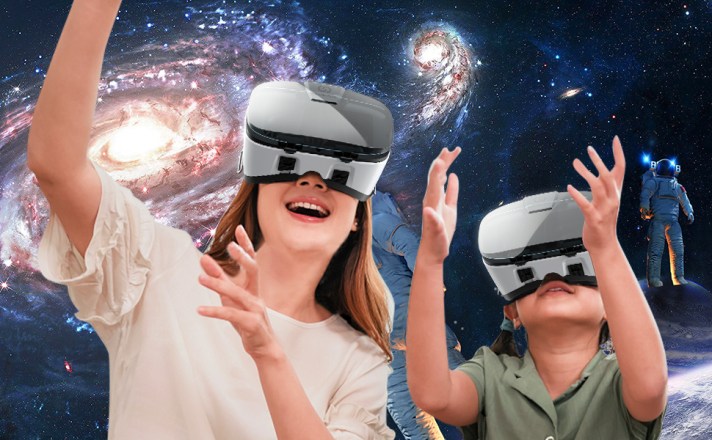
PERFECT GIFT FOR KIDS & ADULTS: those virtual reality glasses premium VR headsets are the perfect present and gift idea for kids and adult’s birthdays, Easter, Father’s Day, Halloween, Thanksgiving, and ChristmasChristmas

Amount: $30 (Amazon)

TETHERED VIRTUAL REALITY HEADSET

BRAND:

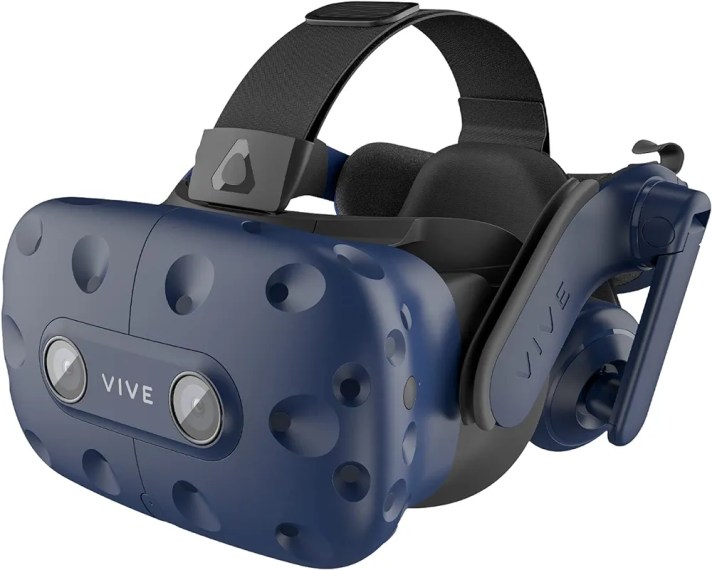
HTC Vive Pro Virtual Reality Full System

Description

Built to meet the needs of today’s most demanding VR users, VIVE Pro is an easy-to-deploy VR system that scales with your business and provides the richest feature set for professional users. From seated environments to expansive, multi-user deployments, VIVE Pro delivers the highest fidelity, clearest audio and most immersive VR experience. HTC has your back with after-sales support as well. Because you are purchasing this authentic HTC VIVE product from an authorized retailer, your VIVE Pro 2 comes with a 12-month limited warranty.

Features & details

STEAM VR 2.0 TRACKING – From seated to standing to full 22’11”’ x 22’11” room-scale. Ideal for multi-user environments for sub-millimeter tracking accuracy

HIGH RESOLUTION DISPLAY – Dual-OLED displays with industry leading resolution of 2880 x 1600 pixels for unparalleled visual fidelity of graphics, text, and textures

SPATIAL AUDIO WITH NOISE CANCELLATION – Hi-res, high impedance headphones, 3D spatial sound with active noise cancellation for an immersive experience without distractions from real-world sounds

MULTI-USER AND EXTENDED USE – Even weight distribution of the headset, easy on and off, and adjustments for head size, glasses and interpupillary distance (IPD) makes multi-user and extended use easier than ever

VIVE TRACKER ECOSYSTEM – Expand business use cases by adding real-life objects to VIVE Tracker bringing the object into your virtual simulation. Ideal for motion capture, automotive, aerospace or heavy equipment simulation.

VIVEPORT INFINITY – Get 2 months of unlimited VR play of 700+ games & apps. 

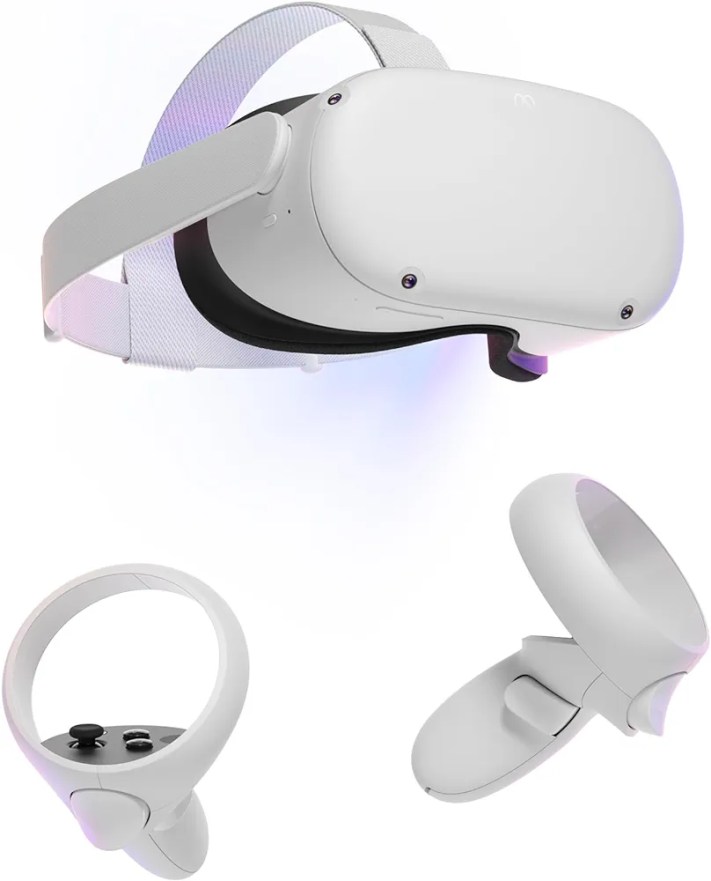
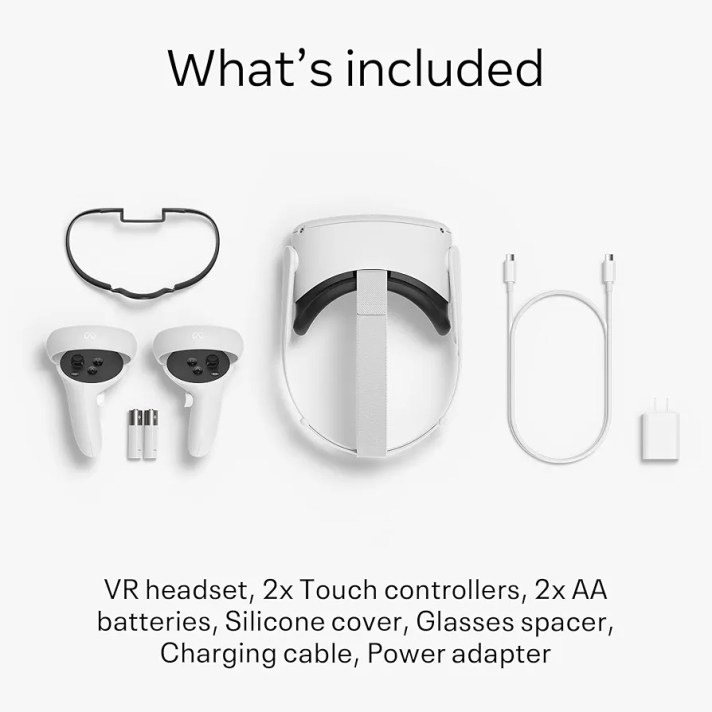
BRAND: Meta Quest 2 — Advanced All-In-One Virtual Reality Headset — 256 GB

Description

*Meta Quest is for ages 13+.

Features & details

Meta Quest is for ages 13+. Certain apps, games and experiences may be suitable for a more mature audience. Keep your experience smooth and seamless, even as high speed action unfolds around you with a super-fast processor and high-resolution display. (Packaging may vary) Meta Quest packaging will continue to carry the Oculus name and logo during the transition to our new branding.

Experience total immersion with 3D positional audio, hand tracking and haptic feedback, working together to make virtual worlds feel real.

Explore an expanding universe of over 250 titles across gaming, fitness, social/multiplayer and entertainment, including exclusive blockbuster releases and totally unique VR experiences.

Travel universes in blockbuster fantasies, scare yourself witless in horror adventures or collaborate with colleagues in innovative workspaces.

Come together in incredible social spaces and multiplayer arenas as you take in live events with friends and family, find your new workout crew or join quests with fellow adventurers.

Be truly free to roam in VR With a wireless headset, intuitive controls, a built-in battery, easy setup and no PC or console needed*

(As seen on Amazon Store)

KIndly join us again tomorrow as we delve deeper into specifics hardware made especially for classroom experience!

To your best interest,

Teacher Funke Akpan

Technology Integration Expert,

Founder, Topflighters Academy

DAY #6 VR/AR CLASSROOM EXPERIENCE

Welcome Dear Educators,

In today’s episode, we are going into details on Hardware Considerations for implementing Virtual Reality (VR) in education.

HARDWARE CONSIDERATIONS FOR VIRTUAL REALITY IN EDUCATION

  1. VR Headsets:
  • Tethered vs. Untethered: Tethered headsets, like the Oculus Rift or HTC Vive, require a connection to a computer, providing high-quality graphics. Untethered headsets, such as the Oculus Quest or standalone devices, offer more mobility but may have slightly lower graphical capabilities.
  • Compatibility: Ensure that the VR headset is compatible with the software and educational content planned for use. Verify the compatibility with platforms like Oculus, SteamVR, or any specific educational software.
  • Comfort and Adjustability: Prioritize comfort and adjustability, as students will likely wear the headsets for extended periods. Look for features like adjustable straps, cushioning, and ergonomic designs to ensure a comfortable experience for users.
  • 2. Controllers:
    • Interaction: Consider the level of interactivity required for educational experiences. Hand controllers provide a more immersive experience and are suitable for activities like virtual experiments or art creation. Simpler controllers or gaze-based interactions may be sufficient for more straightforward content.
    • Ease of Use: Opt for controllers that are intuitive and easy to use, especially for younger students. Simple button layouts and ergonomic designs can enhance the overall usability of the VR system.
    OCULUS QUEST
    • 3. Tracking Systems:
    • Inside-out vs. Outside-in Tracking: Inside-out tracking systems, where sensors are integrated into the headset, offer greater mobility without external sensors. Outside-in tracking relies on external sensors, providing more precise tracking but requiring additional setup.
    • Room Scale vs. Seated Experiences: Determine whether the educational content requires students to move around in a physical space (room-scale) or if seated experiences are sufficient. Room-scale experiences offer more interaction but may require more significant space.
    1. 4. Computing Devices:
    • System Requirements: Check the minimum system requirements for the VR content, and ensure that the computers or laptops in the educational environment meet or exceed those specifications. VR-ready computers with powerful graphics cards are crucial for delivering a smooth experience.
    • Graphics Cards and Processing Power: High-quality graphics cards and ample processing power are essential for rendering detailed VR environments. Consider upgrading existing hardware or investing in new computers that can handle the demands of VR content.
    HTC VIVE
    1. 5. Accessories:
    • Charging Stations: If using untethered VR devices, implement charging stations to ensure that the devices are always ready for use. Consider having extra batteries or charging cables available to minimize downtime.
    • Protective Covers and Cases: To prolong the lifespan of VR hardware, invest in protective covers or cases. This is particularly important in educational settings where devices may be shared among students, increasing the risk of wear and tear.
    1. 6. Safety Considerations:
    • Health and Safety Features: Look for VR systems that prioritize user safety. Adjustable interpupillary distance (IPD) settings accommodate different eye distances, reducing eye strain. Ensure that the hardware complies with safety standards to protect users from potential health issues.
    • Hygiene Solutions: In shared environments, consider hygiene solutions to maintain cleanliness. Removable and cleanable face cushions or disposable covers can help prevent the spread of germs and ensure a more hygienic VR experience.
    1. 7. Budget and Scalability:
    • Total Cost of Ownership (TCO): Consider the overall cost of implementing VR in education. Calculate the total cost of ownership, including hardware, software, accessories, maintenance, and potential future upgrades. Ensure that the chosen solution aligns with the budgetary constraints of the institution.
    • Scalability: Choose a VR solution that aligns with scalability goals. Determine whether the hardware can be easily expanded or replicated as the VR program grows, and factor in costs associated with scaling up.
    1. 8. Technical Support and Warranty:
    • Vendor Support: Opt for hardware from reputable vendors that offer reliable technical support. Check if the vendor provides regular updates, troubleshooting resources, and a responsive customer support system.
    • Warranty: Verify the warranty options provided with the VR hardware. A comprehensive warranty can be crucial in educational settings where devices are subject to heavy usage. Consider extended warranty options for added peace of mind.

    By addressing these considerations, educational institutions can make informed decisions when selecting VR hardware, ensuring a successful integration of immersive technology into the learning environment. A thoughtful approach to hardware choices contributes to a positive and effective VR learning experience for students and educators alike.

    We shall go into more details tomorrow by looking at specific VR headsets and the features. Stay tuned!

    Teacher Funke Akpan

    Technology Integration Expert,

    Topflighters Academy

    DAY #5 VR/AR CLASSROOM EXPERIENCE

    Augmented Reality in Education: Transforming Learning Across Subjects

    Welcome to Day #5 Educators

    I trust that you’ve already acquired valuable insights into the VR/AR classroom experience. Now, let’s delve deeper into the diverse applications of Augmented Reality (AR) across various subjects in the classroom and explore how it enriches the learning experience.

    In recent years, technological advancements have revolutionized the way we approach education. One such innovation that holds tremendous potential is Augmented Reality (AR). By seamlessly blending the physical and digital worlds, AR opens up exciting possibilities for enhancing learning experiences across various subjects. In this blog post, we’ll explore how Augmented Reality can positively impact education in subjects ranging from mathematics to environmental science.

    1. Mathematics: Visualizing Abstract Concepts

    Augmented Reality brings abstract mathematical concepts to life, making them more tangible for students. Through interactive visualizations, students can manipulate geometric shapes, explore complex equations, and gain a deeper understanding of mathematical relationships. This immersive approach fosters engagement and helps students develop a more intuitive grasp of mathematical principles.

    2. English Language: Enhancing Language Proficiency

    In the realm of language education, Augmented Reality provides a dynamic tool for enhancing language proficiency. Interactive language exercises, pronunciation guides, and contextual examples create an immersive language learning experience. AR fosters a more engaging environment for students to practice and improve their language skills.

    3. Arts: Sparking Creativity and Expression

    In the arts, Augmented Reality takes creativity to new heights. By merging the virtual with the physical, AR enables students to animate their artwork, explore new dimensions, and experiment with creative concepts. This technology enriches artistic expression, making the learning process more interactive and enjoyable.

    Brief Exploration of the Human Heart in Augmented Reality

    4. Sciences: Immersive Exploration of Concepts

    Augmented Reality transforms science education by offering immersive explorations of various concepts. Students can delve into 3D models of cells, explore chemical reactions, and witness virtual dissections. This hands-on, interactive approach fosters a deeper understanding of scientific principles and encourages curiosity.

    5. Social Studies and History: Bringing the Past to Life

    In the realm of social studies and history, Augmented Reality acts as a time machine, bringing historical events to life. Students can virtually explore ancient civilizations, witness key moments in history, and engage with historical artifacts. This immersive experience enhances historical understanding and makes the past more accessible and captivating.

    6. Geography: Real-world Exploration

    Geography education benefits from Augmented Reality by providing real-world exploration opportunities. Students can virtually travel to different locations, examine geographical features, and gain a deeper understanding of global interconnectedness. AR transforms geography lessons into dynamic and memorable experiences.

    7. Physical Education: Fusing Fitness with Technology

    Augmented Reality transforms physical education by fusing fitness with technology. Fitness routines and exercises can be visualized in 3D, offering students an interactive way to plan and monitor their workouts. AR promotes a holistic approach to health education, making physical activities more engaging and educational.

    8. Environmental Science: 3D Models for In-depth Understanding

    In the realm of environmental science, Augmented Reality facilitates a deeper understanding of complex ecosystems and environmental processes. Interactive 3D models allow students to explore environmental concepts in a more immersive and engaging manner, fostering a greater appreciation for the natural world.

    In conclusion, Augmented Reality has the potential to revolutionize education across various subjects. By providing interactive, immersive experiences, AR enhances learning engagement and deepens comprehension. As technology continues to evolve, the integration of Augmented Reality in education opens up exciting possibilities for educators and students alike, shaping a more dynamic and interactive future for learning.

    As we journey through the myriad applications of Augmented Reality in education, it becomes evident that this transformative technology has the power to reshape the educational landscape. From Mathematics to special education, AR facilitates immersive, interactive, and personalized learning experiences. As educators continue to explore and integrate this technology into their teaching methodologies, we can anticipate a future where learning is not confined to textbooks but extends into the realms of imagination and exploration, fostering a generation of students equipped with the skills and knowledge needed to thrive in a dynamic and interconnected world. Augmented Reality is not just enhancing education; it is revolutionizing the way we perceive and engage with knowledge.

    Thank you for reading! I believe you got value for your time, can’t wait to see you again tomorrow!

    Teacher Funke

    Technology Integration Expert

    Founder, Topflighters Academy
    Day #4 VR/AR CLASSROOM EXPERIENCE

    VR in Different Subjects – Unveiling the Educational Tapestry

    Hello, esteemed educators! Today, let’s embark on an even more profound exploration of how Virtual Reality (VR) weaves an intricate tapestry across various subjects, enriching the educational landscape with immersive and transformative experiences.

    Science: A Virtual Laboratory Beyond Conventions

    In the scientific realm, VR goes beyond supplementing traditional labs; it redefines them. Imagine conducting experiments without worrying about material constraints. VR enables students to delve into molecular structures, witness chemical reactions from different perspectives, and even simulate biological processes. This not only sparks curiosity but also instills a deeper appreciation for the scientific method and experimentation.

    The future of work is drastically changing due to technology advancements like VR. So, educators, school owners and administrators need to step up their game to prepare today’s learners for the future.

    History: Time-Traveling Through Dynamic Narratives

    The history classroom becomes a time-traveling vessel with VR. Instead of static textbook images, students can virtually visit historical landmarks, witness pivotal moments, and navigate through historically accurate recreations of ancient cities. By immersing themselves in historical narratives, students develop a nuanced understanding of the interconnectedness of events and the impact of historical decisions.

    Literature: Stepping Into the Pages of Stories

    Literature comes alive in VR, offering students the opportunity to step directly into the worlds crafted by authors. Imagine exploring the cobbled streets of Dickensian London or traversing the mythical landscapes of classic literature. This immersive approach not only enhances comprehension but also fosters empathy as students emotionally connect with characters and settings. Literature is no longer a passive experience; it becomes a journey of discovery.

    Mathematics: Navigating the Dimension of Understanding

    In the realm of mathematics, VR serves as a bridge between abstract concepts and tangible understanding. Students can manipulate geometric shapes in a three-dimensional space, observing how mathematical principles manifest in a visually interactive environment. By engaging with mathematical ideas through VR, students develop an intuitive grasp of complex concepts, transforming math from a challenge into an exploration.

    Languages: Cultural Immersion in a Virtual Landscape

    VR language learning extends beyond vocabulary and grammar drills. Students can immerse themselves in virtual environments where the target language is spoken authentically. From exploring culturally rich scenarios to participating in simulated conversations, VR provides an unparalleled linguistic journey. It’s not just about learning words; it’s about understanding cultural nuances and gaining practical language skills.

    Physical Education: Virtual Wellness and Dynamic Activities

    In the realm of physical education, VR introduces a new dimension to wellness. Virtual fitness programs engage students in dynamic activities, from practicing yoga in serene virtual landscapes to participating in virtual sports events. This not only introduces variety to physical education classes but also encourages a holistic approach to health and well-being.

    By embracing VR across diverse subjects, educators not only capture the attention of the digital generation but also nurture a generation of critical thinkers, empathetic learners, and creative problem solvers. As we continue our journey into the realm of VR/AR in education, stay tuned for more insights and practical applications!

    To your progress,

    Teacher Funke Akpan

    Technology Integration Officer

    Founder, Topflighters Academy

    DAY 3 VR/AR CLASSROOM EXPERIENCE

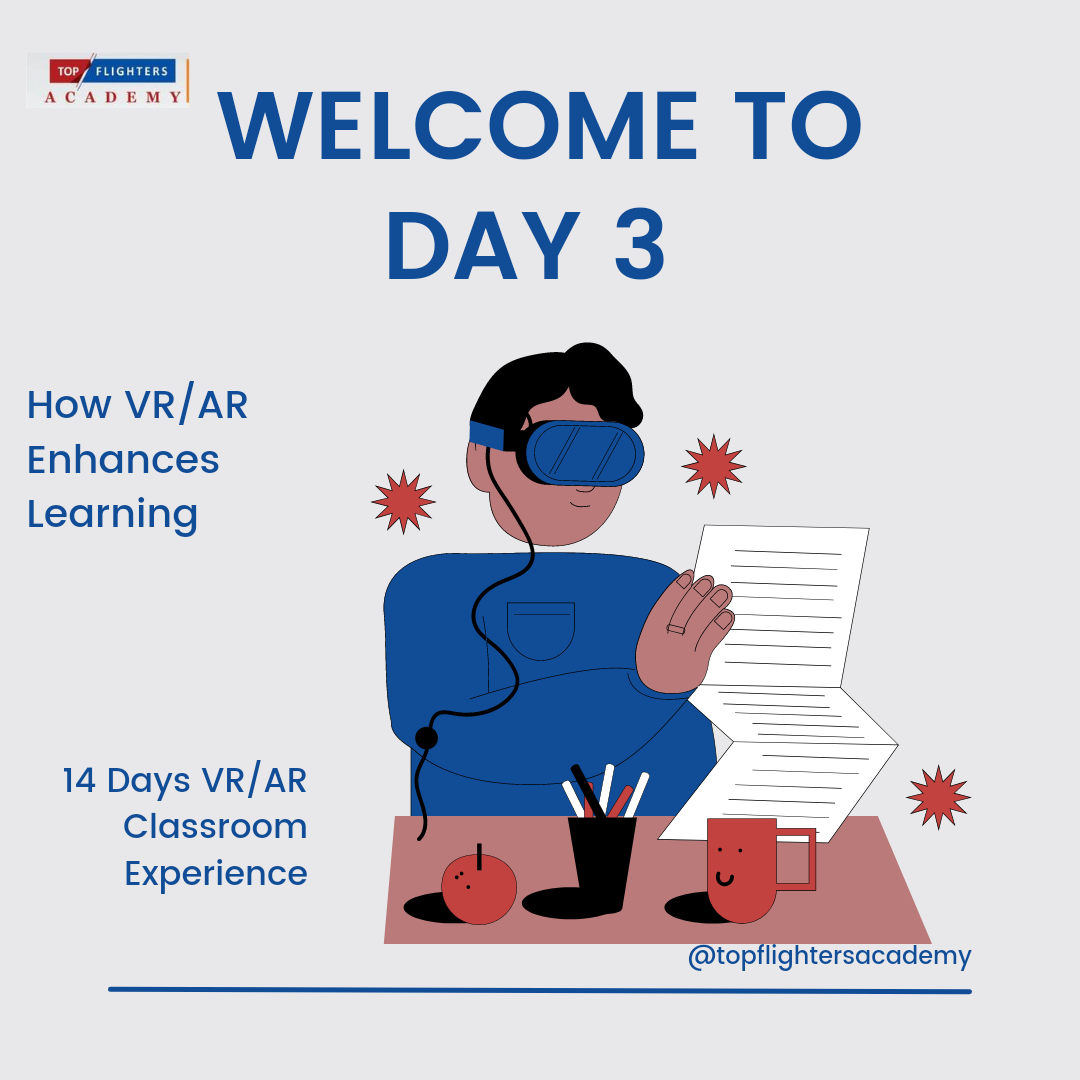
    SUBJECT: How VR/AR Enhances Learning

    Dear Educators,

    Welcome back to our immersive journey into the realm of VR/AR in education! As we continue our exploration, today marks an exhilarating dive into the unparalleled pedagogical advantages these transformative technologies offer. Join us as we uncover the specific ways VR/AR revolutionize educational experiences, from immersive simulations to personalized learning, and explore successful integrations in various subjects. We’ll also address common misconceptions and concerns, ensuring a clear path forward for an inclusive and enriching educational landscape. So, fasten your seatbelts and get ready to witness the transformative power of VR/AR in enhancing learning experiences!

    WELCOME TO DAY 3

    Specific Ways VR/AR Enhance Educational Experiences

    Immersive Simulations: VR is the passport to immersive experiences, transporting students into simulated environments. It enables deeper exploration and understanding of complex concepts. For instance, students can virtually dissect organisms or explore the intricacies of molecular structures, making abstract ideas tangible.

    Interactive Learning: AR enriches real-world settings by overlaying interactive elements. This fosters engagement and interaction as students interact with digital content integrated into their physical environment. Imagine historical figures coming to life or scientific phenomena happening before students’ eyes, sparking curiosity and enhancing learning.

    Personalized Learning: VR/AR adapt content to cater to diverse learning styles. They offer personalized learning experiences by adjusting the pace and presentation of content based on individual preferences. Students can learn at their own speed, ensuring comprehension and retention.

    Examples of Successful VR/AR Integration in Various Subjects

    STEM Subjects: In STEM, VR/AR technologies visualize abstract concepts. From exploring the solar system to simulating engineering designs, they offer hands-on experiences that deepen understanding and foster innovation.

    History and Social Sciences: VR/AR bring history alive! Students can witness pivotal historical events, step into ancient civilizations, or experience cultural heritage, making learning history an engaging and immersive journey.

    Arts and Languages: Creativity knows no bounds with VR/AR! They enable artistic expression in 3D spaces and facilitate language learning through immersive experiences, engaging students in new and captivating ways.

    Addressing Common Misconceptions and Concerns

    Motion Sickness and Safety: We understand concerns about motion sickness. Ensuring students take breaks during VR experiences and providing guidelines for comfortable usage can mitigate these issues. Safety measures, including supervised sessions and ergonomic adjustments, enhance overall comfort and well-being.

    Cost and Accessibility: Most AR/VR devices are expensive except for the Smartphone based VR googles which can be bought at prices less than $100. While the initial investment in VR/AR might seem daunting, strategies like seeking funding, exploring budget-friendly options, or partnering with institutions can alleviate financial barriers. Additionally, promoting shared usage and collaborating with tech-savvy students can enhance accessibility.

    LOCOMOTION IN VIRTUAL REALITY

    Above is a document that contains detailed information on movements in Virtual Reality.

    PROS AND CONS OF VIRTUAL REALITY 

    Listen to this comprehensive video on the Pros and Cons of Virtual Reality and how to take care of your VR goggles/box.

    As we continue this journey, let’s embrace these technologies while ensuring a safe, inclusive, and enriching learning environment for our students.

    Feel free to share your thoughts with us in the comment box!

    Excitedly exploring new horizons with you,

    Funke Akpan

    Technology Integration Officer

    Founder, Topflighters Academy
    🌟 Exclusive Access: Join Our 14-Day VR/AR Classroom Experience! 🚀


    Get ready to unlock the future of education! We’re thrilled to offer you an exclusive opportunity to participate in our 14-day Virtual Reality (VR) and Augmented Reality (AR) Classroom Experience.

    📆 Dates: Monday 8th – Monday 22nd January, 2023
    🎯 Focus: Explore, Engage, Excel in VR/AR Education

    🌐 What’s Included:

    • Introduction to VR/AR Technology
    • Strategies for Seamless Integration in Education
    • Interactive Sessions and Practical Demonstrations
    • Hands-on Experience with Cutting-Edge Tools

    🔐 Subscriber Access:
    Secure your spot now by subscribing to our newsletter! Exclusive access to this transformative learning experience awaits. Click https://forms.gle/181hHWG84KD29dKAA to subscribe and join us on this immersive educational journey.

    FAQs:

    Q: Who can participate in this program?
    A: This program is open to educators, school administrators, and anyone passionate about leveraging technology in education.

    Q: What equipment is required?
    A: A compatible device and internet access are recommended for optimal participation.

    Q: Will there be ongoing support during the program?
    A: Absolutely! Our dedicated support team will be available to assist with any queries or technical assistance throughout the 14-day program.

    Got questions? We’re here to help! Reach out to our dedicated support team for any queries or assistance.

    Don’t miss out on this opportunity to revolutionize your teaching or learning methods. Subscribe today and be at the forefront of educational innovation!

    You have a FREE gift, get one of Teacher Funke’s ebook for FREE here: https://selar.co/TheBasedClassroom

    Don’t forget to leave a review after reading!

    Warm regards,
    Funke Akpan

    Founder, Topflighters Academy
    +2348186504445