DAY #5 VR/AR CLASSROOM EXPERIENCE

Augmented Reality in Education: Transforming Learning Across Subjects

Welcome to Day #5 Educators

I trust that you’ve already acquired valuable insights into the VR/AR classroom experience. Now, let’s delve deeper into the diverse applications of Augmented Reality (AR) across various subjects in the classroom and explore how it enriches the learning experience.

In recent years, technological advancements have revolutionized the way we approach education. One such innovation that holds tremendous potential is Augmented Reality (AR). By seamlessly blending the physical and digital worlds, AR opens up exciting possibilities for enhancing learning experiences across various subjects. In this blog post, we’ll explore how Augmented Reality can positively impact education in subjects ranging from mathematics to environmental science.

1. Mathematics: Visualizing Abstract Concepts

Augmented Reality brings abstract mathematical concepts to life, making them more tangible for students. Through interactive visualizations, students can manipulate geometric shapes, explore complex equations, and gain a deeper understanding of mathematical relationships. This immersive approach fosters engagement and helps students develop a more intuitive grasp of mathematical principles.

2. English Language: Enhancing Language Proficiency

In the realm of language education, Augmented Reality provides a dynamic tool for enhancing language proficiency. Interactive language exercises, pronunciation guides, and contextual examples create an immersive language learning experience. AR fosters a more engaging environment for students to practice and improve their language skills.

3. Arts: Sparking Creativity and Expression

In the arts, Augmented Reality takes creativity to new heights. By merging the virtual with the physical, AR enables students to animate their artwork, explore new dimensions, and experiment with creative concepts. This technology enriches artistic expression, making the learning process more interactive and enjoyable.

Brief Exploration of the Human Heart in Augmented Reality

4. Sciences: Immersive Exploration of Concepts

Augmented Reality transforms science education by offering immersive explorations of various concepts. Students can delve into 3D models of cells, explore chemical reactions, and witness virtual dissections. This hands-on, interactive approach fosters a deeper understanding of scientific principles and encourages curiosity.

5. Social Studies and History: Bringing the Past to Life

In the realm of social studies and history, Augmented Reality acts as a time machine, bringing historical events to life. Students can virtually explore ancient civilizations, witness key moments in history, and engage with historical artifacts. This immersive experience enhances historical understanding and makes the past more accessible and captivating.

6. Geography: Real-world Exploration

Geography education benefits from Augmented Reality by providing real-world exploration opportunities. Students can virtually travel to different locations, examine geographical features, and gain a deeper understanding of global interconnectedness. AR transforms geography lessons into dynamic and memorable experiences.

7. Physical Education: Fusing Fitness with Technology

Augmented Reality transforms physical education by fusing fitness with technology. Fitness routines and exercises can be visualized in 3D, offering students an interactive way to plan and monitor their workouts. AR promotes a holistic approach to health education, making physical activities more engaging and educational.

8. Environmental Science: 3D Models for In-depth Understanding

In the realm of environmental science, Augmented Reality facilitates a deeper understanding of complex ecosystems and environmental processes. Interactive 3D models allow students to explore environmental concepts in a more immersive and engaging manner, fostering a greater appreciation for the natural world.

In conclusion, Augmented Reality has the potential to revolutionize education across various subjects. By providing interactive, immersive experiences, AR enhances learning engagement and deepens comprehension. As technology continues to evolve, the integration of Augmented Reality in education opens up exciting possibilities for educators and students alike, shaping a more dynamic and interactive future for learning.

As we journey through the myriad applications of Augmented Reality in education, it becomes evident that this transformative technology has the power to reshape the educational landscape. From Mathematics to special education, AR facilitates immersive, interactive, and personalized learning experiences. As educators continue to explore and integrate this technology into their teaching methodologies, we can anticipate a future where learning is not confined to textbooks but extends into the realms of imagination and exploration, fostering a generation of students equipped with the skills and knowledge needed to thrive in a dynamic and interconnected world. Augmented Reality is not just enhancing education; it is revolutionizing the way we perceive and engage with knowledge.

Thank you for reading! I believe you got value for your time, can’t wait to see you again tomorrow!

Teacher Funke

Technology Integration Expert

Founder, Topflighters Academy

Day #4 VR/AR CLASSROOM EXPERIENCE

VR in Different Subjects – Unveiling the Educational Tapestry

Hello, esteemed educators! Today, let’s embark on an even more profound exploration of how Virtual Reality (VR) weaves an intricate tapestry across various subjects, enriching the educational landscape with immersive and transformative experiences.

Science: A Virtual Laboratory Beyond Conventions

In the scientific realm, VR goes beyond supplementing traditional labs; it redefines them. Imagine conducting experiments without worrying about material constraints. VR enables students to delve into molecular structures, witness chemical reactions from different perspectives, and even simulate biological processes. This not only sparks curiosity but also instills a deeper appreciation for the scientific method and experimentation.

The future of work is drastically changing due to technology advancements like VR. So, educators, school owners and administrators need to step up their game to prepare today’s learners for the future.

History: Time-Traveling Through Dynamic Narratives

The history classroom becomes a time-traveling vessel with VR. Instead of static textbook images, students can virtually visit historical landmarks, witness pivotal moments, and navigate through historically accurate recreations of ancient cities. By immersing themselves in historical narratives, students develop a nuanced understanding of the interconnectedness of events and the impact of historical decisions.

Literature: Stepping Into the Pages of Stories

Literature comes alive in VR, offering students the opportunity to step directly into the worlds crafted by authors. Imagine exploring the cobbled streets of Dickensian London or traversing the mythical landscapes of classic literature. This immersive approach not only enhances comprehension but also fosters empathy as students emotionally connect with characters and settings. Literature is no longer a passive experience; it becomes a journey of discovery.

Mathematics: Navigating the Dimension of Understanding

In the realm of mathematics, VR serves as a bridge between abstract concepts and tangible understanding. Students can manipulate geometric shapes in a three-dimensional space, observing how mathematical principles manifest in a visually interactive environment. By engaging with mathematical ideas through VR, students develop an intuitive grasp of complex concepts, transforming math from a challenge into an exploration.

Languages: Cultural Immersion in a Virtual Landscape

VR language learning extends beyond vocabulary and grammar drills. Students can immerse themselves in virtual environments where the target language is spoken authentically. From exploring culturally rich scenarios to participating in simulated conversations, VR provides an unparalleled linguistic journey. It’s not just about learning words; it’s about understanding cultural nuances and gaining practical language skills.

Physical Education: Virtual Wellness and Dynamic Activities

In the realm of physical education, VR introduces a new dimension to wellness. Virtual fitness programs engage students in dynamic activities, from practicing yoga in serene virtual landscapes to participating in virtual sports events. This not only introduces variety to physical education classes but also encourages a holistic approach to health and well-being.

By embracing VR across diverse subjects, educators not only capture the attention of the digital generation but also nurture a generation of critical thinkers, empathetic learners, and creative problem solvers. As we continue our journey into the realm of VR/AR in education, stay tuned for more insights and practical applications!

To your progress,

Teacher Funke Akpan

Technology Integration Officer

Founder, Topflighters Academy

DAY 2 VR/AR CLASSROOM EXPERIENCE

Exploring the Tech Behind VR/AR

Welcome back, educators! Today, let’s dive into the fascinating world of Virtual Reality (VR) and Augmented Reality (AR), the technologies reshaping our classrooms.

Detailed Explanation of VR Technology

Virtual Reality (VR): VR creates a simulated environment that immerses users in a digital world, completely replacing the real-world environment. In the classroom, VR allows students to explore and interact with 3D computer-generated environments. It offers a fully immersive experience where students can engage with educational content in a way that feels realistic and often allows for interactivity. For example, students can virtually visit historical landmarks, explore scientific concepts in 3D space, or experience simulations like biology dissections, offering an immersive and engaging learning experience.

Augmented Reality (AR): AR overlays digital content onto the real-world environment, enhancing what users see by adding virtual elements. In the classroom, AR supplements and enriches the physical surroundings with additional digital information. AR can bring textbooks, posters, or physical objects to life by overlaying relevant information, animations, or interactive elements when viewed through AR-enabled devices like smartphones or AR glasses. For instance, students can see 3D models of planets popping out of their textbooks, enhancing their understanding of astronomy, or witness historical events through AR-enhanced visualizations.

Both VR and AR offer unique ways to transform the classroom experience by providing immersive, interactive, and experiential learning opportunities that engage students in ways traditional methods cannot. They offer a dynamic and personalized learning environment where abstract concepts become tangible and learning becomes more engaging and memorable.

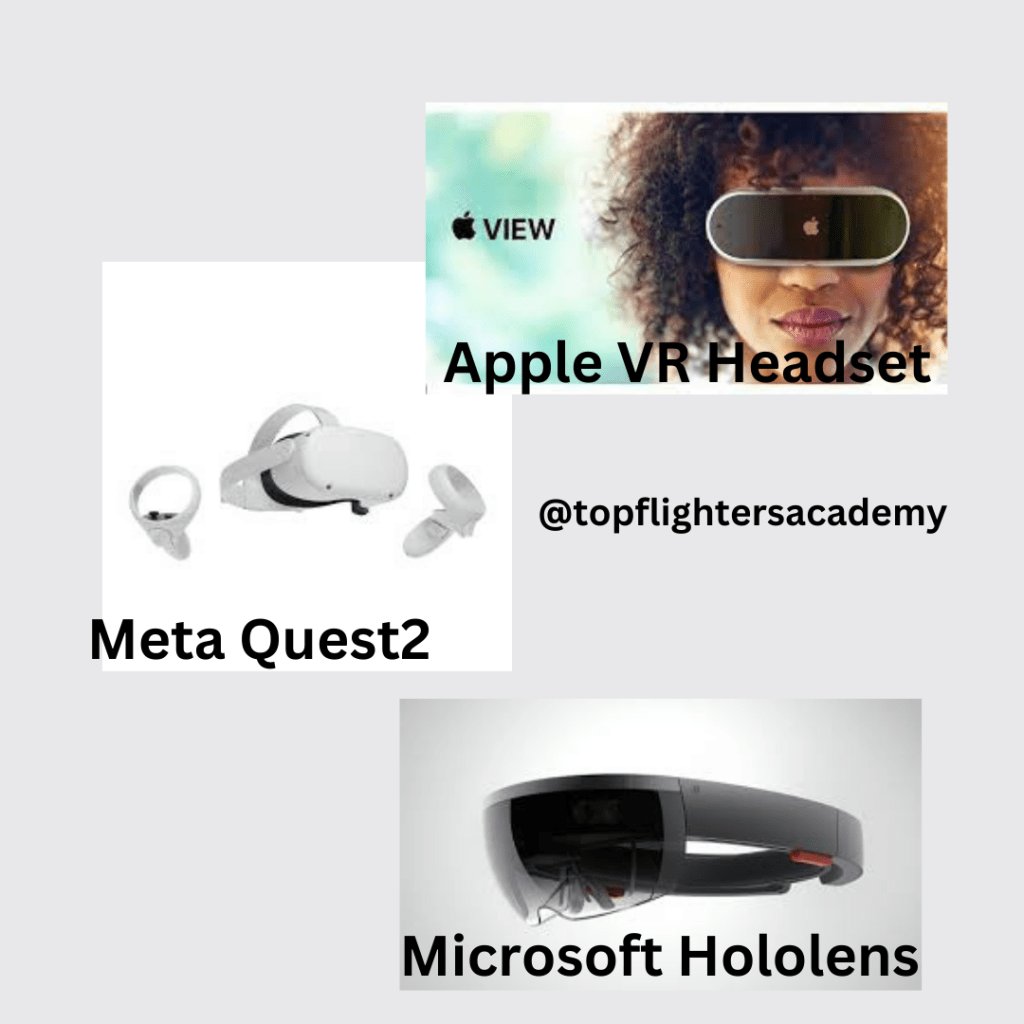
Hardware and Immersion: Think of VR hardware as the tools that transport us to different worlds right from our desks. VR headsets, like Oculus Rift or HTC Vive, serve as the windows into these virtual realms. These headsets come with controllers and sensors that let us navigate and interact with the virtual space, making us feel like we’re truly part of the experience.

Motion Tracking and Interaction: Imagine this: as you move your head or hands, the virtual world responds instantly. That’s the magic of VR’s motion tracking! These systems detect our movements, translating them into actions within the virtual environment. This interaction makes learning incredibly engaging and hands-on, whether exploring the human body or traveling through historical events.

Detailed Explanation of AR Technology

Overlaying Digital Content: Now, think of AR as adding a layer of information to the world around us. Using devices like smartphones or AR glasses, AR technology superimposes digital content onto our physical environment. Remember playing with filters on your phone that placed digital objects in your real-world surroundings? That’s AR in action!

In this short video, I added a digital element to my physical space. That is what AR is all about!

Spatial Mapping and Object Recognition: AR doesn’t just add any content; it’s smart! AR devices map our surroundings and recognize objects in real-time. This means they can enhance what we see by adding information or animations to specific objects or spaces. It’s like having an interactive encyclopedia pop up whenever you look at something!

Examples of Devices Used for VR/AR Experiences

VR Devices: These are like the portals to other dimensions! Devices like Oculus Rift, HTC Vive, or PlayStation VR are some of the leading VR headsets. They offer diverse experiences, from exploring ancient civilizations to diving into the depths of the ocean, making learning an adventure.

AR Devices: AR devices like Microsoft HoloLens, Google Glass, or even AR applications on smartphones, allow us to interact with digital content while still being present in our real surroundings. They’re like having a magic lens that reveals hidden layers of information about the world around us. Another example is SnapAR Google (SnapChat Inc.)

Types of VR

Virtual Reality (VR) technology has evolved to accommodate various applications and experiences. Here are different types of VR:

1. Non-Immersive VR: This type of VR typically involves a less immersive experience, often through desktop or mobile applications. It doesn’t fully engulf the user in a virtual environment but offers some elements of VR, such as 360-degree videos or simple VR applications.

2. Semi-Immersive VR: These setups provide a more immersive experience than non-immersive VR but don’t completely immerse users. They often use projection systems or large screens to create an immersive environment, allowing users to interact with the simulated world to some extent.

3. Fully Immersive VR: This type of VR offers the most immersive experience, transporting users to entirely virtual environments using head-mounted displays (HMDs) like Oculus Rift, HTC Vive, or PlayStation VR. Users can interact with and navigate these environments in a manner that makes them feel fully present within the virtual world.

4. Collaborative VR: Collaborative VR environments allow multiple users to interact and engage within the same virtual space simultaneously. These setups are beneficial for group activities, team projects, or remote collaboration where users can communicate and interact in a shared virtual setting.

5. Web-based VR: This type of VR utilizes web technologies to provide immersive experiences directly through web browsers. It enables users to access VR content without requiring specific applications or installations, making VR more accessible and easy to use.

Each type of VR offers unique experiences and applications, catering to different needs and preferences, whether for entertainment, education, training, or professional purposes.

Different Kinds of VR Googles

There are several types of VR goggles available, each offering different features, experiences, and functionalities. Here are some common types:

1. Tethered VR Headsets: These VR goggles are connected to a computer or gaming console, providing high-quality immersive experiences. They often come with external sensors for precise tracking and offer extensive capabilities, making them suitable for gaming, professional applications, and high-fidelity experiences. Examples include Oculus Rift, HTC Vive, and Valve Index.

2. Standalone VR Headsets: These goggles don’t require a separate computer or console for operation. They contain all the necessary hardware and are more portable. They offer a good balance between quality and convenience, making them suitable for a wide range of applications. Oculus Quest series and HTC Vive Focus are examples of standalone VR headsets.

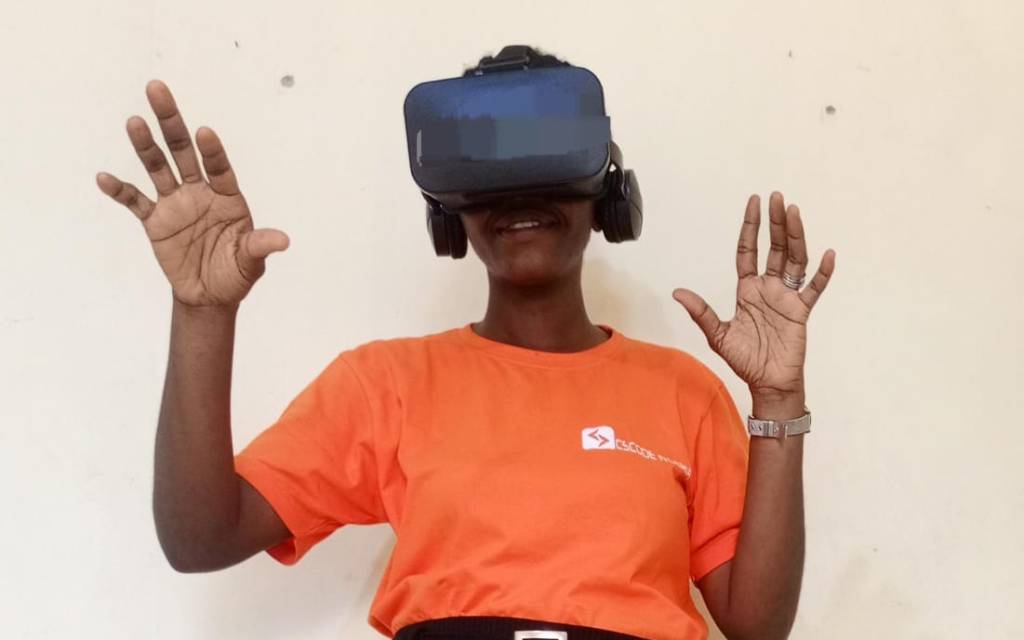
3. Smartphone-based VR Headsets: These goggles rely on smartphones to provide the VR experience. Users place their smartphones into the headset, which uses the phone’s display and processing power to create VR content. They are more affordable and accessible but typically offer less immersive experiences compared to dedicated VR headsets. Examples include Samsung Gear VR and Google Cardboard.

4. Mixed Reality Headsets: These goggles combine elements of both VR and AR, allowing users to interact with both virtual and real-world environments. They offer a blend of digital content and real-world interactions, making them suitable for various applications, including gaming, education, and professional use. Microsoft HoloLens and Magic Leap are examples of mixed reality headsets. Microsoft Hololens is an example of a Mixed Reality Headset.

Each type of VR goggle has its advantages and limitations, catering to different user preferences, usage scenarios, and levels of immersion. The choice often depends on factors like budget, intended use, mobility, and desired level of immersion and interaction.

An example of a Smartphone-based VR headset worn by Teacher Funke

Tomorrow, we’ll explore how these technologies seamlessly integrate into educational settings, creating a whole new world of learning opportunities right inside our classrooms!

Keep exploring,

Funke Akpan

Founder, Topfligters Academy

Technology Integration Expert

+2348186504445

Empowering Learners for the Future Through Based Learning

Elementary teacher and her students using laptop during computer class at school.

Empowering Learners for the Future Through Based Learning

As we step into an increasingly interconnected and technology-driven world, it becomes vital for educators to prepare their learners for the challenges and opportunities of the future. One of the most effective ways to achieve this goal is by embracing various forms of based learning in the classroom. Based learning approaches, such as game-based learning, connection-based learning, and flipped learning, have proven to be transformative in education, fostering engagement, critical thinking, and creativity among students.

1. Game-Based Learning:
Game-based learning leverages gamification principles to make the learning experience more interactive and enjoyable. By integrating educational content into games, teachers can engage learners in problem-solving, decision-making, and skill development while keeping them motivated and focused. The element of competition, achievement, and rewards in games makes the learning process more appealing, leading to better retention and understanding of the subject matter.

Through game-based learning, students can explore complex concepts, experiment with different strategies, and learn from both successes and failures. This approach enhances their problem-solving abilities and encourages a growth mindset where they embrace challenges as opportunities for growth. Additionally, game-based learning can foster collaboration and teamwork as students often work together to achieve common goals within the games.

← Back

Thank you for your response. ✨

2. Connection-Based Learning:
Connection-based learning emphasizes building meaningful connections between learners, educators, and the outside world. It recognizes the value of networks and collaborative learning environments in today’s interconnected society. By utilizing technology and social platforms, teachers can create opportunities for students to interact with experts, professionals, and other learners worldwide, exposing them to diverse perspectives and experiences.

Through connection-based learning, learners gain real-world insights, improve their communication skills, and develop a global awareness that is crucial in the modern workforce. The connections made during this learning process can open doors to future opportunities, such as mentorships, internships, and even career prospects. Moreover, learners develop empathy and a sense of belonging as they interact with people from different backgrounds and cultures, fostering a more inclusive and compassionate society.

A Lesson Done With Connection Based Learning

3. Flipped Learning:
Flipped learning reverses the traditional classroom model, where students learn new concepts at home through pre-recorded videos or readings and engage in active discussions, problem-solving, and application of knowledge during class time. This approach allows students to learn at their own pace, giving them the flexibility to review and grasp difficult concepts before the in-person sessions.

Flipped learning promotes student autonomy and responsibility for their education, encouraging them to take ownership of their learning journey. It also allows teachers to personalize instruction based on individual needs and interests, leading to more profound learning outcomes. During in-class activities, educators can facilitate collaborative projects, critical thinking exercises, and hands-on experiences, maximizing the benefits of face-to-face interactions.

An example of a flipped lesson!
Video Response From a Pupil

Participate in the Forthcoming Webinar:

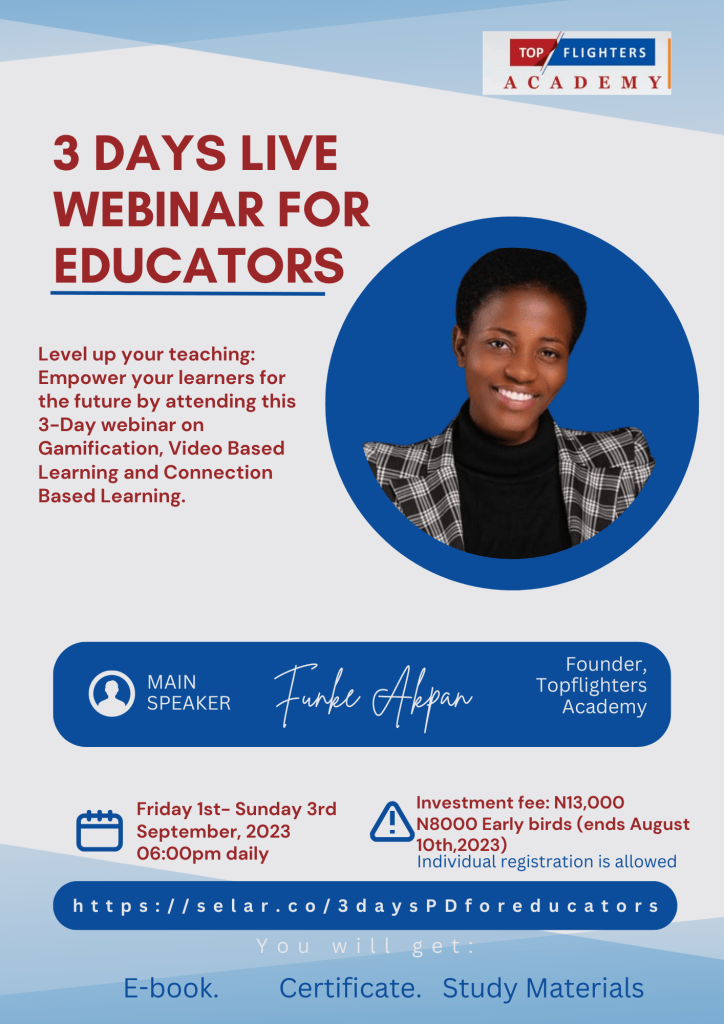
To empower educators with knowledge and skills in embracing these based learning approaches, we are excited to announce our upcoming webinar on “Empowering Learners for the Future: Embracing Game-Based Learning, Connection-Based Learning, and Flipped Learning in the Classroom.”

Date: Friday 1st – Sunday 3rd September, 2023
Time: 6:00 pm daily

During this webinar, expert speaker will delve into the principles and implementation strategies of each based learning approach. She will share successful case studies, practical tips, and resources to help teachers integrate these methods seamlessly into their classrooms.

Webinar Highlights:

  • Game-Based Learning: Strategies for incorporating games into the curriculum, selecting appropriate educational games, and assessing learning outcomes.
  • Connection-Based Learning: Building and nurturing connections within and beyond the classroom, leveraging technology for global collaboration, and facilitating virtual guest speakers.
  • Flipped Learning: Creating engaging and informative pre-recorded content, designing effective in-class activities, and personalized instruction techniques.

Webinar Benefits:
All participants will receive the following as appreciation for their active participation:

  • An exclusive e-book on Based Learning Strategies for the Future Classroom.
  • A Professional Development (PD) certificate that can be added to their LinkedIn profile, showcasing their commitment to advancing education.
  • Access to valuable study materials and resources to aid their continued professional growth.

Don’t miss this fantastic opportunity to upgrade your teaching methodologies and empower your learners for the challenges of tomorrow. Register now for the webinar using the following link:

To participate in the 3-Days Webinar https://selar.co/3daysPDforeducators

Participation in Game-Based Learning ONLY: https://selar.co/gamebasedlearningwebinar Bonus: You will be taught how to monetize your gaming skills.

Connection-Based Learning ONLY: https://selar.co/Connectionbasedlearningwebinar

Flipped Lesson ONLY https://selar.co/flippedlearningwebinar

The early birds offer (40% discount) ends on 10th August 2023

Join us as we embark on this journey to revolutionize education and create a future-ready generation of learners!

For more details, reach out to Teacher Funke here: https://wa.me/message/NTYOCQXCDGQFB1