🌟 Exclusive Access: Join Our 14-Day VR/AR Classroom Experience! 🚀


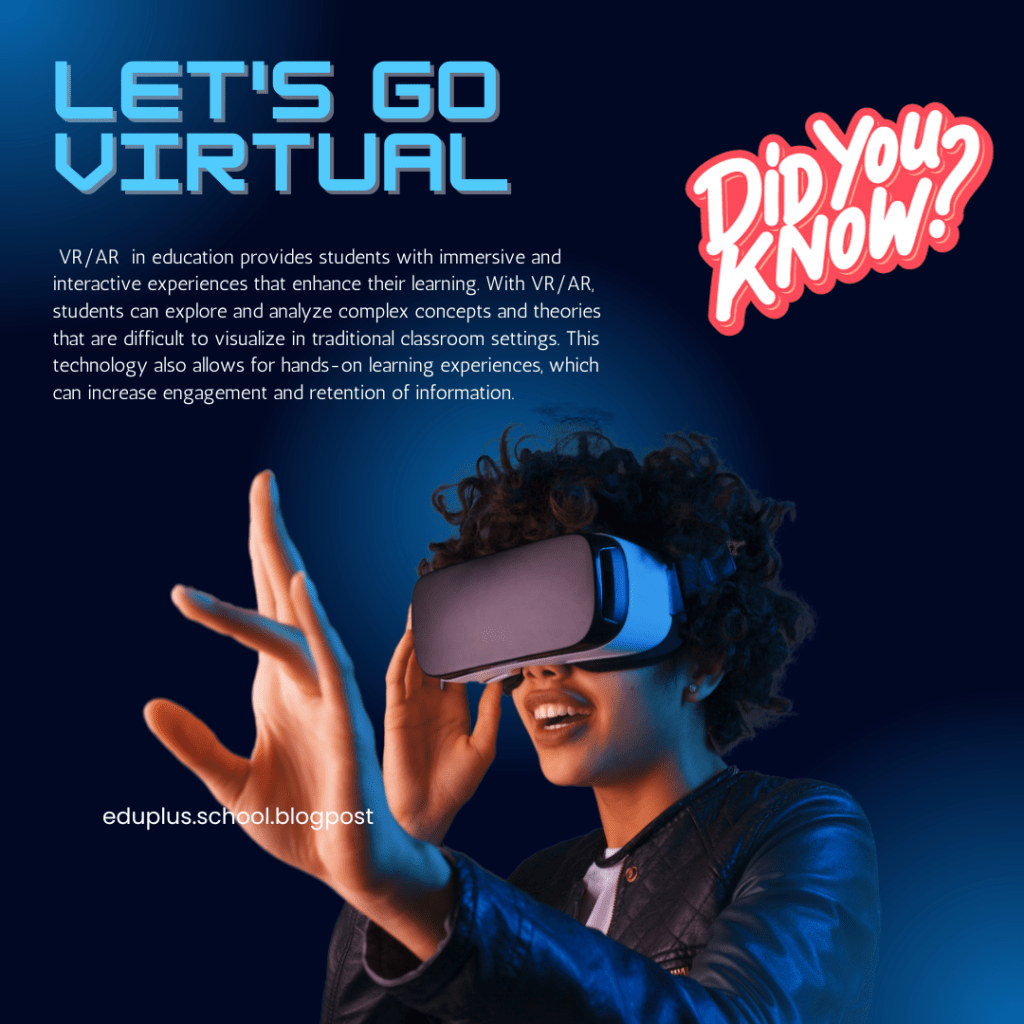
Get ready to unlock the future of education! We’re thrilled to offer you an exclusive opportunity to participate in our 14-day Virtual Reality (VR) and Augmented Reality (AR) Classroom Experience.

📆 Dates: Monday 8th – Monday 22nd January, 2023
🎯 Focus: Explore, Engage, Excel in VR/AR Education

🌐 What’s Included:

  • Introduction to VR/AR Technology
  • Strategies for Seamless Integration in Education
  • Interactive Sessions and Practical Demonstrations
  • Hands-on Experience with Cutting-Edge Tools

🔐 Subscriber Access:
Secure your spot now by subscribing to our newsletter! Exclusive access to this transformative learning experience awaits. Click https://forms.gle/181hHWG84KD29dKAA to subscribe and join us on this immersive educational journey.

FAQs:

Q: Who can participate in this program?
A: This program is open to educators, school administrators, and anyone passionate about leveraging technology in education.

Q: What equipment is required?
A: A compatible device and internet access are recommended for optimal participation.

Q: Will there be ongoing support during the program?
A: Absolutely! Our dedicated support team will be available to assist with any queries or technical assistance throughout the 14-day program.

Got questions? We’re here to help! Reach out to our dedicated support team for any queries or assistance.

Don’t miss out on this opportunity to revolutionize your teaching or learning methods. Subscribe today and be at the forefront of educational innovation!

You have a FREE gift, get one of Teacher Funke’s ebook for FREE here: https://selar.co/TheBasedClassroom

Don’t forget to leave a review after reading!

Warm regards,
Funke Akpan

Founder, Topflighters Academy

+2348186504445

Extended Reality – The New Normal in Education

In recent years, the landscape of education has been profoundly transformed by technological innovations. Among these advancements, extended reality, often referred to as XR, has emerged as a powerful tool to revolutionize the way we learn and interact with educational content. Within XR, three distinct categories stand out: Virtual Reality (VR), Augmented Reality (AR), and Mixed Reality (MR). In this blog post, we will delve into the history and evolution of extended reality, explore the meanings and differences between VR, AR, and MR, and weigh the pros and cons of these technologies in education. Additionally, we will discuss the compelling reasons to embrace VR and AR as invaluable assets in modern educational settings.

History and Evolution of Extended Reality

The concept of extended reality can be traced back to the 18th century, but it has gained significant traction in recent decades. Extended reality refers to a spectrum of technologies that extend, augment, or enhance the way we perceive and interact with the physical and digital worlds. It encompasses three main categories: Virtual Reality (VR), Augmented Reality (AR), and Mixed Reality (MR).

The history and evolution of XR

Understanding Virtual Reality, Augmented Reality, and Mixed Reality

  1. Virtual Reality (VR): VR immerses users in a fully digital environment, completely detached from the physical world. Users wear headsets that provide a 360-degree view of a computer-generated environment, allowing them to explore and interact within this synthetic space.
  2. Augmented Reality (AR): AR overlays digital elements onto the real world. This can be achieved through smartphone screens, glasses, or headsets. Users can see both physical and digital objects simultaneously, enhancing their real-world experiences with additional information or virtual objects.
  3. Mixed Reality (MR): MR combines elements of both VR and AR. In MR, digital objects interact with the physical environment in real-time. Users can interact with and manipulate virtual objects in their real-world context.
Microsoft Mesh is an example of Mixed Reality using the Hololens.

Differences Between VR and AR

The primary distinction between VR and AR lies in their level of immersion. VR provides a fully immersive digital experience, whereas AR overlays digital content onto the real world while maintaining a connection to the physical environment. Both technologies have unique use cases and benefits.

Pros and Cons of VR and AR in Education

Pros:

  1. Immersive Learning: VR allows students to immerse themselves in virtual environments, making abstract concepts tangible and increasing engagement and retention.
  2. Real-World Applications: AR can be used to enhance practical learning, such as medical training, by overlaying instructions and data onto real-life scenarios.
  3. Customized Learning: Both VR and AR can adapt content to individual learning styles and paces, catering to diverse educational needs.
  4. Accessibility: Students can access immersive educational content from anywhere, reducing geographical barriers and enhancing inclusivity.
  5. Interactive Collaboration: MR enables collaborative learning experiences, where students interact with both digital and physical components, promoting teamwork and problem-solving skills.

Cons:

  1. Cost: High-quality VR and AR hardware can be expensive, which may limit access for some educational institutions.
  2. Learning Curve: Teachers and students may require training to effectively use VR and AR tools.
  3. Distraction: Overuse or misuse of immersive technologies can lead to distractions and reduce the focus on educational goals.

Reasons to Embrace VR and AR in Education

  1. Enhanced Engagement: VR and AR make learning more engaging, stimulating, and memorable. Complex or abstract topics become easier to grasp when presented in a visually interactive manner.
  2. Hands-On Learning: These technologies provide hands-on experiences that are otherwise difficult or expensive to replicate in the real world, allowing students to experiment and learn in a safe environment.
  3. Global Learning: VR and AR enable students to connect with peers and experts worldwide, facilitating global collaboration and cultural exchange.
  4. Innovative Teaching Methods: Educators can use VR and AR to adopt innovative teaching methods, such as virtual field trips, 3D models, and simulations.
  5. Future-Ready Skills: Preparing students for the digital age, where VR and AR are increasingly relevant, ensures they acquire skills that are valuable in many industries.

In conclusion, Extended Reality, including VR and AR, has the potential to redefine education. It offers an immersive and interactive approach to learning, making education more engaging, accessible, and relevant to the evolving needs of students in the 21st century. As these technologies continue to advance and become more accessible, their role in education is poised to become the new normal, transforming the way we teach and learn. Embracing VR and AR in education is not just about adopting a trend; it’s about preparing students for the future and empowering them with the skills and knowledge they need to succeed in an increasingly digital world.

Do you wish to infuse VR/AR in your classroom or school, you can reach out to me here: funkeakpan79@gmail.com or send a WhatsApp message to +2348186504445

Thank you for reading! Kindly leave a comment if you find this fascinating!

Empowering Learners for the Future Through Based Learning

Elementary teacher and her students using laptop during computer class at school.

Empowering Learners for the Future Through Based Learning

As we step into an increasingly interconnected and technology-driven world, it becomes vital for educators to prepare their learners for the challenges and opportunities of the future. One of the most effective ways to achieve this goal is by embracing various forms of based learning in the classroom. Based learning approaches, such as game-based learning, connection-based learning, and flipped learning, have proven to be transformative in education, fostering engagement, critical thinking, and creativity among students.

1. Game-Based Learning:
Game-based learning leverages gamification principles to make the learning experience more interactive and enjoyable. By integrating educational content into games, teachers can engage learners in problem-solving, decision-making, and skill development while keeping them motivated and focused. The element of competition, achievement, and rewards in games makes the learning process more appealing, leading to better retention and understanding of the subject matter.

Through game-based learning, students can explore complex concepts, experiment with different strategies, and learn from both successes and failures. This approach enhances their problem-solving abilities and encourages a growth mindset where they embrace challenges as opportunities for growth. Additionally, game-based learning can foster collaboration and teamwork as students often work together to achieve common goals within the games.

← Back

Thank you for your response. ✨

2. Connection-Based Learning:
Connection-based learning emphasizes building meaningful connections between learners, educators, and the outside world. It recognizes the value of networks and collaborative learning environments in today’s interconnected society. By utilizing technology and social platforms, teachers can create opportunities for students to interact with experts, professionals, and other learners worldwide, exposing them to diverse perspectives and experiences.

Through connection-based learning, learners gain real-world insights, improve their communication skills, and develop a global awareness that is crucial in the modern workforce. The connections made during this learning process can open doors to future opportunities, such as mentorships, internships, and even career prospects. Moreover, learners develop empathy and a sense of belonging as they interact with people from different backgrounds and cultures, fostering a more inclusive and compassionate society.

A Lesson Done With Connection Based Learning

3. Flipped Learning:
Flipped learning reverses the traditional classroom model, where students learn new concepts at home through pre-recorded videos or readings and engage in active discussions, problem-solving, and application of knowledge during class time. This approach allows students to learn at their own pace, giving them the flexibility to review and grasp difficult concepts before the in-person sessions.

Flipped learning promotes student autonomy and responsibility for their education, encouraging them to take ownership of their learning journey. It also allows teachers to personalize instruction based on individual needs and interests, leading to more profound learning outcomes. During in-class activities, educators can facilitate collaborative projects, critical thinking exercises, and hands-on experiences, maximizing the benefits of face-to-face interactions.

An example of a flipped lesson!
Video Response From a Pupil

Participate in the Forthcoming Webinar:

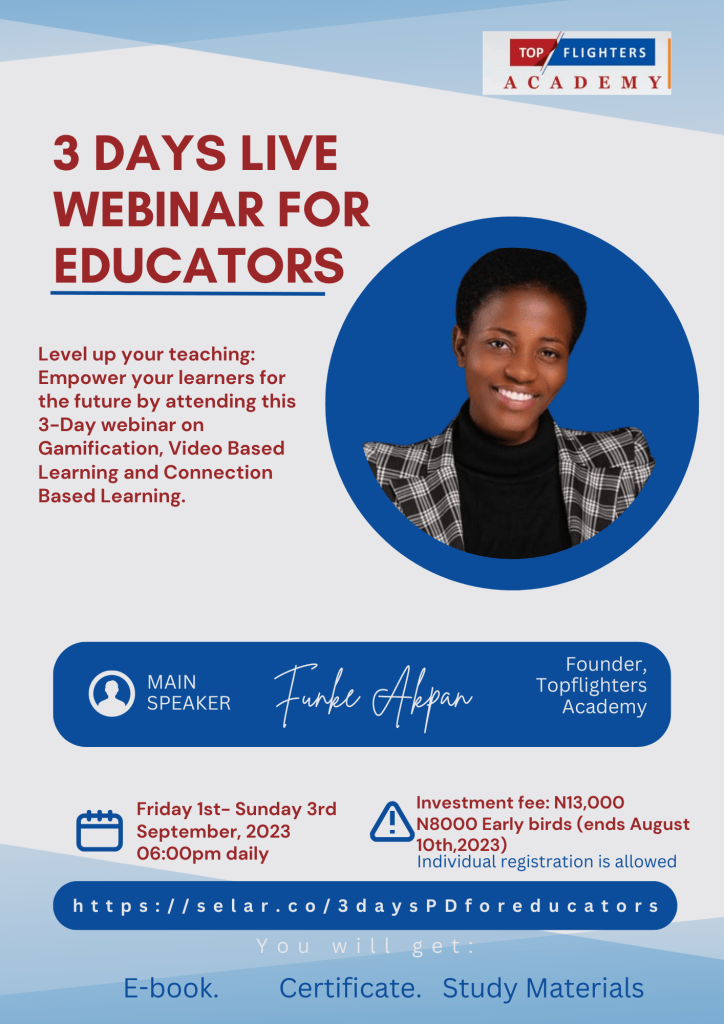
To empower educators with knowledge and skills in embracing these based learning approaches, we are excited to announce our upcoming webinar on “Empowering Learners for the Future: Embracing Game-Based Learning, Connection-Based Learning, and Flipped Learning in the Classroom.”

Date: Friday 1st – Sunday 3rd September, 2023
Time: 6:00 pm daily

During this webinar, expert speaker will delve into the principles and implementation strategies of each based learning approach. She will share successful case studies, practical tips, and resources to help teachers integrate these methods seamlessly into their classrooms.

Webinar Highlights:

  • Game-Based Learning: Strategies for incorporating games into the curriculum, selecting appropriate educational games, and assessing learning outcomes.
  • Connection-Based Learning: Building and nurturing connections within and beyond the classroom, leveraging technology for global collaboration, and facilitating virtual guest speakers.
  • Flipped Learning: Creating engaging and informative pre-recorded content, designing effective in-class activities, and personalized instruction techniques.

Webinar Benefits:
All participants will receive the following as appreciation for their active participation:

  • An exclusive e-book on Based Learning Strategies for the Future Classroom.
  • A Professional Development (PD) certificate that can be added to their LinkedIn profile, showcasing their commitment to advancing education.
  • Access to valuable study materials and resources to aid their continued professional growth.

Don’t miss this fantastic opportunity to upgrade your teaching methodologies and empower your learners for the challenges of tomorrow. Register now for the webinar using the following link:

To participate in the 3-Days Webinar https://selar.co/3daysPDforeducators

Participation in Game-Based Learning ONLY: https://selar.co/gamebasedlearningwebinar Bonus: You will be taught how to monetize your gaming skills.

Connection-Based Learning ONLY: https://selar.co/Connectionbasedlearningwebinar

Flipped Lesson ONLY https://selar.co/flippedlearningwebinar

The early birds offer (40% discount) ends on 10th August 2023

Join us as we embark on this journey to revolutionize education and create a future-ready generation of learners!

For more details, reach out to Teacher Funke here: https://wa.me/message/NTYOCQXCDGQFB1

Redefining Learning

How To Redefine Learning for the 21st Century

-Akpan Funke

Most of the articles and podcasts here on EduPlus will fall under the theme of learning so it’s a word I will use regularly. The aim of this post is to explore how others have defined it over the years and to present a new definition that’s fit for the 21st Century.

Do We Have to Define Learning?

Words have meanings and we use them to communicate with each other.
But it’s amazing how often we use one word when we mean another and this is often the major source of disagreement in everything from philosophical discussions to conversations with our family members.
If we both use the same word when we mean different things and don’t clarify what we’re talking about, we can end up going around in circles without realising it because we’re completely unaware of each other’s assumptions.
While defining terms may seem tedious it’s essential to start any discussion on the same page in order to avoid confusing or even misleading people.
Most of the articles and podcasts here on EduPlus will fall under the theme of learning so, unsurprisingly, it’s a word I use regularly in my work. The aim of this post is to clarify exactly what I mean when I use the word learning and to explore how others have defined it over the years.

Learning is Not Education or School
‍Learning has lost its central meaning in everyday language. Many people’s eyes glaze over if you talk to them about learning because the words immediately evoke images of sitting passively in a classroom, listening to a teacher and trying to avoid mistakes.
People have collapsed the idea of learning with the idea of school, and the type of education that takes place there.
There are differences between education and learning. While the terms are often used synonymously, they are not the same thing. While learning is at the very core of education, it only relates directly to the content and methods of education – what is taught and how it’s taught.

But education itself is part of a much broader field that includes questions about the role of the state and the organisation of the school system. A school is thus a component of the educational system – one of the building blocks in the overall structure of the whole.

Ultimately a good educational system should create schools and universities that promote learning. But because our educational system is doing such a poor job of this, people are collapsing the ideas of school, education and learning into one.

There is nothing wrong with education when it’s done properly and there are many examples of alternative schools that produce exceptional results. We should differentiate between good and bad schools, good and bad education rather than rejecting the concepts of education and school outright.
Learning is Holistic
Perhaps my favourite definition of learning comes from American educationalist and philosopher John Dewey whose ideas are often cited but rarely understood.

Dewey defined learning as the amount of “emotional, intellectual, moral and spiritual growth that a man accomplishes over the course of his life”, seeing it as a holistic process that wasn’t isolated to the intellectual sphere.

According to Dewey’s definition, learning is not just about understanding how to solve simultaneous equations or crafting a well-argued explanation of history.

It’s about playing musical instruments, performing theatre and practicing sports. It’s about becoming a better parent or friend, making judgements about what’s right and wrong and communicating our thoughts and feelings.
Ultimately, learning is a process through which we continuously seek to understand ourselves and the world around us. Or as Indian philosopher Jiddu Krishnamurti puts it more eloquently – “The whole movement of life is learning.”
Learning is Growth
What exactly does Dewey mean when he equates learning with growth? Surely, growth must have a purpose, a final outcome that it’s moving towards – growth towards what exactly?

Dewey insisted that this question was inconsistent with the concept of growth itself. He viewed growth from a naturalistic perspective, not from the more mechanistic lens we often view it through now – today we talk about economic growth as a means to raising living standards and revenue growth as a means to increasing business profits.
Using the same mental model, learning should always have a very specific end – learning to code in order to start a business, learning a language to speak to a client or picking up a sport to get fitter.
While I think having a clear understanding of your motivation for learning something is crucial, it’s not the only thing that matters. Learning isn’t just a means to an end, it’s also an end in itself – and this is what Dewey was getting at by defining learning as growth.

This makes more sense if we think of growth as analogous to life. What is the purpose of life? Countless philosophers have spent their lives exploring this question, often coming to the conclusion that it can’t be answered.
But from a naturalistic lens like, the one used by Dewey, the answer is simple – the purpose of life is more life. The purpose of growth is more growth; and by extension the purpose of learning is simply more learning.

Learning is Active
Learning has become synonymous with taking in information passively and retaining it. This is one of the biggest misconceptions we carry into our lives after leaving the educational system.
The truth is that all learning is active. It isn’t a process of having something done to you – it’s a process of you doing something to yourself. This doesn’t matter whether you’re learning with a teacher (by instruction) or without a teacher (by discovery).
As American philosopher Mortimer Adler put it:

“All learning is fundamentally an active process, a process of learning from experience, of learning by doing, not by having something done to oneself. That’s why it’s so wrong to say, “I’ll learn you” instead of “I’ll teach you.” For even when I’m teaching you it’s you who has to do the learning by yourself.”

Socrates, perhaps one of the greatest teachers and learners of all time captured this active element of learning perfectly when he compared his role as a teacher to that of a midwife.
“All I do,” he said “is assist the birth of knowledge, the birth of the understanding of ideas in someone else’s mind. And by helping them in the labour of discovery, I make the process of discovery easier for them and less painful.”

Learning is for Life
Learning doesn’t stop when we leave school. It doesn’t stop when we leave university. Learning is the process of a whole lifetime and adult learning is the most important part of the process.

The importance of this continued learning is growing exponentially as we continue to move from a knowledge economy to a learning economy. Whereas a few decades ago it may have been enough for us to master a field of specialised knowledge and spend our careers using that to earn a living, we now need to constantly pick up new skills and knowledge just to stand still and stay relevant.

And contrary to another popular misconception, this isn’t just a possibility limited to the younger members of society – we are never too old to learn. Much of this belief is the result of collapsing the growth and ageing of the body with the growth and ageing of the mind.
While the research on the mental ageing process is largely inconclusive, one thing is certain – if you believe you’re too old to learn, you will be – or as Henry Ford put it “Anyone who stops learning is old, whether at twenty or eighty. Anyone who keeps learning stays young.”
Learning How To Learn

Ultimately, the definition of learning in this post is really what my role here at EduPlus is all about.
I want to help you become fully self sufficient in directing your learning so that you can master the knowledge and skills you need to make an impact on the world around you.
I want to help you rediscover learning as a holistic, active process, a vehicle for personal growth and an essential part of living a good life.

I certainly don’t pretend to have all the answers but I’m committed to providing you with practical advice to help you thrive on your learning journey.
Because the journey is the destination.
Welcome once again to EduPlus!